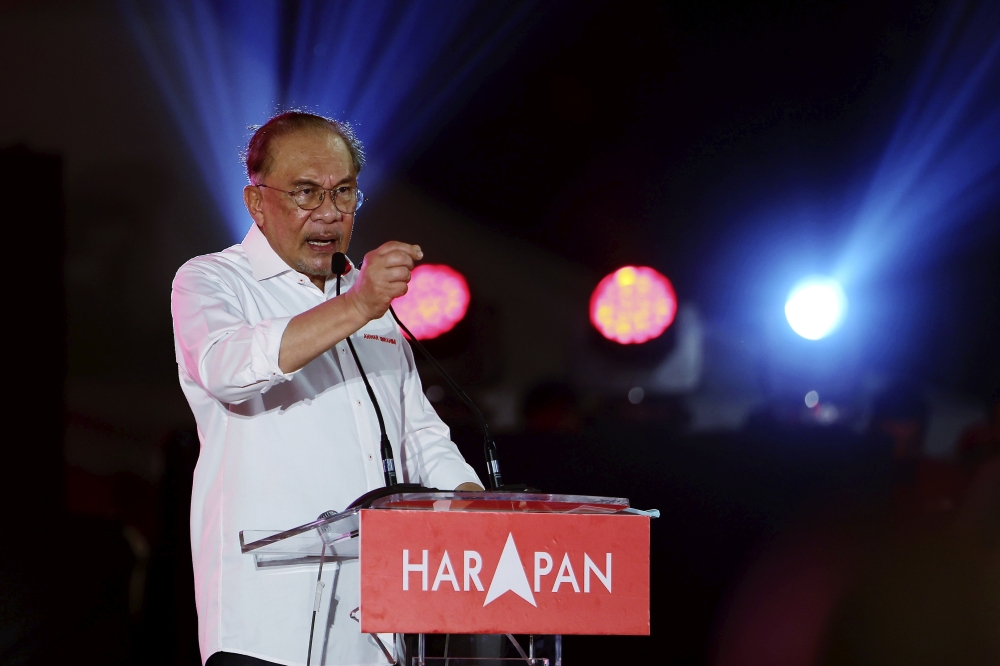
Prime Minister Datuk Seri Anwar Ibrahim is launching his first major campaign initiative in Negeri Sembilan today, with an ambitious schedule encompassing four separate engagements designed to energise party supporters and reach voters across the state. The multi-location tour signals the government's commitment to consolidating political support in a state that has historically represented a significant battleground in Malaysian electoral politics.
The back-to-back events scheduled throughout the day reflect a strategy of maximum grassroots visibility. Rather than concentrating efforts in a single location, the Prime Minister's decision to undertake a rapid tour across multiple constituencies demonstrates the administration's recognition that Negeri Sembilan's diverse demographic and geographic spread requires targeted, localized engagement. This approach allows Anwar to address concerns specific to different communities while maintaining momentum across the state.
Negeri Sembilan has long occupied an important position in national political calculations. The state's competitive political dynamics mean that swings in voter sentiment here often mirror broader national trends, making it a bellwether for assessing public reception to government policies. By personally leading campaign efforts rather than delegating to subordinates, Anwar is underscoring the personal priority he places on the outcome in this state. This direct engagement carries symbolic weight, particularly in demonstrating commitment to constituencies that may feel overlooked by federal-level policymaking.
The timing of this campaign tour carries significance in the broader political calendar. Campaign momentum builds gradually through repeated messaging and visible leadership presence, and launching with a four-event day establishes a high baseline of activity. Such intensive campaigning requires substantial logistical coordination, suggesting that party machinery has been mobilized well in advance to ensure smooth execution across multiple locations. For supporters and party members, the scale of the effort reinforces confidence in leadership commitment and party resources.
From a strategic perspective, Anwar's personal involvement at this early stage of campaigning serves multiple purposes. It attracts media coverage that amplifies the campaign message beyond those physically present at each event. Television footage, photographs, and social media content generated from the tour reach exponentially more voters than direct attendees, creating a multiplier effect on campaign messaging. In contemporary Malaysian politics, where media coverage and public perception significantly influence electoral outcomes, such visibility represents a crucial asset.
The choice to begin campaign activities in Negeri Sembilan first, rather than other states, reveals organizational priorities. Anwar's decision-making on which states to prioritize and in what sequence reflects internal polling data, assessment of incumbent strength, and identification of swing constituencies. By deploying his personal political capital in Negeri Sembilan at the campaign's outset, the Prime Minister is signalling that the government considers this state winnable and strategically important. Conversely, this focus may prompt opposition parties to concentrate their own resources here, potentially intensifying political competition in the state.
For Negeri Sembilan voters, this intensive campaign attention presents an opportunity to engage directly with the Prime Minister and articulate concerns about pressing local issues. Whether focused on infrastructure development, economic opportunities, healthcare, education, or other policy domains, constituents attending these events have the chance to voice priorities and assess how responsive national leadership appears to local needs. Such direct interaction, even in formal campaign settings, can influence voter perceptions and decision-making.
The four-event format also allows the campaign to reach different demographic segments. Events might be tailored to address concerns relevant to specific communities, whether urban professionals, rural agricultural workers, youth, seniors, or particular ethnic or religious groups. This differentiation ensures that campaign messaging resonates with local contexts while maintaining coherent national messaging. The ability to customize delivery while maintaining strategic consistency represents a hallmark of professional political campaigning.
On a practical level, successful execution of a four-stop tour demonstrates organizational capability and coordination within party structures. For rank-and-file party members supporting these events, participating in a tour involving the Prime Minister reinforces party morale and provides motivation for continued activist engagement. Well-organized, well-attended campaign events create momentum that extends beyond the immediate participants, influencing the broader political atmosphere in the state through informal networks and social discussion.
The campaign tour also serves to benchmark Anwar's personal political standing in Negeri Sembilan specifically. Response levels, crowd sizes, and public reception to his presence provide real-time feedback on government popularity in the state. This information proves invaluable for campaign strategists in assessing whether current political strategies require adjustment or whether resource allocation should shift based on actual voter response rather than preliminary assumptions.
For Malaysian and Southeast Asian observers of regional politics, Anwar's campaign activities represent the routine functioning of democratic political competition. Unlike authoritarian systems where political leadership remains insulated from direct voter engagement, Malaysia's electoral system requires that political leaders periodically subject themselves to public scrutiny and campaign actively for continued support. This necessity to campaign, though sometimes appearing repetitive or performative, reflects the democratic principle that political legitimacy ultimately derives from public consent rather than institutional positioning alone.

