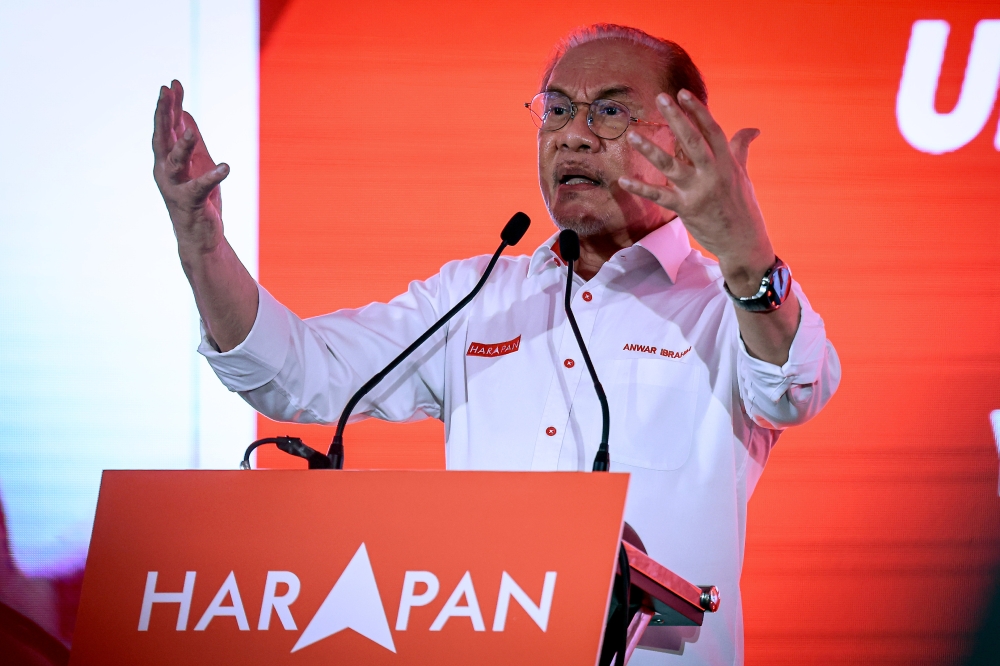
Prime Minister Datuk Seri Anwar Ibrahim is bringing his campaign efforts to Negeri Sembilan as Pakatan Harapan seeks to tighten its grip on a state where electoral fortunes remain genuinely competitive. The initiative represents a deliberate push to energise the ruling coalition's machinery in a region where complacency could prove costly, particularly in constituencies where voting margins have historically been razor-thin.
Anwar's presence on the ground signals that Pakatan's leadership recognises Negeri Sembilan as neither secure nor unwinnable—a delicate political balance that demands sustained attention and resources. The state has emerged as a genuine battleground where grassroots mobilisation can meaningfully shift voter sentiment. Rather than concentrate exclusively on opposition strongholds or safeguarded territory, the coalition is investing political capital in areas where persuasion remains possible, a calculated approach reflecting the maturity of Malaysia's electoral competition.
The campaign visit carries particular significance given Negeri Sembilan's demographic diversity and its status as a swing region. Unlike states where one coalition dominates, Negeri Sembilan presents opportunities for both Pakatan and its rivals to make meaningful gains through disciplined campaigning and effective messaging. The state's voters, spread across urban centres, semi-rural constituencies, and plantation-dependent areas, demand tailored political communication rather than one-dimensional appeals. Anwar's direct engagement demonstrates that senior leadership recognises this complexity.
For Pakatan, maintaining electoral competitiveness in Negeri Sembilan serves broader strategic purposes beyond the state itself. A strong showing here prevents opposition forces from claiming momentum heading into subsequent electoral contests. Moreover, Negeri Sembilan's geographic position near Selangor, Kuala Lumpur, and the Klang Valley means that sentiment ripples across the densely populated central region, influencing voter calculations in adjacent constituencies. Electoral psychology suggests that perceived momentum in one area influences turnout and enthusiasm in neighbouring regions.
Anwar's direct involvement underscores how contemporary Malaysian politics remains personalised around leadership figures, particularly the Prime Minister. While party machinery and institutional structures matter, the appearance of top-tier political leadership at campaign events generates media coverage, mobilises party cadres, and sends a psychological signal that the leadership takes a particular region seriously. For Pakatan supporters in Negeri Sembilan, Anwar's visit validates their constituency's importance and encourages continued political participation.
The coalition faces genuine competitive pressure from opposition parties that have invested substantially in ground organisation. Effective counter-campaigns require sustained presence and messaging discipline, areas where Pakatan's historical fragmentation sometimes disadvantaged the coalition. However, current efforts to strengthen party coordination and unified campaign strategy suggest institutional learning from previous electoral cycles. Anwar's presence helps consolidate these improvements into tangible voter outreach.
Negeri Sembilan's particular electoral dynamics reflect broader national patterns where polarisation is less absolute than often portrayed. Significant voter populations remain genuinely persuadable, particularly those concerned with bread-and-butter issues like cost of living, employment, and infrastructure development. A Prime Ministerial campaign visit allows Pakatan to articulate its economic narrative and policy achievements directly to audiences sceptical of filtered information. In an era of fragmented media consumption, such direct engagement remains politically valuable.
The timing of this campaign initiative also reflects Pakatan's desire to maintain electoral readiness. Malaysian political cycles are unpredictable, with snap elections potentially called on relatively short notice. By activating ground machinery now and energising party volunteers, Pakatan ensures that should elections occur, the coalition possesses pre-existing organisational momentum rather than starting from dormancy. This forward-thinking approach distinguishes established ruling coalitions from opposition parties that must mobilise more reactively.
For Southeast Asian observers monitoring Malaysian politics, this campaign initiative illustrates how contemporary electoral competition in the region increasingly resembles sophisticated democratic machinery rather than personalised factional contests. Pakatan's emphasis on sustained outreach, targeted messaging, and leadership visibility reflects voting populations that demand responsiveness and evidence of competence. The coalition's willingness to invest resources in competitive rather than safe constituencies suggests confident leadership willing to contest ground rather than defend entrenched positions.
The broader implication for Malaysian politics centres on whether Pakatan can translate campaign activity into electoral performance. Ground organisation, leadership visibility, and policy messaging require disciplined execution to generate tangible results. Negeri Sembilan's competitive nature means that opposition parties will simultaneously intensify their own efforts, creating a genuinely contested political space. The outcome will ultimately depend on which coalition most effectively connects with voter concerns while maintaining organisational coherence during the campaign period and beyond.

