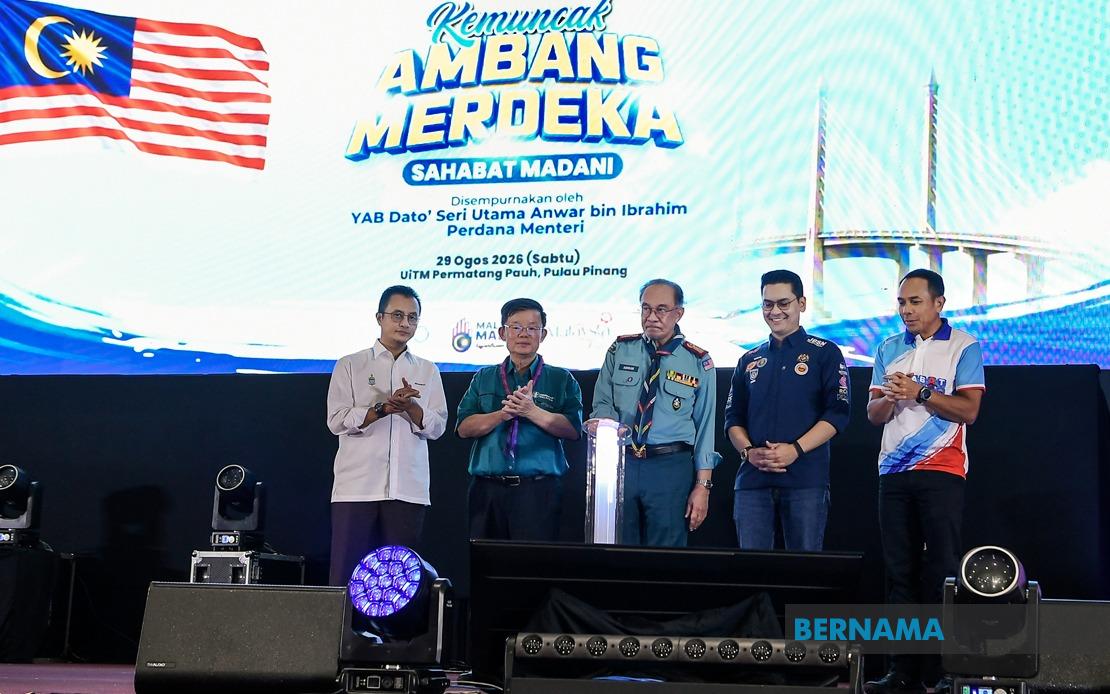
Prime Minister Datuk Seri Anwar Ibrahim has launched Sahabat MADANI, a nationwide volunteer initiative drawing more than 11,000 participants in its initial phase. The programme, unveiled at Universiti Teknologi MARA (UiTM) Permatang Pauh during the Ambang Merdeka Sahabat MADANI 2026 highlight programme, represents a coordinated effort by the government to harness community participation for social good. The rapid uptake suggests considerable public appetite for structured volunteering opportunities aligned with the administration's governance agenda.
The initiative has registered 11,060 volunteers across Malaysia, establishing what officials describe as a national movement rooted in principles of mutual respect and inclusive community engagement. The Implementation Coordination Unit of the Prime Minister's Department (ICU JPM) emphasises that the programme creates a framework for individuals from different ethnic, religious and socioeconomic backgrounds to collaborate on shared objectives. This emphasis on diversity reflects a deliberate strategy to position volunteer service as a unifying national endeavour at a time when Malaysian society continues to navigate complex questions around pluralism and social cohesion.
Sahabat MADANI's operational focus centres on direct community intervention addressing tangible needs. The programme prioritises supporting economically vulnerable populations, intervening in youth education by assisting school dropouts, creating employment pathways for young people, and mobilising rapid assistance during crises. Rather than functioning as a purely awareness-raising exercise, the initiative prescribes concrete deliverables that allow volunteers to see measurable outcomes from their participation. This pragmatic approach may enhance volunteer retention compared to more abstract civic engagement models.
The programme sits within the broader Malaysia MADANI framework, which the government has positioned as its signature policy platform. The phrase "Kesejahteraan Dinikmati" translates to shared wellbeing enjoyed by all, signalling an egalitarian emphasis that extends beyond symbolic gestures to material improvements in living standards. By institutionalising volunteerism as a core mechanism for achieving this vision, the administration effectively enlists civil society as a partner in addressing gaps that government services alone might not fully cover. This distributed model of social provision has implications for how Malaysia conceptualises the social contract between state and citizens.
The timing of the launch during Malaysia's Independence Day commemorations carries symbolic weight. Officials have explicitly connected volunteer service to the spirit of independence, suggesting that active citizenship and mutual aid represent expressions of national sovereignty. This framing potentially positions disengagement from community service as a form of national indifference, subtly encouraging participation through patriotic appeals. For Malaysian readers accustomed to political messaging during festive seasons, this rhetorical strategy reflects familiar patterns of aligning policy initiatives with national occasions.
The governance architecture supporting Sahabat MADANI emphasises coordination and responsiveness. The programme explicitly commits to transparency and results-oriented delivery, addressing longstanding public concerns about efficacy in government-linked initiatives. By embedding accountability mechanisms within the volunteer structure and requiring interventions to match actual community needs rather than predetermined templates, the design attempts to overcome scepticism about top-down social programmes. Whether this aspiration translates into practice will depend substantially on implementation capacity at local levels.
The initiative's emphasis on young people deserves particular attention for regional observers. Officials specifically appeal to youth to reject "divisive sentiments" and channel their abilities toward national development. This messaging occurs within a Malaysian context where generational attitudes toward religious identity, ethnic relations, and political participation have shifted considerably. By offering young volunteers structured opportunities for cross-community interaction through service, Sahabat MADANI potentially influences identity formation and political socialisation in ways extending beyond immediate community benefits.
The programme's ambition to tackle poverty, hardship, corruption and injustice simultaneously reflects expansive goals that require sustained commitment. Volunteers recruited through Sahabat MADANI will confront structural challenges that community service alone cannot resolve, potentially creating frustration if the initiative is oversold as a complete solution to Malaysia's developmental challenges. The gap between the programme's aspirations and the inevitable constraints on what volunteer efforts can achieve will test the initiative's sustainability.
For Southeast Asian observers, Sahabat MADANI exemplifies how contemporary governments employ volunteer mobilisation as a governance tool. Rather than viewing citizens as passive recipients of state provision, the initiative treats them as active agents in social problem-solving. This reflects global trends toward hybrid models of service delivery incorporating state resources, market mechanisms, and civil society participation. Malaysia's implementation of this approach will provide instructive lessons about whether volunteer-centred governance can effectively address inequality without fundamentally redistributing economic resources.
The registration of over 11,000 volunteers within the launch period indicates either substantial underlying interest in community service or effective promotional efforts by government apparatus mobilising participation through institutional channels. The distinction matters for assessing the initiative's authentic grassroots character versus its potential as an extension of state reach into civil society. Malaysian civil society organisations monitoring government-society relations will likely scrutinise whether Sahabat MADANI maintains genuine independence or gradually becomes a delivery mechanism for predetermined policy objectives.
Looking forward, the initiative's success will depend on sustaining volunteer engagement beyond the initial enthusiasm surrounding a high-profile launch. Experience with similar programmes regionally suggests that retention rates frequently decline sharply after the first months as the reality of sustained voluntary commitment tests participants' dedication. The ICU JPM's capacity to provide meaningful assignments, recognition, and support systems for volunteers across Malaysia's diverse geography will prove decisive in determining whether Sahabat MADANI evolves into an enduring national institution or gradually diminishes in relevance.

