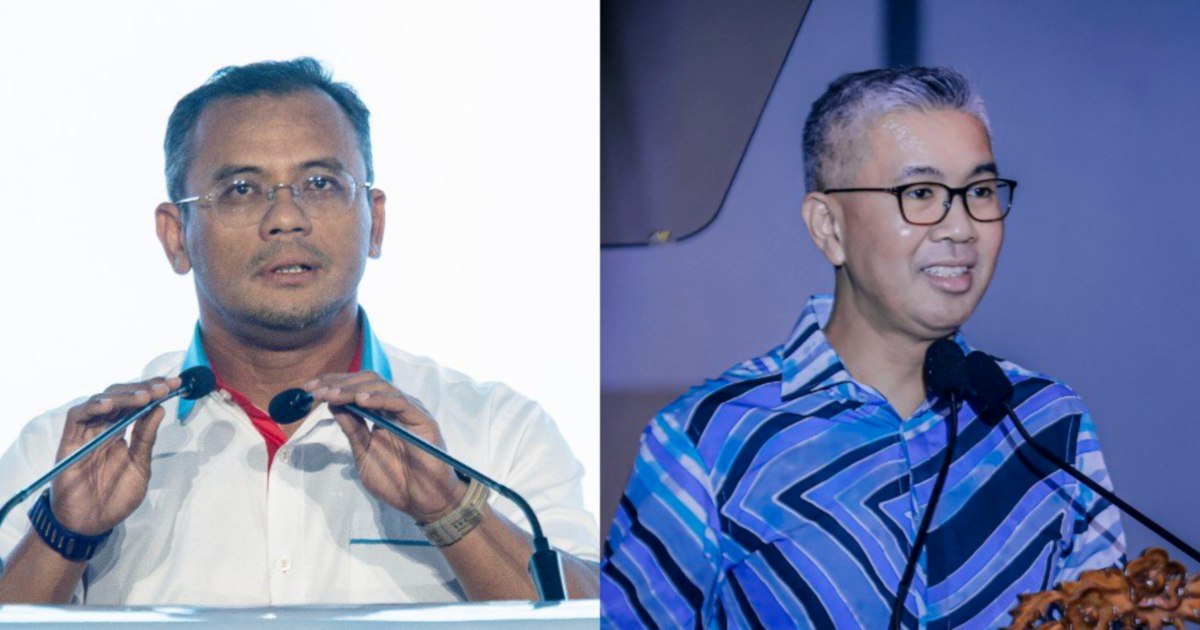
PKR president Datuk Seri Anwar Ibrahim has made significant announcements regarding key party positions, naming Datuk Seri Amirudin Shari as the party's election director while appointing Tengku Zafrul Azlan as a Prime Minister's Office coordinator. The moves represent a strategic realignment within the party hierarchy as it gears up for future electoral contests and seeks to strengthen coordination between party machinery and government operations.
The appointment of Amirudin to lead electoral operations reflects his prominence within the PKR structure and his track record in managing party affairs. As election director, Amirudin will shoulder responsibility for orchestrating the party's campaign strategies, candidate selection processes, and grassroots mobilisation efforts across the country. This position traditionally carries considerable influence within Malaysian political parties, as it determines the direction and intensity of electoral engagement at federal and state levels.
The decision to simultaneously appoint Tengku Zafrul to a PMO coordinator role indicates Anwar's intent to deepen the connections between party infrastructure and the machinery of government. Such appointments typically ensure that policy announcements, government initiatives, and party messaging remain coherent and mutually reinforcing. For PKR, maintaining close coordination between party operations and ministerial functions has become increasingly important as the coalition government manages competing demands from its various component parties.
These announcements underscore the ongoing structural adjustments within PKR as the party navigates Malaysia's complex political landscape. Following the 2022 general election and subsequent coalition negotiations, PKR has progressively refined its internal hierarchy to accommodate both electoral objectives and governmental responsibilities. The party's leadership has consistently sought to balance representation of different regional interests while ensuring decision-making efficiency at the highest levels.
For Malaysian political observers, such appointments signal PKR's confidence in preparing for the next electoral cycle, though timing remains uncertain. The party's forward-looking posture suggests that despite the coalition government's current tenure, PKR leadership is actively thinking about campaign readiness, candidate development, and electoral messaging. This proactive approach reflects lessons learned from previous electoral contests where party preparedness directly influenced outcomes.
The roles assigned represent complementary functions within party machinery. While Amirudin's position focuses on electoral mechanics and party mobilisation, the PMO coordinator role ensures that government resources, policy announcements, and ministerial activities align with broader party communications strategies. Such coordination has become standard practice in Malaysian coalition governments, where multiple parties must present a unified front while protecting distinct party interests.
Within the broader context of Malaysian politics, these moves also reflect PKR's position as the dominant party within the current governing coalition. As the party providing the Prime Minister, PKR carries disproportionate responsibility for coalition cohesion and governmental effectiveness. Strengthening both electoral capacity through Amirudin's appointment and government-party alignment through Tengku Zafrul's role serves this dual mandate.
These appointments carry implications beyond internal party management. PKR's electoral machinery influences campaign intensity and resource allocation across constituencies where the party contests. Strong electoral direction from the party centre can shape the competitiveness of individual races and affect overall coalition performance. Similarly, effective PMO coordination amplifies the government's ability to communicate achievements and policy directions through party channels, reaching beyond traditional media to grassroots supporters.
Regional considerations also feature in such appointments. PKR, as a party with substantial presence in Peninsula Malaysia and growing influence in Sabah and Sarawak, must ensure that its national leadership structures reflect geographic diversity while maintaining coherent decision-making. Leadership appointments signal which regional voices carry influence in the party's highest councils.
The announcements reflect contemporary Malaysian political practice where party and government functions increasingly intersect. Modern coalition governance requires seamless transition between party strategy and government action, particularly for the dominant coalition partner. These appointments institutionalise such coordination, creating clearer chains of command and responsibility.
For political analysts tracking PKR's evolution, these moves suggest the party is consolidating its organisational capacity following the transitional period that followed the 2022 elections. Having navigated initial coalition formation challenges, PKR's leadership appears focused on establishing durable structures for sustained electoral and governmental performance.
The broader significance of these announcements extends to coalition stability. When PKR effectively manages both electoral and governmental functions, the entire government coalition benefits from consistent messaging and coordinated implementation. Conversely, weaknesses in party coordination can create openings for intra-coalition criticism that weakens overall coalition coherence. These appointments represent leadership commitment to minimising such vulnerabilities.
Looking forward, how effectively Amirudin and Tengku Zafrul execute their respective mandates will influence PKR's trajectory and the government coalition's overall performance. These roles position both individuals prominently within the party's future direction while signalling to party members and supporters that leadership succession planning remains actively managed within PKR's upper echelons.

