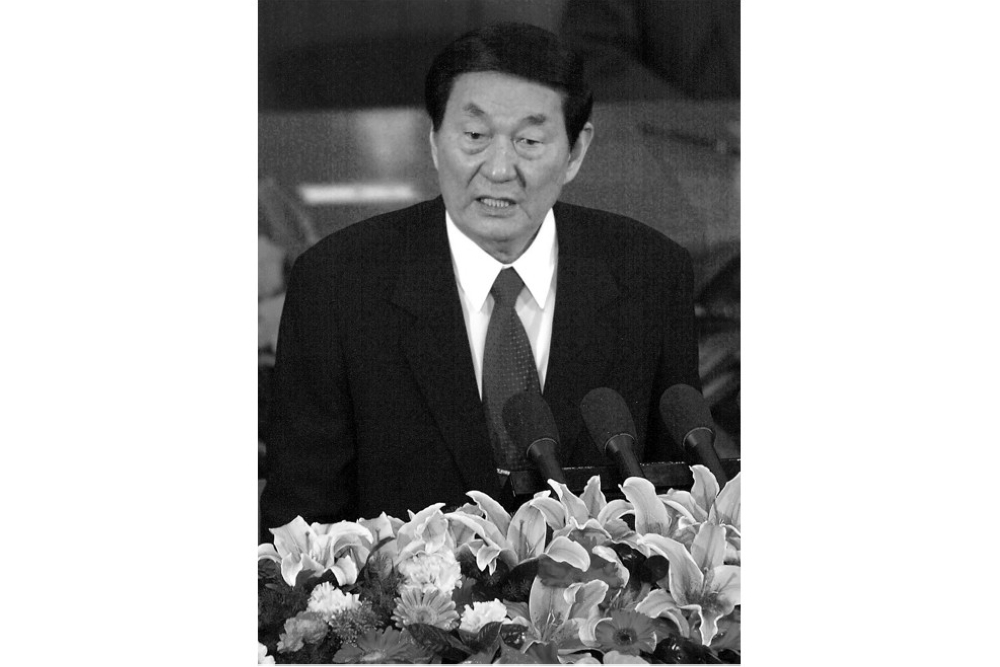
Prime Minister Datuk Seri Anwar Ibrahim has mourned the passing of Zhu Rongji, the former Premier of China who served as a crucial architect of bilateral relations between Kuala Lumpur and Beijing. In a statement released yesterday, Anwar described Zhu as a valued friend whose contributions extended far beyond his formal government positions, leaving a lasting imprint on how Malaysia and China engage with one another across multiple sectors of mutual interest.
Zhu Rongji, who led China's government during the late 1990s and early 2000s, occupied a position of tremendous influence during a transformative period for Chinese economic development and international engagement. His tenure coincided with China's accelerating integration into global markets and its deepening involvement in Southeast Asian affairs, a dynamic that proved consequential for Malaysia's own strategic positioning in the region. The former premier's approach to economic reform and liberalization shaped China's trajectory during years that fundamentally altered the geopolitical and commercial landscape across Asia.
In his remarks, Anwar emphasized that Zhu went beyond the conventional responsibilities of his official role to foster genuine personal connections with Malaysian leadership. These relationships transcended the typical formal protocols of state-to-state interaction, creating a foundation of trust and mutual understanding that informed subsequent policy decisions affecting trade, investment, and cultural cooperation. The Prime Minister's characterization of Zhu as a "good friend" underscores the personal dimension that often underpins the most effective diplomatic relationships, particularly in Asian contexts where relationship-building carries significant weight.
The strengthening of Malaysia-China ties during Zhu's era had measurable consequences for the Malaysian economy. Chinese investment flows into Malaysia expanded considerably during this period, with particular growth in manufacturing, infrastructure development, and resource sectors. Malaysian businesses gained increased access to Chinese markets, while Chinese enterprises established significant operational bases in Malaysia, creating employment and technological transfer opportunities. These economic linkages, initially forged during Zhu's time in government, have proven remarkably durable and continue to shape bilateral commerce today.
Beyond commerce, Zhu's approach to regional diplomacy helped establish patterns of engagement between China and Southeast Asia that remain influential. His willingness to invest political capital in relationship-building with individual Southeast Asian nations, rather than treating the region as a monolithic entity, allowed for nuanced bilateral arrangements that accommodated each country's particular circumstances and interests. Malaysia benefited from this differentiated approach, which recognized its specific role as both a Muslim-majority nation and a significant economic actor in Southeast Asia.
The timing of Zhu's passing carries symbolic weight, arriving at a moment when Malaysia-China relations face both opportunities and complexities. Current administrations in both capitals continue to navigate questions regarding trade balances, infrastructure projects, and regional security concerns. Having individuals like Zhu who cultivated foundational goodwill across decades represents valuable historical capital that can help navigate contemporary disagreements and preserve cooperation during periods of tension.
Anwar's public acknowledgment of Zhu's contributions reflects Malaysia's broader diplomatic approach of maintaining robust relationships across major powers regardless of periodic fluctuations in politics or policy. The Prime Minister's statement serves not only as a personal tribute but also as a reaffirmation of Malaysia's commitment to the bilateral relationship that Zhu helped construct. Such public gestures carry meaning in diplomatic circles, signaling continuity and respect for historical partnerships even as immediate political circumstances shift.
For Malaysian observers of Chinese politics and economics, Zhu Rongji remains a significant historical figure whose legacy extends well beyond his formal government tenure. His reputation as a pragmatist who pushed for market-oriented reforms while maintaining Communist Party authority made him distinctive among Chinese leaders of his generation. His influence on economic policy continued through advisory roles even after he stepped down from his premier position, allowing him to shape China's development trajectory across multiple decades.
The relationship between Malaysian and Chinese leaders typically emphasizes historical memory and accumulated goodwill as anchors for ongoing cooperation. By publicly mourning Zhu and specifically crediting his role in deepening ties, Anwar ensures that the contributions of earlier architects of bilateral relations remain visible and appreciated by current and future generations. This historical consciousness helps maintain the institutional memory that sustains long-term strategic partnerships in Southeast Asia.
For Malaysia, which occupies a delicate position balancing relationships with China, the United States, and other major powers, maintaining strong connections with Beijing remains strategically significant. Figures like Zhu who helped establish precedents for constructive engagement between Malaysia and China provided templates for managing relations with a major power in ways that respect Malaysian sovereignty while enabling mutually beneficial cooperation. As Malaysia charts its course in an increasingly complex regional environment, the diplomatic legacy of leaders like Zhu continues to offer lessons in relationship management and pragmatic statecraft.

