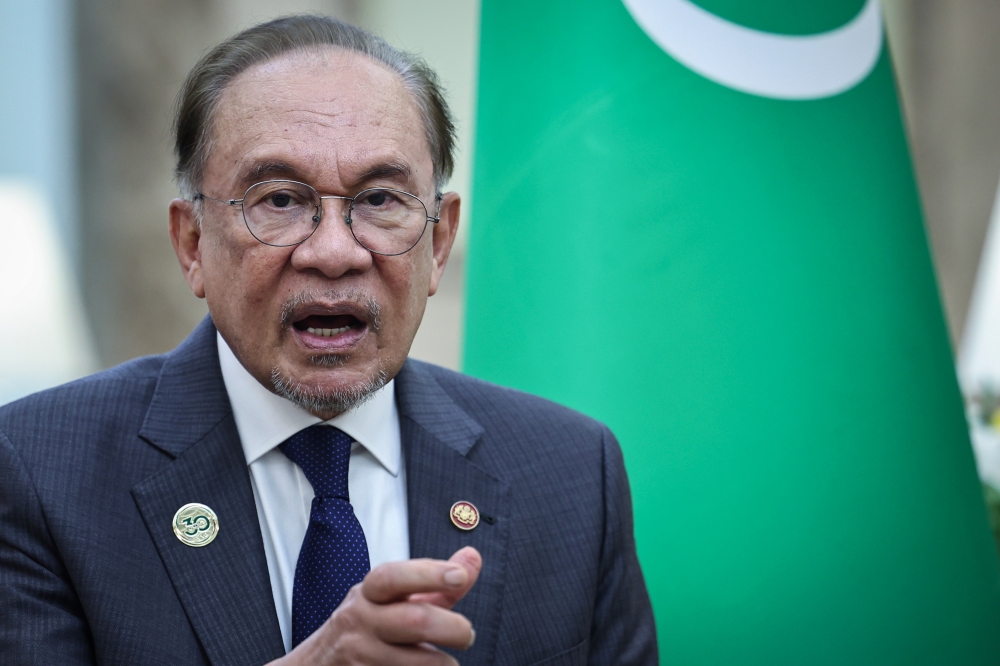
Prime Minister Datuk Seri Anwar Ibrahim has expressed profound sorrow at the death of Professor John L. Esposito, one of the world's most influential scholars of Islam and international relations. Anwar's statement, released on July 16, highlighted Esposito's exceptional contributions to bridging cultural and religious divides at a time when such understanding remains critically important for global stability and harmony.
Esposito, a towering intellectual figure whose career spanned more than five decades, devoted himself to advancing nuanced scholarship on Islam and Muslim societies. His passing marks the loss of a scholar whose work consistently challenged Western stereotypes and misconceptions about Islam, replacing simplistic narratives with rigorous academic analysis grounded in deep contextual knowledge. Anwar's tribute underscored the significance of Esposito's legacy not merely as an academic achievement but as a vital contribution to international relations and mutual respect between civilizations.
Throughout his distinguished tenure, Esposito established himself as a bridge-builder whose influence extended far beyond university campuses. He held prestigious positions at leading institutions and founded the Centre for Muslim-Christian Understanding, reflecting his conviction that scholarship could serve as a foundation for dialogue. His prolific publishing record, including numerous books on Islamic movements, democracy in Muslim-majority nations, and the geopolitical dimensions of religious identity, provided policymakers and scholars with analytical frameworks essential for understanding contemporary Middle Eastern and global affairs.
For Malaysia and Southeast Asia specifically, Esposito's work held particular relevance. His research on Islam in the context of pluralistic societies offered perspectives applicable to the region's own experiences with religious coexistence and political Islam. Malaysian policymakers and intellectuals frequently drew upon his scholarly assessments when navigating questions about Islamic governance, democratization, and the compatibility of Islamic principles with modern state structures. His nuanced approach rejected both Islamophobic oversimplifications and defensive posturing, instead advocating for evidence-based understanding.
Anwar Ibrahim's personal connection to Esposito reflected broader recognition within Southeast Asian political and intellectual circles of the scholar's importance. Both figures, in their respective domains, championed the notion that Islam and modernity need not exist in perpetual tension, and that Muslim-majority societies could pursue development, democracy, and social progress while maintaining religious identity. This alignment of perspectives made Esposito a natural intellectual reference point for leaders like Anwar who sought to articulate alternative visions of Islamic political thought.
The timing of Esposito's passing holds symbolic weight in an era marked by persistent geopolitical tensions and religious polarization. At a moment when Islamophobia remains a documented phenomenon in Western societies and anti-Western sentiment persists in parts of the Muslim world, the loss of a scholar dedicated to dismantling these mutual prejudices represents a genuine setback for advocates of cross-cultural understanding. Esposito's insistence that Islamic revival movements merited serious scholarly attention rather than dismissal or demonization helped establish frameworks through which informed policy discussion could occur.
Anwar's public mourning also reflects the high value placed on intellectual figures who transcend narrow advocacy to achieve genuine scholarly credibility. Esposito never sacrificed academic rigor for the sake of interfaith pleasantries; his work maintained intellectual integrity while remaining accessible to non-specialist audiences. This balance proved essential to his influence, allowing policymakers and educated citizens to engage with complex theological and political issues with appropriate sophistication.
Esposito's institutional innovations, particularly the Centre for Muslim-Christian Understanding, demonstrated his conviction that understanding required sustained institutional commitment rather than isolated scholarly interventions. The centre's work examining political Islam, terrorism, and religious reform provided generations of students with tools for informed analysis. Many of these students went on to positions of influence in diplomacy, journalism, and academia throughout Asia, North America, and Europe, extending Esposito's intellectual influence across networks.
The scholar's research on specific issues relevant to Southeast Asia, including discussions of Islam in Indonesia and Malaysia, contributed to international understanding of how democratic institutions and Islamic identity could coexist. His work helped counter narratives that portrayed Islamic movements as inherently incompatible with democratic governance, instead demonstrating the diversity of political orientations within Islamic thought and practice.
Anwar's tribute serves as a reminder that in an increasingly fractured world, the loss of intellectuals committed to understanding across difference carries real consequences. As the region and the world grapple with questions of religious identity in secular states, religious minorities' rights, and the role of faith in public life, Esposito's scholarly legacy provides essential resources for thoughtful deliberation. His passing removes from the global conversation a voice that consistently elevated discourse above rhetoric and demanded engagement with evidence and complexity.

