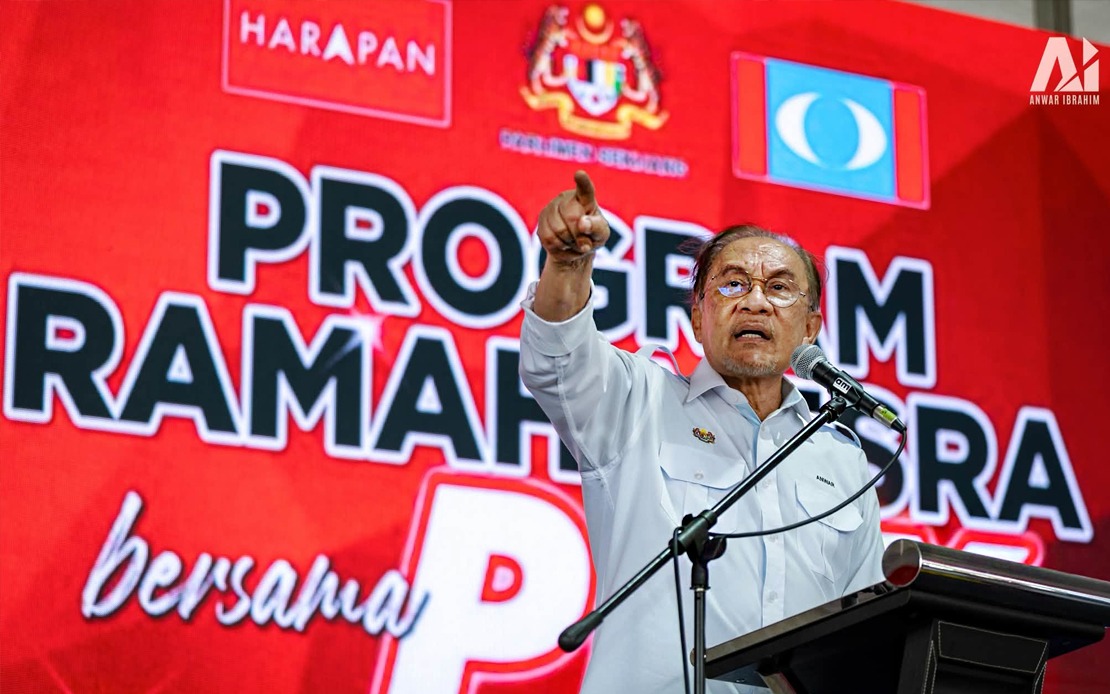
Prime Minister Datuk Seri Anwar Ibrahim has thrown his political weight behind the durian farming sector, pledging direct intervention to combat the sharp price decline plaguing growers across Peninsular Malaysia. Speaking at a grassroots gathering in Tangkak's Gambir state constituency on July 5, Anwar signalled his intention to leverage Malaysia's diplomatic relationship with China to tackle what has become a significant income crisis for the nation's durian producers. The synchronized peak season across multiple growing regions has flooded local markets with supply, crushing prices and threatening the livelihoods of thousands of farmers who depend on the commodity's traditionally robust returns.
The Prime Minister's proposed remedy hinges on diplomatic negotiation rather than domestic intervention alone. During his scheduled trip to China next month, Anwar intends to discuss durian market expansion directly with Chinese Premier Li Qiang, whom he described as a trusted ally. This represents a calculated attempt to pivot away from oversupplied domestic markets toward the massive consumer base in China, where premium fruit commands significant pricing power. By framing the issue as a bilateral trade opportunity rather than merely a domestic crisis, Anwar appears to be signalling confidence in Malaysia-China relations as a vehicle for economic problem-solving that extends beyond traditional commerce to include agriculture and rural development.
The strategic rationale behind this approach reflects broader recognition of China's critical importance to Malaysian agricultural exports. China maintains notoriously stringent import standards, particularly for fresh produce, which Anwar acknowledged presents a formidable barrier to entry. Nevertheless, his willingness to engage Premier Li on this specific issue underscores the political salience of the durian sector within Malaysia's electoral calculus, particularly in peninsular states where agricultural constituencies hold meaningful influence. The Gambir state seat, where this speech occurred, represents precisely the type of rural constituency where farmer welfare can determine electoral outcomes.
Anwar's framing of the issue emphasized mutual economic benefit rather than supplication. He characterized the negotiation as an opportunity to expand trade channels that would benefit both Malaysian producers and Chinese consumers seeking premium durian varieties. This subtle reframing transforms what might appear as a crisis-driven request into a proposal for deepening commercial ties, potentially making it more palatable to Beijing's negotiating posture. The implicit suggestion is that Malaysia possesses valuable agricultural assets that China's affluent consumers increasingly demand, suggesting a fundamentally sound long-term trade relationship rather than a temporary glut that requires diplomatic rescue.
For Malaysian farmers and rural constituencies monitoring this announcement, the timing carries particular weight. Durian farming represents a significant income source across Johor, Pahang, Perak, and other producing states. When seasonal dynamics create simultaneous harvests across regions—a recurring phenomenon—farmers face dramatically compressed prices that can wipe out annual profits regardless of yield quality or quantity. Previous attempts to manage this volatility through domestic storage programs or price support schemes have demonstrated limited effectiveness given the fruit's perishable nature and the capital requirements for modern cold chain infrastructure. International market access thus becomes not merely attractive but economically essential for price stabilization.
Beyond the durian discussion, Anwar used the same platform to defend the government's fuel subsidy program against criticism about its fiscal sustainability. He articulated a deliberate policy choice to shield consumers from global energy price volatility, positioning fuel affordability as a foundational social compact rather than an economically irrational subsidy. Current retail prices reflect this approach, with RON95 petrol subsidized at RM1.99 per litre and diesel at RM2.10 per litre—substantially below the market rates of RM3.37 and RM3.97 respectively. Anwar's assertion that Malaysia maintains the world's lowest fuel prices represented a strong political statement, though critics might counter that this claim requires careful definition regarding absolute pricing versus subsidy depth.
The Prime Minister's justification for fuel subsidies invoked both economic principle and political philosophy. He acknowledged that orthodox economic doctrine would dictate price increases during periods of global supply disruption—particularly given recent Middle East tensions affecting international oil markets. Yet he consciously rejected this prescription in favor of protecting household purchasing power. This philosophical stance reveals tension within the government's broader economic framework: commitments to fiscal prudence and market rationality coexist uneasily with redistributive welfare provisions targeted at politically sensitive commodities. The resolve to "reduce" fuel prices, in Anwar's phrasing, suggests an active commitment to subsidy maintenance rather than mere temporary accommodation.
The fuel subsidy discussion carries particular relevance for understanding how Malaysian policymakers conceptualize government's role in economic management. Unlike some peer nations that have liberalized fuel pricing as part of broader reform agendas, Malaysia has reinforced subsidies through the BUDI MADANI initiative, essentially doubling down on price controls. This approach has immediate electoral appeal, particularly among lower-income voters and transportation-dependent sectors including agriculture. Durian farmers transporting produce to markets depend on affordable diesel; rural constituencies consuming fuel for daily necessities benefit directly from subsidized pricing. The interconnection between fuel and agricultural affordability thus becomes apparent, with both policies serving overlapping constituencies.
Anwar's dual emphasis on market access negotiation for agricultural exports and continued domestic subsidies for fuel reflects a coherent, if fiscally ambitious, development philosophy. Rural Malaysia, where durian cultivation concentrates geographically, requires both profitable export opportunities and affordable input costs. By simultaneously pursuing Chinese market penetration and maintaining fuel subsidies, the government attempts to address both elements of agricultural competitiveness. Whether this dual-track approach proves sustainable depends partly on successful agricultural export expansion—if durian market share in China grows substantially, farmer incomes could rise despite lower domestic prices, reducing reliance on direct government support while generating export revenues that offset subsidy costs.
The broader Southeast Asian context matters for evaluating Anwar's strategic choices. Thailand, Vietnam, and Indonesia have expanded agricultural exports substantially, with Thailand becoming the dominant durian exporter to China. Malaysian producers face intense international competition at precisely the moment when domestic oversupply weakens their negotiating position. Anwar's diplomatic intervention thus responds not only to immediate price pressures but to longer-term competitive threats from regional rivals. Successfully securing expanded Chinese market access for Malaysian durian would position the sector more defensively within regional trade dynamics, protecting both current farmer incomes and the sector's future viability.
The implications for Malaysian agricultural policy extend beyond durian specifically. This episode demonstrates how contemporary Malaysian governance increasingly relies on diplomatic negotiation and international market positioning to address domestic sectoral challenges. Rather than attempting to manage supply through domestic quotas or production controls—interventions that proved politically contentious and economically inefficient historically—the government now emphasizes export market expansion as the primary solution to oversupply crises. This represents a significant philosophical shift toward export-oriented solutions, though it requires both diplomatic skill and actual international market receptiveness to succeed effectively.
Looking forward, the success of Anwar's diplomatic engagement with Premier Li Qiang will significantly impact the credibility of government initiatives targeting agricultural welfare. If subsequent announcements confirm expanded Chinese market access for Malaysian durian, rural constituencies will likely interpret this as evidence of government responsiveness to their concerns. Conversely, if negotiations yield limited concrete results, farmers may grow skeptical of political pledges, particularly given the sector's history of cyclical crises with minimal structural improvement. The coming months will thus represent a crucial test of the government's capacity to deliver on major policy commitments affecting rural constituencies whose electoral support remains essential to maintaining parliamentary majorities.

