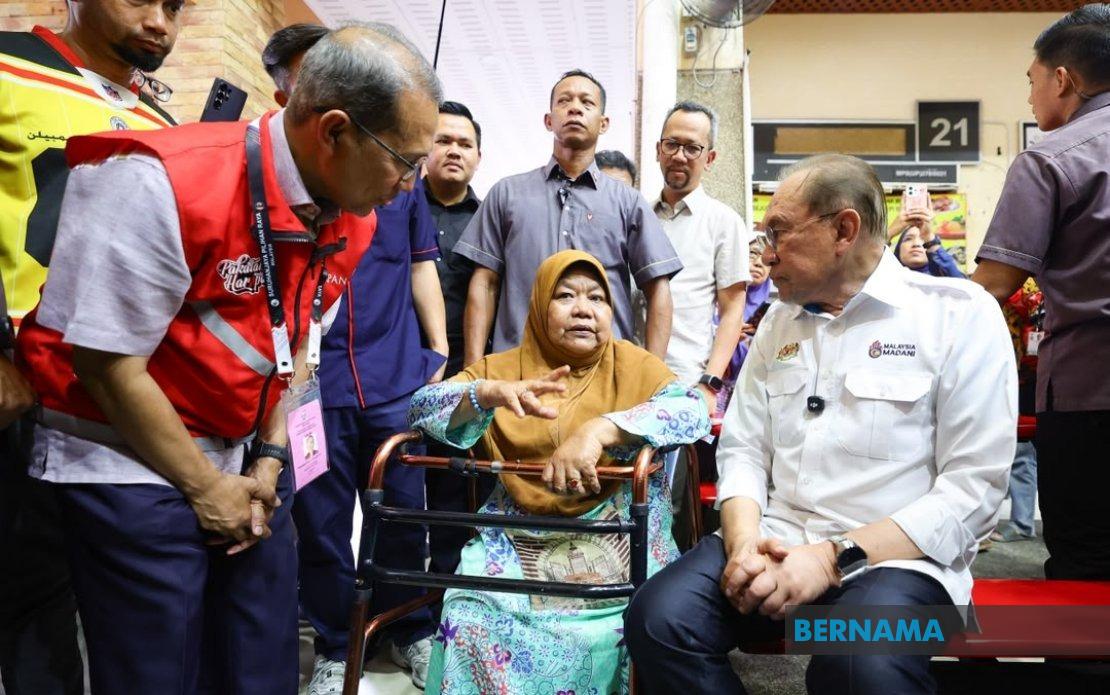
Prime Minister Datuk Seri Anwar Ibrahim has highlighted reciprocal river management initiatives across Negeri Sembilan as concrete evidence that the Pakatan Harapan-led state administration possesses both the capacity and commitment to channel resources equitably back to ordinary Malaysians. Speaking at a gathering with residents of Ampangan in Seremban on July 22, Anwar framed these infrastructure projects as exemplars of a governance philosophy that prioritises transparency and community welfare over opaque resource extraction.
The river widening and deepening operations being conducted throughout the state demonstrate what Anwar terms a "reciprocal basis" approach to development. Rather than allowing sand and gravel excavated from these flood-mitigation works to benefit private contractors or disappear into government coffers, the scheme channels revenues from extracted materials back into sustaining and improving the river systems themselves. This circular methodology addresses two priorities simultaneously: it tackles chronic flooding that affects residential and agricultural communities, while establishing a sustainable financing mechanism for ongoing maintenance that does not depend solely on annual budget allocations.
Anwar's emphasis on the Ampangan project specifically underscores how his administration views flagship initiatives at the grassroots level. By inviting residents to witness how their local landscape is being transformed through projects designed with their needs in mind, the Prime Minister seeks to rebuild public confidence in government competence after years of instability and institutional decline. The presence of Muhammad Nazri Kassim, the PH candidate contesting the Ampangan state seat, signals an effort to link national leadership messaging with local electoral contests.
The integrity-centred governance framework Anwar articulated during the event reflects broader efforts by PH to rebrand itself as a administration fundamentally different from its predecessors. He stressed that every infrastructure undertaking must position constituent welfare as its primary objective rather than secondary consideration. This rhetorical positioning carries particular weight in Malaysia's political landscape, where concerns about development projects benefiting connected elites while marginalising ordinary citizens have eroded faith in institutions across decades.
Drawing on his past experience negotiating a hotel development in Port Dickson, Anwar illustrated his preferred model of stakeholder-inclusive planning. He referenced how that project incorporated provisions for the local fishing community, extending beyond mere permits and into tangible improvements to housing and educational opportunities. This anecdote attempts to establish a personal track record of development that balances economic growth with social consideration, positioning Anwar as an architect of equitable rather than extractive progress.
The timing of these remarks matters considerably. Negeri Sembilan holds elections on August 1, with early voting commencing on July 28, meaning the state faces a critical political inflection point. Anwar's campaign visit and emphasis on tangible local projects reflect PH's understanding that electoral victories are secured through demonstrations of governance effectiveness rather than promises alone. In a state where voters have shown willingness to shift allegiances based on performance perceptions, concrete infrastructure that citizens can observe and utilise carries particular persuasive force.
PH is contesting all 36 state seats through a coalition arrangement that distributes candidacies across its three major components: PKR fields 16 candidates, DAP presents 11, and Amanah contributes nine. This internal balance reflects ongoing negotiations about power-sharing within the coalition and suggests that all three parties maintain significant stakes in the Negeri Sembilan outcome. For PKR in particular, maintaining control of a state government serves both symbolic and financial purposes, supporting the party's claim to viable governance capacity beyond the federal level.
Anwar's appeal to voters emphasised the importance of selecting leaders of integrity and trustworthiness across all ethnic communities. His explicit mention of "many good Malays, many good Indians and many good Chinese who have dignity" addresses one of PH's persistent challenges: the coalition's struggle to maintain credibility with Malay-Muslim voters while simultaneously appealing to non-Bumiputera communities. By framing the choice as fundamentally about character rather than ethnicity or religion, Anwar attempts to transcend communal politics and build a multiethnic consensus around integrity-based governance.
For Malaysian readers beyond Negeri Sembilan, the political implications of this state election extend beyond regional significance. Negeri Sembilan represents a barometer of PH's resilience and capacity to sustain federal-level authority through maintaining control of state apparatus. Losses in state elections typically precede eventual federal defeats, while state-level victories provide momentum and renewed legitimacy for federal governing coalitions. The river projects Anwar highlighted therefore carry symbolic weight far exceeding their local infrastructure value.
The emphasis on transparent resource management and community-beneficial development also reflects global trends toward environmental and social governance considerations in infrastructure planning. Malaysia's Southeast Asian neighbours, from Singapore's precision water management to Indonesia's evolving approaches to land use, have increasingly demonstrated that development and environmental stewardship need not conflict fundamentally. Anwar's framing of the Negeri Sembilan initiatives aligns with these regional expectations regarding what responsible governance should deliver.
Looking forward, the outcomes in Negeri Sembilan will likely influence how effectively PH can campaign on its development record in future electoral contests. If the state government can demonstrate sustained improvements in flood management, transparent fund utilisation, and community satisfaction, these outcomes become powerful testimonials to PH's broader claims about restoring institutional integrity. Conversely, project delays, cost overruns, or perceptions of opacity would undermine Anwar's core messaging about returns of resources to ordinary Malaysians.

