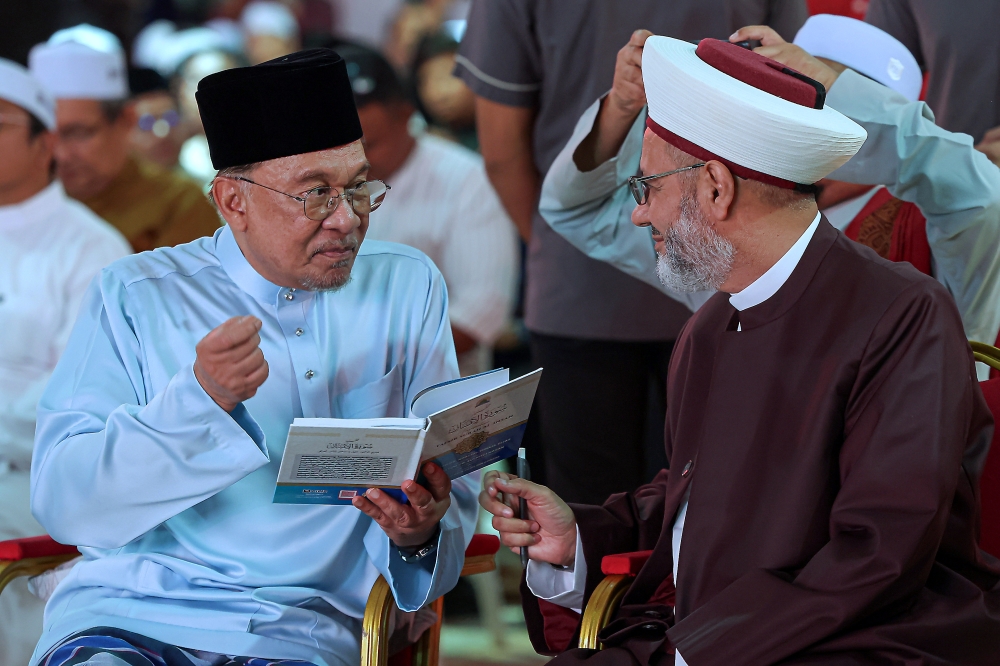
Prime Minister Datuk Seri Anwar Ibrahim has publicly recognised the Grand Imam of Al-Azhar, Ahmed Al-Tayyeb, as a leading international figure in promoting moderate Islamic values and building bridges across religious communities. Speaking in Kuala Lumpur on July 31, the Malaysian leader offered substantial praise for the influential Egyptian cleric's contributions to fostering dialogue and understanding in an increasingly polarised world.
Anwar's endorsement underscores Malaysia's alignment with Al-Azhar's theological outlook, which emphasises reason, pluralism, and coexistence. Al-Azhar, one of Islam's oldest and most prestigious centres of learning established in the 10th century, has historically sought to position itself as a guardian of mainstream Islamic scholarship. Under Al-Tayyeb's leadership since 2010, the institution has intensified efforts to counter extremist interpretations and promote what it characterises as authentic Islamic teaching rooted in tolerance.
The Malaysian Prime Minister's comments reflect broader regional currents within Southeast Asian Islam, where leaders have increasingly sought to articulate a vision of the faith that accommodates modern pluralism and democratic values. Malaysia, as a Muslim-majority nation with significant non-Muslim populations, has invested heavily in narratives of Islamic moderation as both a religious position and a political strategy. By explicitly commending Al-Tayyeb, Anwar signals Malaysia's identification with this intellectual current and positions his administration within a global network of Islamic leadership advocating similar positions.
Al-Tayyeb has been instrumental in various interfaith initiatives, including meetings with Pope Francis and engagement with Western leaders. These diplomatic efforts, while sometimes controversial within conservative Islamic circles, have established him as a voice for reconciliation at a time when religious tensions have driven conflict across the Middle East and beyond. His willingness to engage with non-Muslim authorities and question exclusivist interpretations of Islamic law has made him both a respected figure in Western diplomatic circles and a lightning rod for criticism from Salafi and fundamentalist scholars.
The recognition from Malaysia's Prime Minister carries particular significance given Southeast Asia's geopolitical position. The region hosts hundreds of millions of Muslims alongside substantial Christian, Buddhist, and Hindu populations. Leaders like Anwar have consistently argued that Islamic civilisation is fundamentally compatible with pluralism and democracy, a position that requires intellectual support from respected Islamic authorities. Al-Tayyeb's prominence provides such validation, offering Anwar and other moderate voices a reference point when countering arguments that Islam and liberal democracy are inherently incompatible.
Yet the political context of Anwar's statement warrants examination. The Malaysian Prime Minister has faced persistent challenges from opposition figures and Islamic conservative groups questioning his commitment to Islamic law and values. By publicly celebrating a globally respected Islamic scholar renowned for moderate positions, Anwar attempts to reframe the conversation around Islam in Malaysia away from cultural conservatism and towards theological sophistication and international standing. This manoeuvre suggests an understanding that Malaysia's religious credibility increasingly depends on alignment with globally influential Islamic intellectuals rather than domestic theological credentials alone.
Al-Azhar's institutional influence extends through networks of graduates and affiliated institutions across the Muslim world, including Southeast Asia. Many Malaysian Islamic scholars and officials have studied at the institution or maintain intellectual connections with it. These ties create a constituency within Malaysia's Islamic establishment predisposed toward Al-Tayyeb's interpretive approach, making his views particularly relevant to local religious debates. When Anwar references the Grand Imam approvingly, he activates these networks and signals that Malaysia's religious leadership aligns with Al-Azhar's intellectual trajectory.
The emphasis on religious moderation also speaks to Malaysia's efforts to counter extremist recruitment and ideology. By promoting prominent voices like Al-Tayyeb who explicitly argue against violent interpretations of Islam, the government attempts to offer Muslims an alternative intellectual framework. This approach assumes that theological debate matters for counterterrorism and violence prevention—a proposition supported by various scholars but also contested by those who emphasise political and socioeconomic factors in radicalisation.
Looking forward, Anwar's comments suggest Malaysia will likely deepen its engagement with Al-Azhar and similar institutions. This could manifest through scholarly exchanges, student placements, or formal diplomatic cooperation. Such moves would further embed Malaysia within global networks of moderate Islamic thought while potentially strengthening Anwar's domestic position by associating his administration with respected international Islamic authority. For Southeast Asia more broadly, increased Malaysian-Egyptian Islamic coordination could influence how the region's Muslim-majority nations navigate tensions between Islamic tradition and modern governance.

