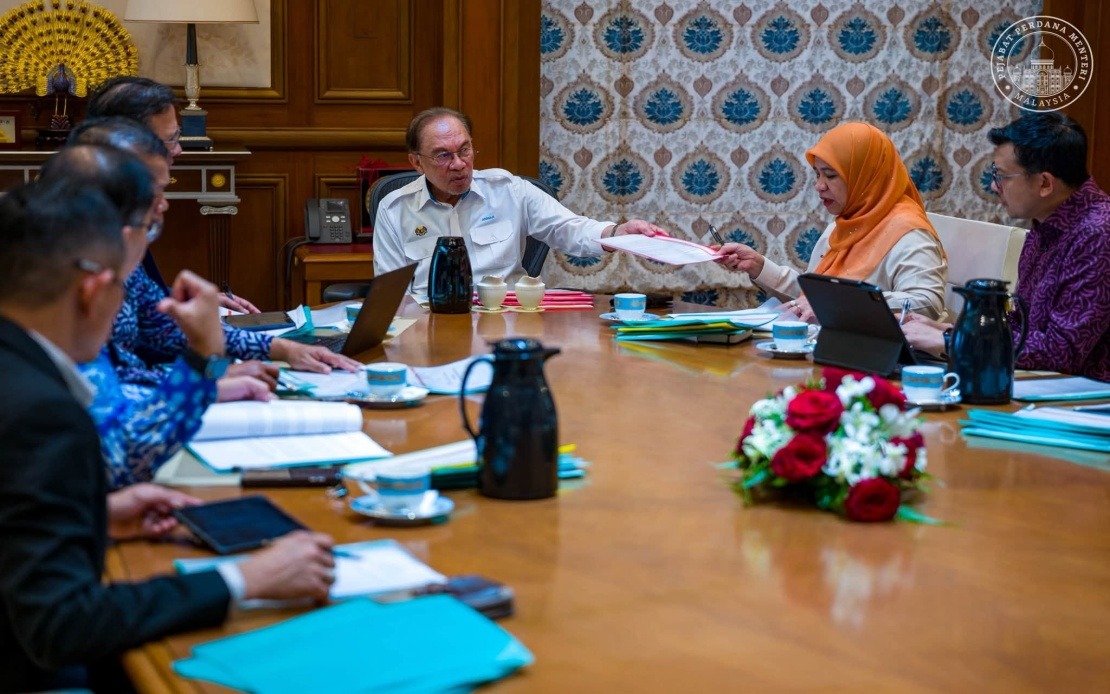
Prime Minister Datuk Seri Anwar Ibrahim has directed the Federal Land Development Authority to expedite resolution of long-standing concerns affecting FELDA settlers, signalling heightened governmental focus on issues that have accumulated within the organisation's schemes over decades. His intervention underscores mounting pressure within the MADANI administration to demonstrate tangible progress on a portfolio affecting hundreds of thousands of families whose livelihoods depend on FELDA-managed agricultural and residential development schemes.
The Prime Minister's statement, conveyed through social media, specifically identified second-generation housing complications and land ownership disputes as pressing matters requiring immediate intervention. These categories of grievances have historically represented significant sources of frustration for FELDA communities, where settler families often grapple with unclear tenure arrangements, inadequate housing stock for younger generations seeking to establish independent households, and bureaucratic obstacles preventing formal land transfer. The explicit naming of these issues signals acknowledgment within the highest levels of government that systemic problems persist despite previous reform initiatives.
Anwar's directive reflects a broader commitment by the MADANI Government to strengthen institutional capacity within FELDA, positioning the authority as a mechanism for rural development that genuinely serves settler interests rather than functioning primarily as an administrative structure. The Prime Minister emphasised that comprehensive examination of each grievance, coupled with transparent solution frameworks, remains essential for rebuilding confidence within communities that have historically voiced concerns about governance and resource allocation within the organisation. This approach suggests potential forthcoming reviews of FELDA's operational procedures and decision-making mechanisms.
Second-generation housing represents a particularly acute challenge within FELDA schemes. Original settlers, now aging, typically occupy primary residential units developed during initial land development phases. Their adult children, however, frequently encounter barriers when attempting to secure housing plots within schemes, leading to family fragmentation and reduced willingness among younger generations to pursue agricultural livelihoods. The absence of systematic mechanisms enabling intergenerational property transfer or expansion has created bottlenecks that administrative reform alone cannot fully resolve without policy reorientation.
Land ownership disputes similarly complicate the FELDA framework. While settlers technically hold interest in their plots, the nature and extent of this ownership often remains ambiguous, particularly regarding inheritance rights, the permissibility of subdivision, and conditions governing commercial transactions. These uncertainties discourage long-term investment in productive improvements and create legal vulnerabilities for settler families navigating inheritance or financial emergencies requiring asset liquidation. Clarifying ownership structures represents a fundamental prerequisite for enhancing settler autonomy and economic security.
The timing of Anwar's intervention carries significance within Malaysia's contemporary political landscape. FELDA represents one of the country's largest government-linked schemes, with deep historical connections to rural constituencies and political support networks. Demonstrating governmental responsiveness to FELDA community concerns addresses constituencies whose political loyalty remains contested ground. Conversely, failure to implement meaningful reforms risks alienating these populations who increasingly compare their circumstances against rapidly urbanising regions offering superior economic opportunities.
For Malaysian policymakers, FELDA's trajectory reflects broader questions about effectiveness of state-directed rural development models. The authority was established during an era emphasising coordinated settlement, centralised administration, and agricultural standardisation. Contemporary expectations, however, demand greater flexibility accommodating diverse settler aspirations, including non-agricultural economic activities, private enterprise, and individual decision-making authority. Reconciling these frameworks requires structural innovations rather than incremental adjustments.
Regional perspectives on FELDA's challenges carry relevance throughout Southeast Asia, where comparable land development authorities operate across Indonesia, Thailand, and the Philippines. These jurisdictions confront analogous tensions between original development mandates and evolving community expectations. Malaysia's willingness to publicly acknowledge FELDA difficulties and commit resources toward resolution provides comparative benchmarks for other Southeast Asian administrators wrestling with similar institutional legacy issues.
Implementation mechanisms for resolving settler grievances remain undefined within the Prime Minister's statement. Whether FELDA will undertake independent internal reviews, commission external investigations, or establish settler consultation mechanisms remains unclear. The substantive resolution pace will depend substantially on whether forthcoming initiatives prioritise comprehensive systemic reform or pursue more limited measures addressing discrete grievances without fundamentally restructuring institutional relationships between authority administrators and settler communities.
For affected FELDA families, particularly second-generation members navigating housing and ownership uncertainties, Anwar's public commitment represents acknowledgment that their concerns warrant governmental attention. However, translating political commitment into operational reform requires sustained attention amid competing policy priorities and budgetary constraints. The effectiveness of any resulting interventions will ultimately determine whether this initiative represents a genuine turning point for FELDA communities or constitutes another rhetorical response to persistent underlying structural challenges.

