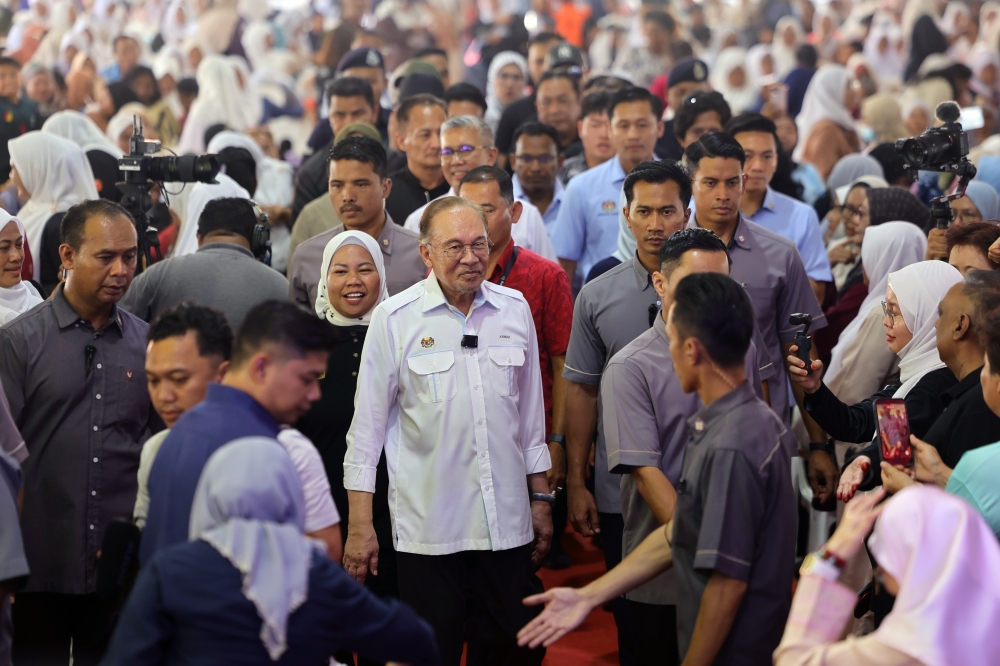
Prime Minister Datuk Seri Anwar Ibrahim has cast serious doubt over bonus payments totalling 13 months awarded to Tabung Haji management, describing the arrangement as a significant violation of the sacred trust placed in those overseeing the pilgrimage fund. His remarks came as the government examines findings from a Royal Commission of Inquiry probe into the fund's operations, signalling that accountability for historical governance failures remains a central concern for the administration.
The comments reflect growing scrutiny of how Tabung Haji, which manages savings and pilgrimage arrangements for millions of Malaysian Muslims, has deployed resources in ways that may not align with the fund's core mission of supporting hajj pilgrims. The 13-month bonus structure has emerged as a particular flashpoint in discussions about institutional discipline and the stewardship of public-facing religious organisations that hold substantial community assets.
Anwar's objections highlight a broader tension between corporate management practices adopted by large Malaysian institutions and the ethical obligations these entities owe to their beneficiary populations. Tabung Haji serves approximately 30 million account holders who contribute savings specifically designated for the pilgrimage journey—one of the Five Pillars of Islam. When management compensation mechanisms divert resources or appear disproportionate, questions inevitably arise about whether leadership has prioritised collective member welfare over institutional efficiency.
The Royal Commission of Inquiry itself was established to investigate a range of governance and operational concerns at Tabung Haji, following years of criticism about investment losses, delayed pilgrimage placements, and administrative inconsistencies. The 13-month bonus revelation forms part of a broader pattern the inquiry examined regarding how senior executives were remunerated during periods when ordinary members faced processing delays and reduced service quality.
From a structural perspective, Malaysia's governance framework for sovereign wealth funds and religious endowment bodies remains evolving. Unlike private corporations where shareholders can challenge board decisions through institutional mechanisms, Tabung Haji members lack direct leverage over executive compensation decisions. This asymmetry creates vulnerability to practices that might face immediate challenge in a different corporate environment. The Prime Minister's intervention signals that government is prepared to use its regulatory authority to enforce stricter standards going forward.
The timing of Anwar's comments coincides with renewed focus on Tabung Haji's investment strategy, which has faced criticism for underperformance relative to benchmarks and for concentration in certain asset classes. Some analysts have argued that bloated administrative costs, including elevated management compensation, reduce capital available for productive investment on behalf of members. If the 13-month bonus represents an outlier departure from standard practice, the inquiry may reveal systemic inefficiencies that compound over time.
For pilgrims themselves, the implications are tangible. Every ringgit not preserved efficiently within the fund translates to reduced purchasing power when members finally embark on hajj, potentially affecting quality of accommodation, transport, or support services. The government's emphasis on fiduciary duty directly connects to this practical impact—management decisions affect whether members receive optimal value from their long-term savings commitment.
Regionally, Malaysia's management of Tabung Haji carries weight as a model for Islamic finance and religious endowment governance across Southeast Asia and beyond. Countries with substantial Muslim populations increasingly scrutinise how domestic organisations deploy funds for religious purposes. Transparency and accountability at Tabung Haji can establish benchmarks that neighbouring nations reference when designing their own governance frameworks for similar institutions.
The political dimension should not be overlooked. Governance failures at culturally significant institutions create opportunities for opposition movements to question an administration's commitment to Bumiputera interests and Muslim welfare. By positioning himself as enforcer of stricter standards, Anwar addresses this vulnerability directly. His intervention suggests the government intends to move beyond simply identifying historical problems toward implementing corrective reforms.
Moving forward, the inquiry's recommendations will likely shape compensation policy across Malaysia's government-linked institutions and religious organisations. If the 13-month bonus structure is formally declared inappropriate, precedent may be set for reviewing similar arrangements elsewhere. This could trigger broader debates about executive remuneration across the Islamic financial services sector and religious endowment bodies generally.
The Tabung Haji case ultimately reflects broader governance challenges facing Malaysia's institutional landscape. As organisations holding public trust grow larger and more complex, the gap between professional management standards and community expectations can widen. Anwar's public criticism signals that closing this gap—ensuring decision-makers prioritise beneficiary interests above all else—remains a defining challenge for Malaysia's ongoing institutional reform agenda.

