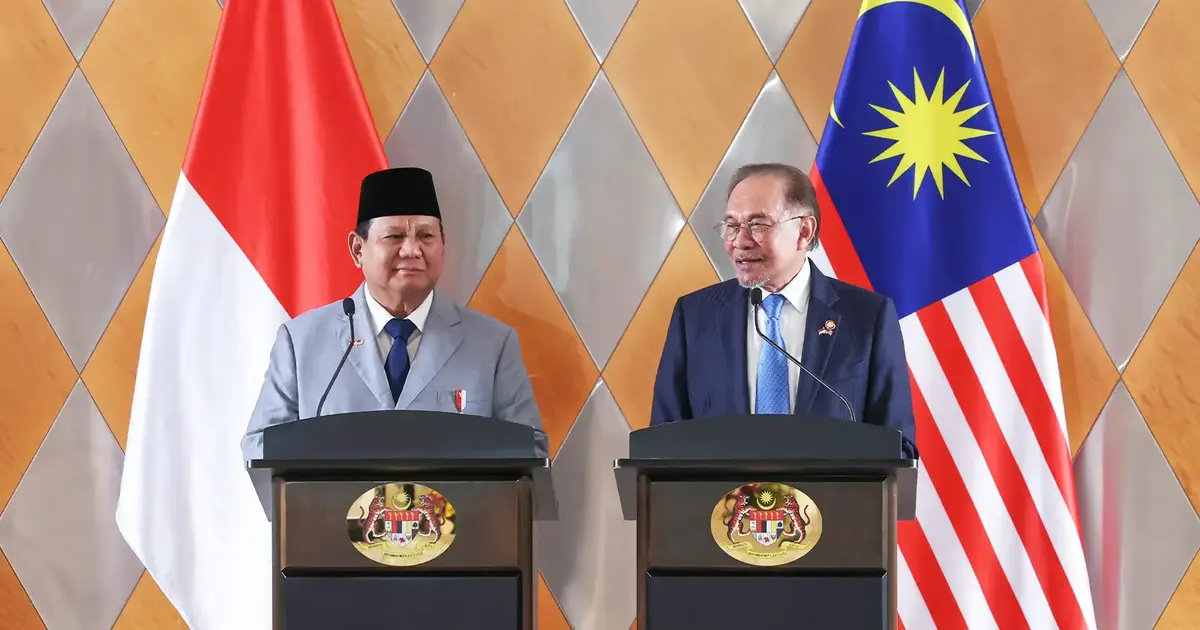
Prime Minister Anwar Ibrahim has escalated concerns about the Federal Land Development Authority's (Felda) exposure to the Eagle High venture by directly communicating with Indonesian President Prabowo Subianto, signalling that the cross-border investment dispute has become a matter of bilateral diplomatic importance. The correspondence underscores mounting anxiety within Malaysia's leadership over what could emerge as a defining financial setback for the state agency if negotiations fail to yield a satisfactory resolution.
According to Anwar, Felda stands to forfeit more than RM2 billion invested in the Eagle High project, with recovery prospects limited to approximately RM200 million should current trajectories persist. This stark arithmetic represents a potential loss ratio of approximately 90 percent on the fund's total exposure, a scenario that would constitute one of the most significant capital destruction events in the organisation's operational history. The magnitude of potential loss reflects the depth of misalignment between Felda's original investment thesis and the venture's actual performance metrics.
Felda, which manages approximately 861,000 hectares of land and oversees the welfare of some 112,000 settler families, has traditionally functioned as a cornerstone institution for rural development in Malaysia. The Eagle High investment represented a strategic diversification effort beyond traditional plantation operations, reflecting the agency's attempt to modernise its portfolio and generate returns across multiple asset classes. However, the venture's struggles have exposed the risks inherent in international expansion without adequate due diligence mechanisms or robust governance frameworks.
The timing of Anwar's intervention suggests that routine diplomatic channels and corporate negotiations have proven insufficient to unlock a viable solution. By elevating the matter to presidential level, the Malaysian Prime Minister is effectively signalling that resolution requires high-level political engagement and potentially governmental involvement from Indonesia's side. This diplomatic approach reflects the complexity of cross-border investment disputes, where contractual remedies alone may prove inadequate when substantial sums are at stake.
The Eagle High venture exemplifies broader challenges confronting state-owned enterprises across Southeast Asia as they expand beyond domestic markets. These institutions often operate with mixed mandates balancing commercial returns against social objectives, a tension that can complicate investment decision-making. When overseas ventures encounter difficulties, the intersection of commercial failure and political accountability creates pressure on governments to intervene, even when such involvement might distort normal market-based resolution mechanisms.
For Malaysian observers, the Felda situation carries particular resonance given the organisation's historical role in rural poverty alleviation and agricultural development. The potential loss of RM2 billion represents foregone resources that could have supported settler communities, funded infrastructure improvements, or enabled enterprise diversification within Malaysia itself. The reputational dimension compounds financial concerns, as high-profile investment failures can erode public confidence in institutional management and governance capabilities.
The decision to involve President Prabowo directly indicates that Indonesian authorities may need to facilitate a negotiated settlement through governmental mechanisms rather than relying solely on corporate restructuring or contractual renegotiation. This approach acknowledges that some investment disputes, particularly involving state entities, require political resolution frameworks that transcend conventional business dispute resolution. It also reflects the reality that Indonesian law, regulatory authorities, and governmental entities likely play significant roles in any Eagle High restructuring scenario.
From a regional perspective, the Felda-Eagle High case serves as a cautionary tale for other Malaysian institutions contemplating international expansion. The incident underscores the importance of rigorous pre-investment analysis, continuous monitoring protocols, and clear exit strategies for overseas ventures. It also highlights how investments that appear sound at inception can deteriorate significantly when operating environments shift, regulatory frameworks change, or counterparties face financial stress.
The RM200 million recovery figure that Anwar referenced presumably reflects either asset valuations under stress scenarios or contractual arrangements that guarantee minimum repayment amounts in distressed situations. This residual value may depend on successful conclusion of negotiations with Indonesian stakeholders, or it might represent secured claims against specific assets within the Eagle High structure. Either way, the disparity between original investment and realistic recovery underscores the severity of the value destruction that has occurred.
Anwar's written communication to Prabowo carries diplomatic significance beyond the immediate investment issue. It demonstrates Malaysia's willingness to engage Indonesian leadership on matters affecting Malaysian entities and citizens' welfare, while acknowledging that bilateral cooperation can facilitate resolution of complex commercial disputes. The gesture also reflects evolving institutional relationships between the two countries' governments in managing cross-border business challenges.
Moving forward, the resolution of the Felda-Eagle High situation will likely establish precedents for how Malaysian state entities approach international ventures and how the government balances commercial losses against broader policy objectives. The outcome will also test the efficacy of presidential-level diplomatic engagement in resolving investment disputes, and whether such interventions can yield outcomes superior to market-based or contractual mechanisms alone.

