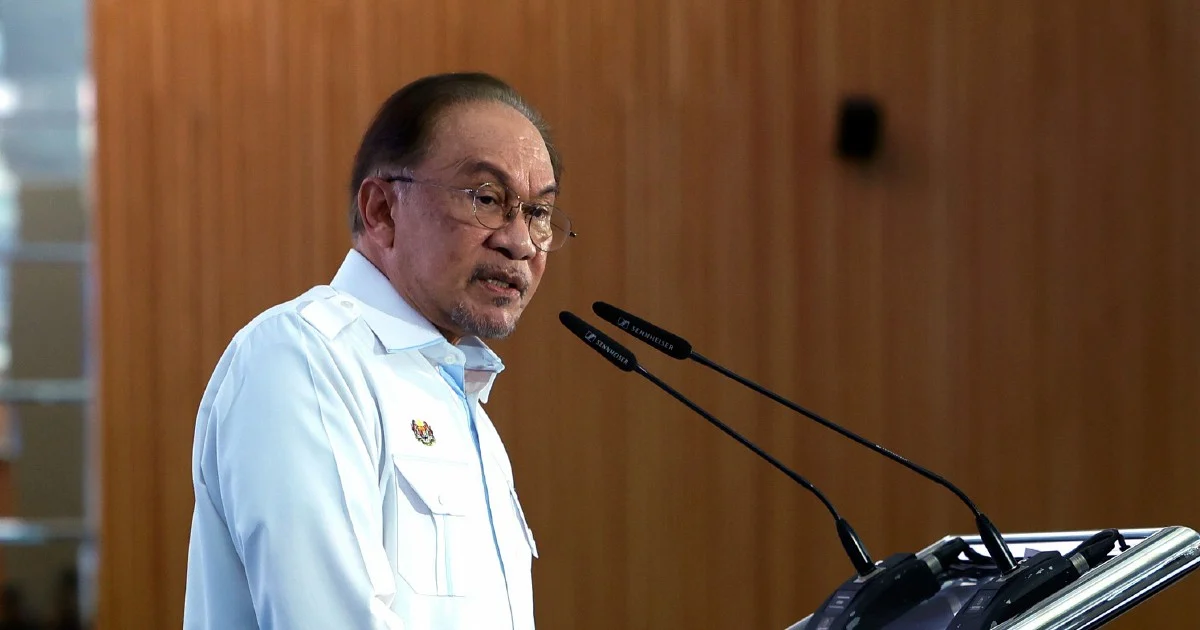
Prime Minister Datuk Seri Anwar Ibrahim has firmly rejected allegations that the federal government shows favoritism in allocating development resources to different states, asserting that the distribution mechanism operates according to transparent and equitable principles. The denial comes amid ongoing scrutiny over how infrastructure budgets and developmental initiatives are shared among Malaysia's 13 states and three federal territories, a matter that regularly generates debate during parliamentary sessions and state assemblies.
The issue of development fund allocation has proven consistently contentious in Malaysian politics, particularly as states governed by opposition parties periodically express frustration over what they characterise as inadequate federal support for their infrastructure and social programmes. The allocation methodology touches on fundamental questions of governance equity and federalism, with stakeholders across the political spectrum scrutinising how development money flows from the centre to peripheral regions.
Anwar's public dismissal of such claims represents an attempt to reinforce public confidence in the administration's commitment to balanced regional development. The prime minister's position suggests that allocation decisions are based on standardised criteria rather than political considerations, though he did not elaborate extensively on the specific metrics used to determine which states receive funding allocations or how competing demands are prioritised within budget cycles.
Malaysia's development allocation framework involves complex calculations incorporating factors such as population density, existing infrastructure levels, economic indicators, and geographical considerations. However, opposition-held states frequently argue that political factors inadvertently influence these distributions, disadvantaging regions where the ruling coalition lacks control. This tension reflects broader anxieties about whether federal resources genuinely serve national interests or serve as tools for political advantage.
The premier's remarks carry particular significance given Malaysia's constitutional framework, which distributes power between federal and state authorities. The ability of the central government to control development fund disbursement represents one of the most consequential tools available to the federal administration, making equity in allocation crucial to maintaining public faith in fair governance across the federation.
For Malaysian citizens and state administrators alike, the distribution of development resources directly impacts observable outcomes—from school infrastructure and healthcare facilities to transportation networks and utilities. States receiving smaller allocations inevitably report capacity constraints in addressing citizen needs, creating visible disparities that fuel public discourse about fairness and political favouritism.
Anwar's assertion of equitable treatment requires credibility through demonstrable evidence, though such evidence remains frequently contested. Independent analysts have occasionally examined allocation patterns, revealing complex stories where poverty indices, population sizes, and development needs sometimes diverge significantly from actual fund distributions. The government maintains that allocation decisions account for these variables objectively, yet the perception of inequality persists across certain constituencies.
For Southeast Asian observers, Malaysia's allocation debates offer insights into how federal systems manage central-state relations within diverse political contexts. The question of resource distribution fairness resonates across the region, where multiple nations employ federal or quasi-federal structures while managing tension between centralised control and regional autonomy demands.
The prime minister's position also reflects broader policy continuity, as questions about development equity have animated Malaysian political debate across successive administrations. Each government has confronted similar accusations, suggesting that structural factors—rather than individual political leadership—may contribute to perception gaps between federal intentions and regional experiences.
Moving forward, enhanced transparency in allocation methodology could potentially address persistent scepticism. Should the federal government publish detailed breakdowns explaining how specific states received particular funding amounts, with clear reference to objective criteria, such disclosure might reduce suspicion and strengthen public confidence in the process.
The allocation debate ultimately touches on Malaysia's fundamental commitment to inclusive federalism. Whether development resources flow to states based on genuine national needs assessment or reflect unstated political calculations remains a critical question for Malaysian governance, one that Anwar's dismissal of bias allegations neither definitively resolves nor adequately addresses through substantive detail.

