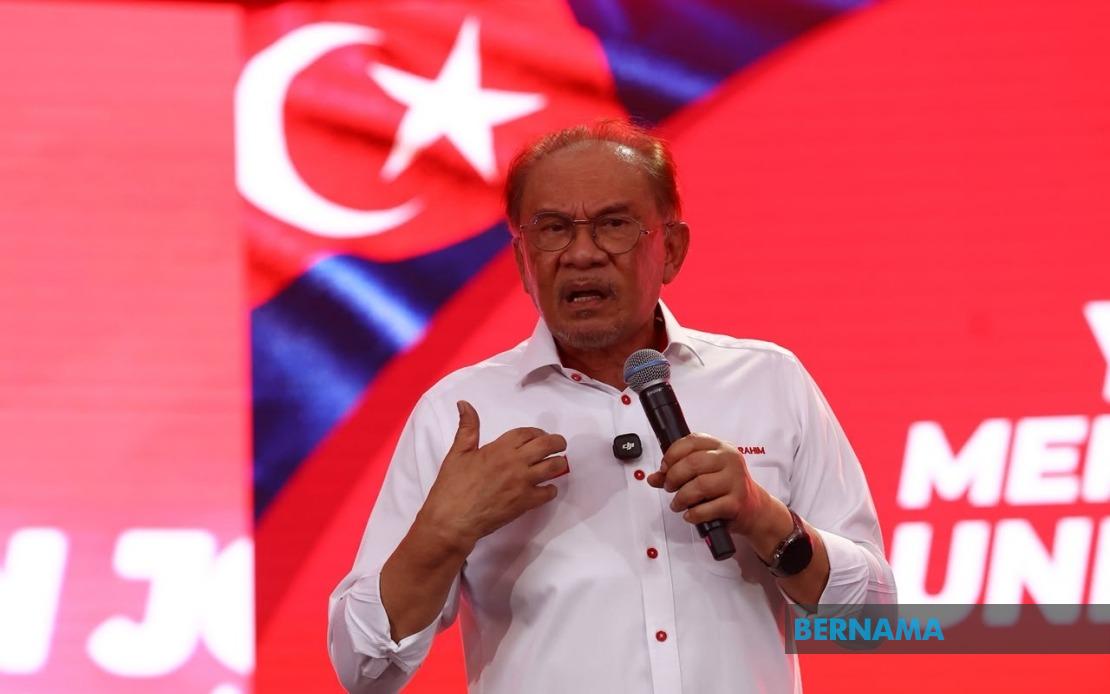
Prime Minister Datuk Seri Anwar Ibrahim has dismissed widespread reports suggesting he acquired a new luxury BMW for personal consumption, dismissing the allegations as baseless rumours spread through social media. Speaking during a campaign event in Senggarang, Batu Pahat on July 9 for the forthcoming 16th Johor state election, Anwar directly addressed the controversy by characterizing the vehicle in question as an older model rather than a recent purchase. His emphatic denial underscores growing public scrutiny of government officials' asset management, particularly given the prominence of anti-corruption messaging in his political platform.
The Prime Minister's clarification reveals a broader pattern of defensive positioning on personal asset ownership. Anwar highlighted the inconsistency between accusations of luxury vehicle ownership and his political messaging around poverty alleviation and equitable resource distribution. By framing the claims as lies deliberately circulated to damage his reputation, he attempted to redirect public conversation away from questions about official vehicle usage and towards the credibility of anonymous social media allegations. This rhetorical strategy reflects the heightened sensitivity surrounding personal conduct among senior government figures in Malaysia's competitive political environment.
A significant distinction emerged during Anwar's remarks regarding the Mercedes-Benz he currently operates. Rather than claiming ownership, the Prime Minister emphasized that the vehicle represents a royal gift from His Majesty Sultan Ibrahim, King of Malaysia. This distinction carries considerable importance in Malaysian governance protocol, as it differentiates between personal assets and official state property. By registering the Mercedes-Benz under the Prime Minister's Department rather than his personal name, Anwar sought to demonstrate compliance with governance standards and separation between private wealth and official assets.
The Prime Minister's Department (JPM) and the Ceremonial and International Conference Secretariat Division (BIUPA) had previously issued an official statement clarifying the BMW's status as existing government infrastructure. According to the departmental announcement released on Monday, the vehicle previously utilized by the prime minister constitutes an established government asset rather than a newly procured official vehicle. This institutional confirmation represents an attempt to provide administrative authority to the Prime Minister's personal denials, creating a paper trail of official documentation supporting his claims about the vehicle's longstanding status within the government fleet.
BIUPA's designation of the BMW as logistics support under their management portfolio illustrates the complex infrastructure surrounding prime ministerial operations. Government vehicles allocated to official state representatives serve specific ceremonial, security, and operational functions that extend beyond individual convenience. The clarification that this particular vehicle belonged to BIUPA's managed assets rather than newly acquired executive transport suggests administrative efficiency and resource allocation consistency within government operations. This classification carries implications for how public resources are audited and tracked across government departments.
Anwar's explicit statement rejecting comparisons to officials who "siphon off and steal the people's money" introduces a comparative ethical dimension to the controversy. By positioning himself distinctly from corrupt officials, the Prime Minister invoked broader anti-corruption messaging that formed a cornerstone of his political coalition's election platform. This rhetorical move attempts to reconcile questions about personal asset usage with foundational claims about governance integrity and public financial stewardship. However, the necessity of such detailed clarifications suggests that public confidence in official narratives surrounding government asset management remains fragile.
The timing of Anwar's remarks, delivered during a "Yok! Meriahkan Johor! Undi Harapan" programme organized in conjunction with Johor state election campaigning, reflects the political context shaping the controversy. Election periods typically intensify scrutiny of leadership figures, making personal asset ownership narratives particularly potent campaign fodder. Opposition actors and social media communities weaponize such allegations to undermine government credibility during competitive electoral phases. The prominence Anwar gave to addressing the BMW claims demonstrates how effectively such narratives can penetrate political discourse, requiring direct refutation from the highest government levels.
Packatan Harapan's communications apparatus actively supported the Prime Minister's position, with Communications Minister and PH communications director Datuk Fahmi Fadzil attending the Senggarang campaign event. The coalition's presence at the location where Anwar addressed the vehicle controversy indicates coordinated messaging strategy across coalition structures. By appearing alongside the Prime Minister during his denial, coalition leadership visibly endorsed his characterization of the claims as misinformation. This organizational response demonstrates how government and ruling coalition entities mobilize institutional resources to counter narratives that threaten leadership credibility.
The Johor state election scheduled for Saturday, July 13, represented the immediate political context where these asset ownership narratives circulate with heightened consequence. Pakatan Harapan's contestation of all 56 state seats elevated stakes for coalition performance in a politically significant state. Any narrative undermining leadership credibility carries potential consequences for voter sentiment across concurrent electoral contests. The BMW controversy, however substantively resolved through official clarifications, illustrated how personal asset management can become entangled with broader electoral calculations and public perception of governance competence.
For Malaysian observers and regional governance analysts, the incident underscores persistent tensions between transparency requirements and official privilege surrounding government asset utilization. While institutional clarifications provide administrative documentation, they address only technical questions about vehicle ownership classification rather than fundamental public concerns about resource allocation priorities. The necessity of Prime Minister-level engagement with such technical asset management issues suggests gaps in administrative communication protocols or public confidence in departmental disclosures. Going forward, more proactive official documentation of government vehicle fleets and their utilization may prove essential for preventing similar controversies from escalating through social media channels.
The controversy also reflects broader patterns within Malaysian political discourse where personal conduct narratives achieve political salience with limited substantive foundation. Social media's capacity to disseminate unverified claims about government officials operates faster than official institutional responses, creating persistent credibility deficits regardless of eventual clarifications. This dynamic benefits opposition actors seeking to erode ruling coalition support while placing government communicators in reactive positions. Anwar's direct public engagement with the vehicle ownership question, while politically necessary, perhaps inadvertently amplified attention to a matter that official departmental statements might have otherwise contained within administrative channels.

