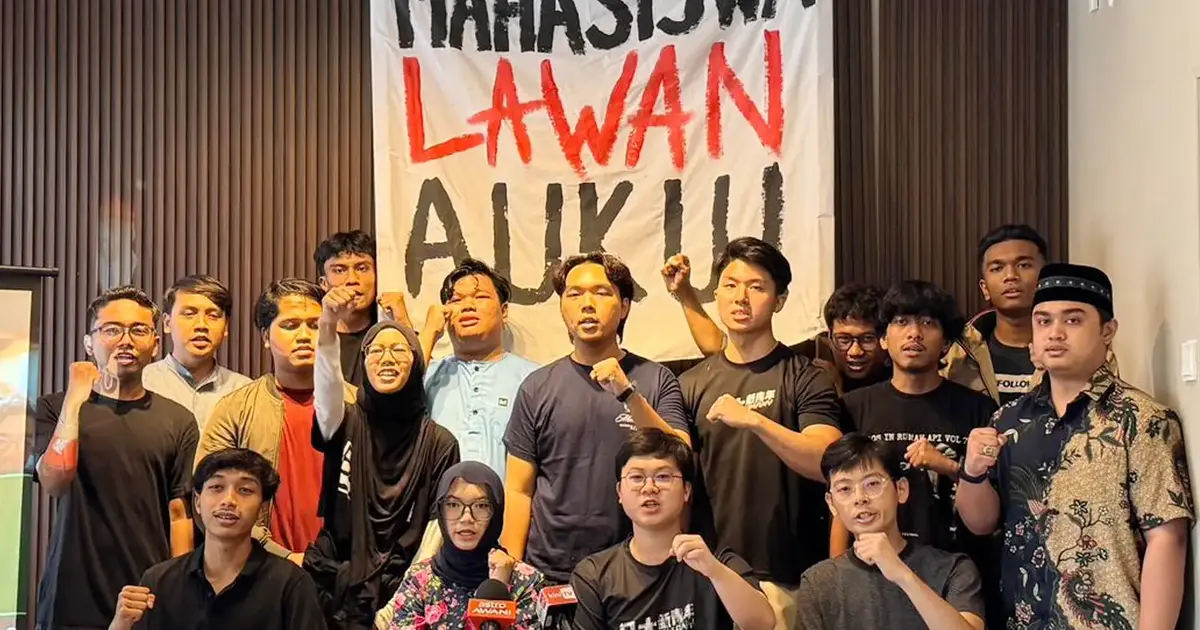
Prime Minister Anwar Ibrahim has signalled his administration's commitment to avoiding fresh legislative measures that would place constraints on students, marking a significant departure from the approach embodied in the Auku Act. The declaration arrives in the wake of the government's decision to dismantle the long-standing law that had governed student conduct and activism, suggesting a shift towards greater liberalisation in the nation's approach to tertiary education and youth participation in civic affairs.
The Auku, or the Universities and University Colleges Act, had served as a primary legal instrument for regulating student behaviour on campuses for decades. Its provisions had been widely criticised by civil liberties advocates, student unions, and international observers as excessively restrictive, limiting freedom of expression and assembly among university populations. The government's determination to repeal the legislation reflected growing recognition that contemporary approaches to student governance require more nuanced frameworks than blanket prohibitions.
Anwar's explicit rejection of new restrictive statutes represents a notable policy stance in Malaysia's ongoing democratic evolution. By committing against legislation specifically targeting student populations, the Prime Minister appears to be charting a course that emphasises trust in young people's judgment whilst maintaining institutional stability on campuses. This posture distinguishes his administration from predecessors that increasingly relied on legislative restrictions to manage student activism and political expression.
The abolition of Auku had been anticipated as a watershed moment for Malaysian higher education, with many stakeholders expecting a period of legislative uncertainty. Students and their representatives had campaigned extensively for the law's removal, arguing that its restrictions hindered intellectual discourse and democratic participation. Anwar's assurance eliminates one potential source of anxiety—that the government might simply replace one restrictive regime with another under different terminology or framework.
However, the Prime Minister's position does not necessarily indicate an absence of regulatory oversight on campuses. University administrations retain separate authority through institutional policies and regulatory frameworks that operate outside the Auku apparatus. These mechanisms, including student codes of conduct and disciplinary procedures, continue functioning and typically receive less public scrutiny than legislative measures. The distinction between statutory restrictions and institutional governance becomes particularly important in assessing the practical implications of Anwar's pledge.
The commitment also carries implications for Malaysia's international standing regarding academic freedom and youth rights. Regional peers and global observers have increasingly scrutinised university policies across Southeast Asia, with particular attention to whether governments respect intellectual pluralism and student expression. By foregoing new restrictive legislation, Malaysia may position itself as more aligned with international norms around tertiary education governance, potentially enhancing its attractiveness to international students and academic collaborators.
For the broader Malaysian political landscape, Anwar's stance reflects calculated positioning that acknowledges youth constituencies as significant political actors. University students and recent graduates constitute an increasingly important demographic bloc, and their grievances regarding representation and participation carry electoral consequences. The decision to avoid new restrictions serves both ideological and pragmatic purposes, appealing to more progressive voter segments whilst avoiding the political cost of introducing unpopular legislation.
Yet implementing this commitment presents complex challenges. Campus administrators, political figures within and outside government, and security agencies may face pressure to control student activities through alternative mechanisms when specific incidents provoke concern. The absence of new legislation does not prevent creative use of existing laws, such as provisions related to public order or national security, to constrain student conduct indirectly. Observers will likely scrutinise whether the government honours its pledge or circumvents it through enforcement of broader statutes.
Regionally, Malaysia's approach will influence university governance discussions across Southeast Asia. Countries including Indonesia, Thailand, and the Philippines continue grappling with similar questions about balancing student freedoms against institutional stability. Malaysia's experience in moving beyond Auku without implementing replacement restrictions may offer lessons, though each nation's distinct political circumstances will shape outcomes differently.
The Prime Minister's declaration also reflects evolving understanding within Malaysia's political establishment regarding generational change and governance expectations. Younger cohorts of Malaysians demonstrate different attitudes towards authority and institutional legitimacy than predecessors, with greater emphasis on transparency, participation, and individual agency. Policies perceived as paternalistic or overly controlling face increased resistance and potentially delegitimise institutions that enforce them. Anwar's position appears responsive to these shifting expectations.
Looking ahead, the practical meaning of Anwar's commitment will depend heavily on implementation and restraint across various government agencies. University leaders, law enforcement, and political operatives must resist temptations to circumvent the principle through alternative mechanisms. Building institutional cultures that respect student expression whilst maintaining campus order requires more sophisticated approaches than legislation—including dialogue, clear communication, and trust-building.
The months and years following Auku's abolition will be instructive for assessing whether Malaysian democracy can accommodate expanded student freedoms without sacrificing institutional functioning. Anwar's pledge to avoid new restrictive laws represents necessary but insufficient commitment to meaningful reform. Its ultimate significance will emerge through how thoroughly the government refrains from achieving through indirect means what it has renounced doing directly.

