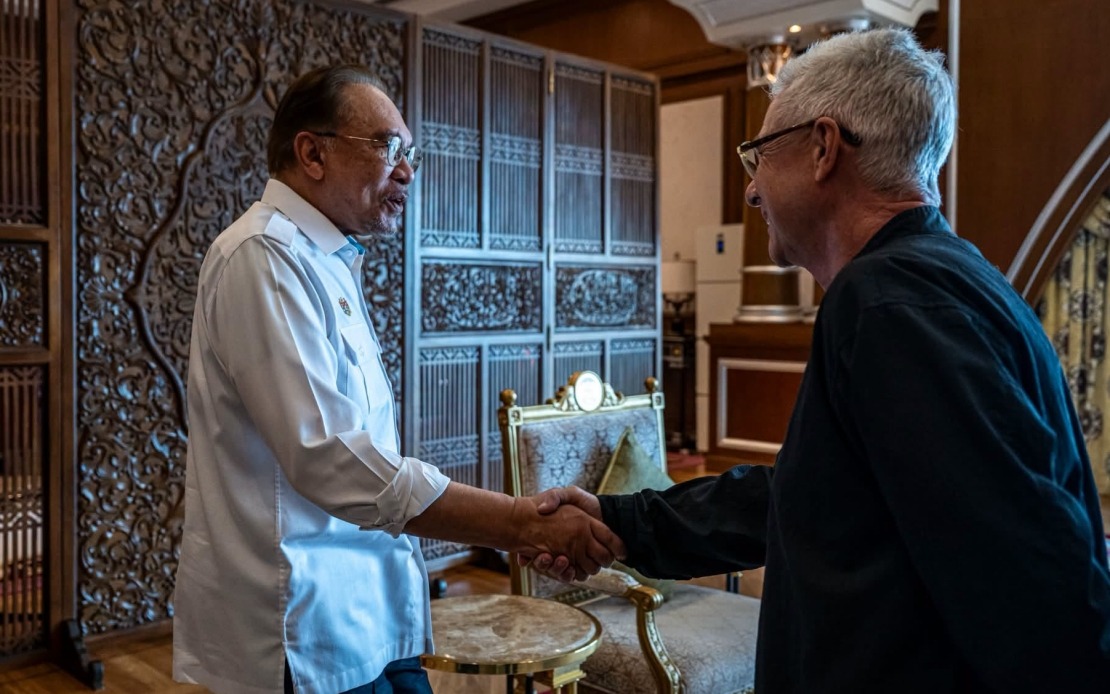
Prime Minister Datuk Seri Anwar Ibrahim held discussions with Singapore Grand Prix Executive Director Michael Roche on Tuesday, seeking to adopt proven management practices as Malaysia prepares to host the Formula 1 Gulf Air Bahrain Grand Prix at Sepang International Circuit in October. The encounter reflects Kuala Lumpur's determination to extract maximum value from what it views as a transformative international motorsports event, leveraging Singapore's established track record in staging world-class racing championships.
The meeting underscores Malaysia's broader strategic intent to position itself as a premier motorsports destination in Southeast Asia following the Malaysian Grand Prix's absence from Formula 1's calendar since 2017. That decade-long hiatus stemmed from escalating hosting expenditures and licensing obligations that proved economically unsustainable under the previous arrangement. The opportunity to co-host the Bahrain Grand Prix represents a recalibration of the nation's approach, potentially offering a lower-cost pathway back into Formula 1's elite competition schedule through collaborative arrangements with other circuits or national jurisdictions.
According to Anwar's statement, Malaysian authorities view the October event not merely as a sporting occasion but as a cornerstone initiative for broader economic rejuvenation. Officials project substantial advantages across multiple economic channels: tourism inflows from international visitors, labour market expansion as hospitality and logistics sectors scale operations, stimulation of business activity among suppliers and service providers, and enhanced perceptions of Malaysia's business environment among global investment communities. These anticipated gains align squarely with the national Visit Malaysia 2026 campaign, which targets substantially elevated visitor arrivals and spending during that calendar year.
The diplomatic and economic dimensions of this engagement carry particular significance for Southeast Asian readers. Singapore's dominance in hosting the annual Marina Bay street circuit Grand Prix—consistently ranked as one of motorsports' most prestigious and lucrative events—provides a natural reference point for Malaysian planners. The city-state's operational excellence, security protocols, infrastructure management, and stakeholder coordination offer documented lessons that other aspirational racing venues can study. By directly consulting with Singapore's leadership, Malaysia signals both respect for its neighbour's institutional competence and pragmatic willingness to adopt transferable best practices rather than reinventing operational approaches.
The geopolitical context surrounding this Formula 1 commitment warrants particular attention. The original scheduling of the 2026 Bahrain Grand Prix for April at the Bahrain International Circuit was reshuffled to October specifically because of escalating regional tensions in West Asia. Malaysia's willingness to assume hosting responsibilities despite these upstream complications demonstrates commitment to sporting diplomacy and suggests confidence in the event's ultimate viability. The October timing at Sepang may actually prove advantageous, avoiding Bahrain's intense summer heat while capitalizing on Malaysia's cooler season to attract international spectators and media contingents.
The structural arrangement itself—a collaborative partnership between Malaysia and Bahrain—represents an innovative governance model that differs from traditional single-nation hosting formats. This type of bilateral cooperation potentially reduces the financial burden on any single host nation while distributing organizational responsibilities and sharing revenues. Should this model succeed, it could establish a template for other aspiring Formula 1 destinations, particularly in the Asia-Pacific region where individual governments face constraints in sustaining costly championship hosting arrangements independently.
Anwar's explicit commitment to ensuring the Sepang event meets international standards reflects awareness that Malaysia's motorsports reputation partly suffered during the 2017 withdrawal. Reclaiming credibility as a capable, professional host requires demonstrable execution of world-class logistics, safety management, and spectator experience. The Prime Minister's personal involvement and high-profile engagement with Singapore's expertise send clear signals to Formula 1 authorities, circuit partners, and international investors that this venture commands senior governmental attention and institutional support.
From a Malaysian perspective, the economic implications merit scrutiny beyond headline announcements. The 2026 timeframe provides roughly eighteen months for comprehensive preparation, facility upgrades, workforce training, and regulatory framework adjustments. Sepang International Circuit will likely require substantial refurbishment to align with contemporary Formula 1 technical and safety specifications, given the twelve-year interval since it last hosted the Malaysian Grand Prix. Construction timelines, cost escalations, and supply chain disruptions could materialise as critical variables determining project viability.
The broader motorsports ecosystem in Malaysia stands to benefit considerably if the October 2026 event succeeds. Enhanced international recognition could attract additional racing championships, automotive sponsorships, and engineering investments to the country. Regional competitors from Indonesia, Thailand, and Vietnam may view Malaysia's re-entry into Formula 1 as raising competitive stakes for their own sporting tourism aspirations. Within ASEAN, motorsports infrastructure development and event hosting capabilities increasingly correlate with broader perceptions of national economic dynamism and governance competence.
Apart from the immediate economic considerations, this initiative carries symbolic weight for Malaysia's post-pandemic recovery narrative. International sporting events of Formula 1's calibre generate media coverage reaching billions globally, offering unprecedented exposure for Malaysian tourism, commercial enterprises, and technological capabilities. The national brand rehabilitation through successful event hosting represents an intangible asset complementing concrete economic gains. Anwar's emphasis on strengthening Malaysia's positioning as a regional motorsports hub reflects understanding that competitive advantage in attracting similar prestigious international events requires demonstrable operational excellence from comparable prior instances.
Successful execution of the October 2026 Bahrain Grand Prix at Sepang would likely generate momentum for Malaysia's longer-term aspirations regarding permanent Formula 1 calendar reinstatement. While the current arrangement involves a bilateral partnership with Bahrain, securing this single marquee event could establish the foundation for future negotiations with Formula 1 authorities and the FIA regarding regular Malaysian Grand Prix resumption. The intelligence gathering and operational knowledge transfer occurring through consultations with Singapore's Executive Director Michael Roche and his team represent essential groundwork for these extended strategic objectives.

