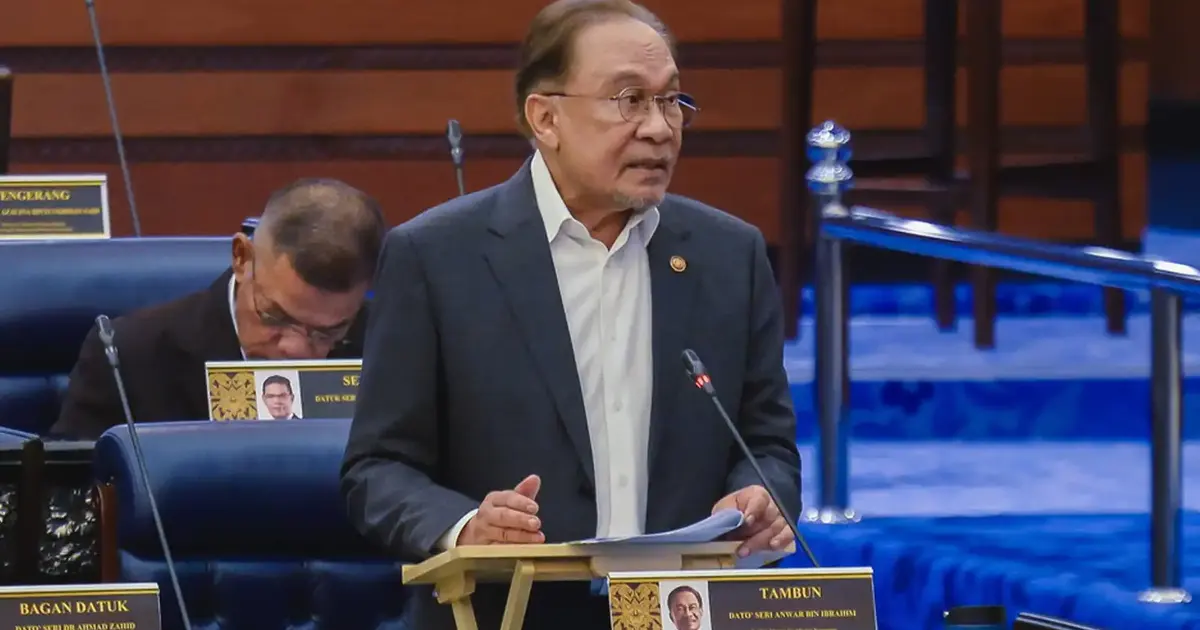
Prime Minister Anwar Ibrahim has drawn a clear line on fiscal responsibility, declaring that Putrajaya will not automatically assume financial burdens created by state governments' project decisions or cost overruns. His position marks a tightening of federal oversight on how state authorities manage development budgets and represents a departure from past practices where the federal centre occasionally absorbed shortfalls from state initiatives.
Anwar's stance centres on the principle that each level of government must operate within its means and accept accountability for its own policy choices. When state administrations embark on infrastructure or development projects, they do so with agreed-upon allocations determined at the outset. If those projects subsequently encounter cost pressures—whether through inefficiency, poor planning, or market forces—the states themselves must address those challenges rather than appealing to federal coffers for emergency support.
The Prime Minister's emphasis on renegotiation rather than automatic supplementation represents a more disciplined approach to intergovernmental finances. Under this framework, if a state finds itself unable to complete a project within budget, it would need to return to federal authorities and justify why additional funds are necessary. Such renegotiations would presumably involve detailed scrutiny of project management, spending efficiency, and whether the original cost estimates were realistic or reflected poor due diligence.
For Malaysian states, this announcement carries significant implications for development planning and fiscal strategy. State governments must now budget more conservatively and build in larger contingency reserves rather than relying on federal rescue mechanisms. This could force states to prioritize fewer, better-planned projects over ambitious multi-initiative portfolios that depend on cost-sharing assumptions. Particularly vulnerable are smaller states with limited revenue bases and those relying heavily on federal transfers for their development budgets.
The policy also reflects broader concerns about financial discipline within the Malaysian federation. Over recent years, various states have experienced project delays and cost overruns—from infrastructure schemes to administrative facilities—that ultimately required federal intervention. By signalling that such interventions will no longer be automatic, Anwar is attempting to instil greater accountability at the state level and discourage wasteful or poorly managed initiatives from the outset.
From a federal perspective, the approach eases pressure on Putrajaya's own budget constraints. Malaysia's federal government has faced competing demands for spending, including debt servicing, national infrastructure commitments, and social programmes. By declining to subsidize state-level cost overruns, the federal administration can better protect its fiscal space for national priorities and reduce the likelihood of breaching its own deficit targets.
However, the policy could create tensions between Kuala Lumpur and state capitals, particularly those governed by opposition parties or those with historical grievances over allocation shares. States may argue that federal underestimation of costs during initial budget-setting reflects shortcomings at both levels and should therefore trigger shared responsibility. Some may point to federal agencies that have benefited from supplementary allocations for their own projects as evidence of inconsistent standards.
The renegotiation requirement also introduces an element of unpredictability for state administrations. Projects facing genuine cost pressures due to factors beyond their control—such as global commodity price spikes affecting construction materials or unforeseen site conditions—would still need to navigate a potentially contentious renegotiation process. This could delay project completion or force states to reduce scope, potentially compromising the original policy objectives.
Internally, Anwar's announcement suggests the federal government has undertaken a review of its exposure to state-level liabilities and determined that tighter boundaries are warranted. This aligns with broader fiscal consolidation efforts by the Anwar administration, which has attempted to restrain discretionary spending and focus on debt reduction. The policy sends a signal to state governments that the era of relatively easy access to federal supplementary funds has ended.
Regionally, Malaysia's approach to federal-state fiscal relations may offer lessons for other Southeast Asian federations grappling with similar dynamics. The region includes several nations where central governments struggle with the costs of propping up subnational governments, and Malaysia's attempt to enforce clearer accountability lines could resonate with policymakers elsewhere.
Moving forward, state governments will need to recalibrate their approach to project planning and execution. Greater emphasis on feasibility studies, realistic cost estimation, and project management capacity will become essential. States may also seek to strengthen their own revenue bases through improved tax collection or enhanced own-source revenue generation, reducing dependence on federal transfers and creating greater autonomy in development spending decisions.
Anwar's declaration ultimately reflects a philosophical shift towards treating state governments as mature fiscal actors responsible for their own choices. While this may impose short-term constraints on state development ambitions, it signals a commitment to more rational budgeting practices across the federation. The test will be whether states respond by improving their financial management or whether the policy creates friction that complicates other aspects of federal-state cooperation.

