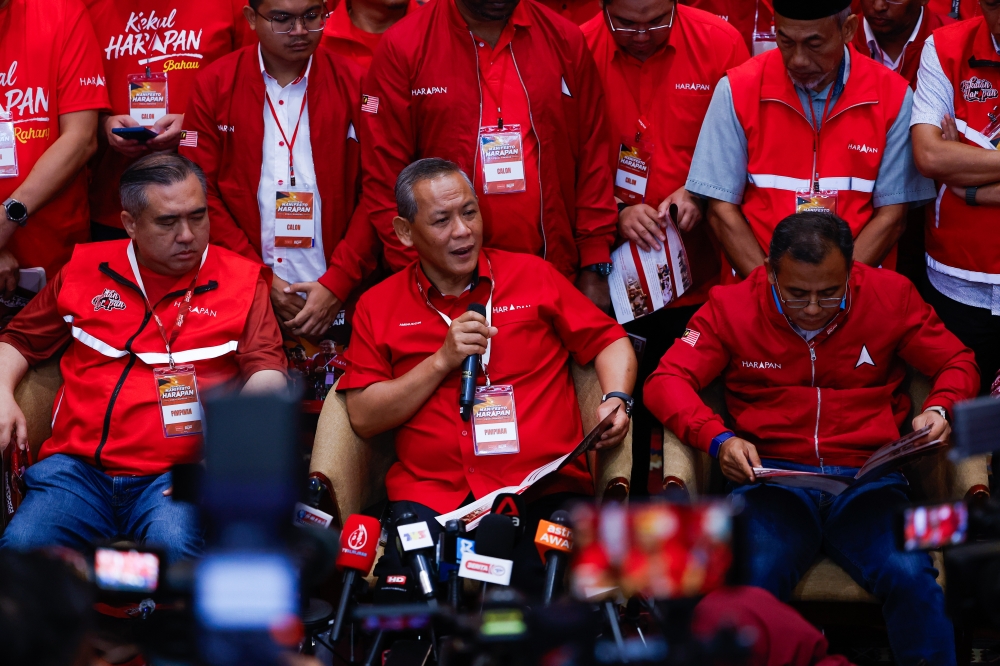
Prime Minister Datuk Seri Anwar Ibrahim is set to join Pakatan Harapan's electoral campaign in Negeri Sembilan on Wednesday, marking the coalition's continued push to strengthen its political position ahead of upcoming contests. The announcement, made by Selangor Menteri Besar Aminuddin Harun in Seremban on July 21, signals renewed momentum in the ruling coalition's grassroots engagement across the central Malaysian state.
Anwar's participation underscores the strategic importance that Pakatan assigns to Negeri Sembilan, a state where the coalition has historically maintained significant electoral strength. His presence at campaign events is expected to energise party machinery and appeal to voters across demographic and regional lines. As both Prime Minister and party chairman, Anwar's involvement carries symbolic weight, demonstrating the coalition's commitment to consolidated party structures and unified messaging during the electoral cycle.
The campaign visit arrives amid broader political activity across Malaysia's electoral landscape. Negeri Sembilan, nestled between the more densely populated Selangor and the historically competitive Pahang, represents a crucial battleground for national coalitions seeking to maintain or expand parliamentary and state-level representation. The state's mix of urban constituencies and rural farming communities reflects the diverse voter interests that require careful attention from campaigning politicians.
Aminuddin's confirmation of the PM's attendance reflects coordination between Selangor and Negeri Sembilan leadership, suggesting a collaborative approach to regional campaigning. The Selangor Menteri Besar's role in announcing the visit also highlights the interconnectedness of electoral strategies across neighbouring states in the Klang Valley region and surrounding areas. Such coordination helps Pakatan Harapan maintain coherent messaging and resource allocation across multiple constituencies.
For Pakatan Harapan, sustained leadership visibility remains essential to consolidating voter confidence, particularly in states where the coalition has established institutional presence. Anwar's campaign appearances serve multiple purposes: reinforcing party discipline, connecting national policy direction with local concerns, and demonstrating that Pakatan's leadership remains actively engaged with grassroots sentiments rather than operating exclusively at federal level.
Negeri Sembilan's political profile has evolved significantly over the past decade, reflecting national political realignments and shifting voter preferences. The state's electorate increasingly reflects younger, more urbanised demographics alongside traditional rural communities, creating complex electoral mathematics that require nuanced campaign strategies. Anwar's visit allows Pakatan to address both constituencies through tailored messaging about economic management, education, and infrastructure development.
The Wednesday campaign event also serves as an opportunity for Pakatan to mobilise party volunteers and strengthen local organisational networks. State-level machinery, often managed by state-based leaders and local councillors, requires periodic reinforcement through high-profile visits that generate media attention and sustain volunteer enthusiasm. Such grassroots activation proves particularly valuable during pre-election periods when organisational coherence directly influences electoral outcomes.
From a broader Southeast Asian perspective, Malaysia's ongoing electoral engagement reflects the region's commitment to democratic processes and regular electoral cycles. Unlike some neighbouring nations where political transitions occur through military or institutional intervention, Malaysia's constitutional monarchy and parliamentary democracy rely on regular electoral verification of political mandate. Pakatan Harapan's systematic campaign approach, demonstrated through Anwar's scheduled participation, exemplifies this institutionalised approach to securing electoral legitimacy.
The campaign visit also carries implications for governance narratives that Pakatan seeks to advance. By maintaining active campaign presence rather than relying solely on incumbency advantages, the coalition signals that it views electoral competition as ongoing rather than settled. This approach contrasts with some political establishments that treat electoral cycles as predictable exercises. For Malaysian voters and international observers, such continuous engagement suggests a coalition leadership that respects electoral uncertainty and actively competes for public support.
Anwar's participation in Negeri Sembilan campaign activities also provides platform for addressing state-specific policy concerns that may not dominate national headlines. Issues such as local infrastructure development, small-scale farming support, and educational facilities often require state-level champions who can connect national resources to local implementation. Campaign visits allow Prime Ministers to demonstrate such attentiveness to geographically dispersed concerns.
The announcement comes within Pakatan Harapan's broader electoral framework, where maintaining momentum across multiple states requires strategic deployment of leadership personnel and campaign resources. The coalition's coordination between national and state-level leadership, as evidenced by Aminuddin's role in confirming the PM's visit, demonstrates institutional maturity in managing complex multi-tier political organisations across Malaysia's federal structure.
As Malaysian politics continues to navigate post-2018 and post-2022 alignments, campaign activities like this week's Negeri Sembilan engagement reflect the ongoing evolution of coalition politics. Pakatan Harapan's willingness to commit prime ministerial time to state-level campaigning indicates recognition that electoral security requires sustained engagement rather than administrative complacency, a lesson resonating across Malaysia's political establishment as electoral cycles continue to shape the nation's democratic trajectory.

