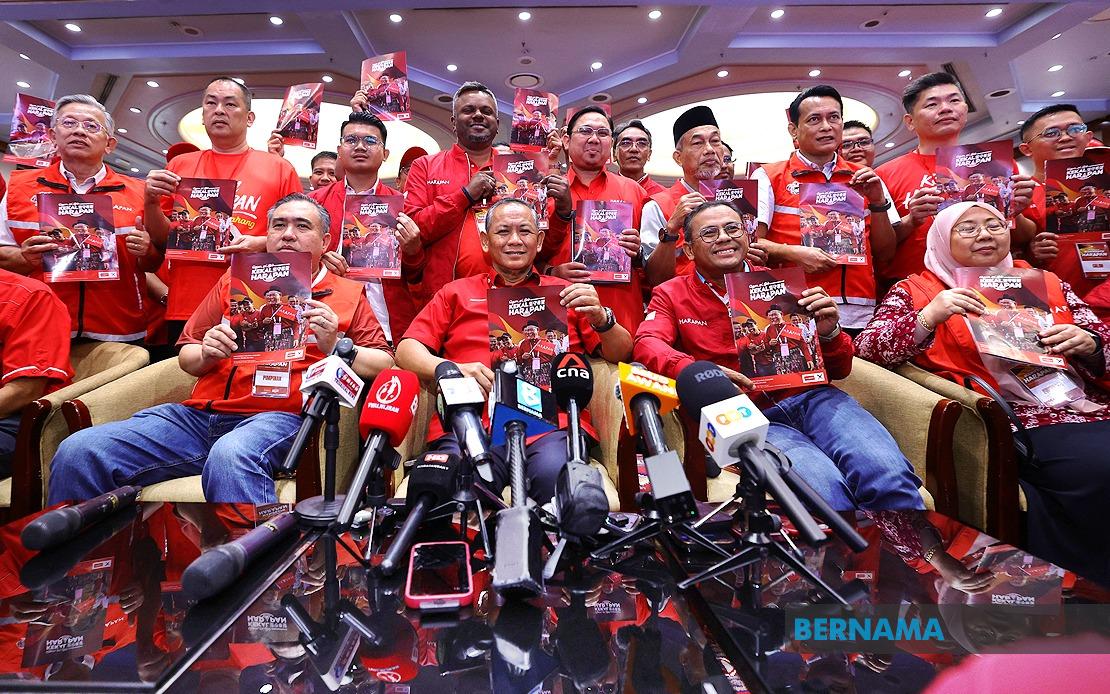
Prime Minister Datuk Seri Anwar Ibrahim will intensify Pakatan Harapan's push in Negeri Sembilan by joining campaign activities this Wednesday, according to PH Negeri Sembilan chairman Datuk Seri Aminuddin Harun. The announcement came as the ruling coalition formally introduced its platform for the 16th Negeri Sembilan state election, setting the stage for a final week of rallies before voters head to the polls on August 1.
Anwar's scheduled appearance in Sikamat and Paroi represents a significant show of force by the federal leadership, underscoring PH's commitment to retaining control of the state assembly. The prime minister's participation alongside senior party figures and campaign machinery will provide a national dimension to what remains a keenly contested state battle. His absence from Tuesday night's manifesto launch in Seremban was quickly characterized as inconsequential by Aminuddin, who emphasized that PH's organizational preparations and policy commitments remain the party's true strength.
The manifesto launch brought together a constellation of coalition heavyweights, reflecting the importance Putrajaya places on the Negeri Sembilan contest. Present were DAP secretary-general and Chennah seat candidate Anthony Loke, Selangor Menteri Besar and PH election director Datuk Seri Amirudin Shari, PKR secretary-general Datuk Dr Fuziah Salleh, and Amanah vice-president Datuk Dr Mohd Hatta Md Ramli. The breadth of senior representation signals how much the three-state coalition values maintaining its foothold in the central region.
PH's policy framework for Negeri Sembilan spans nine interconnected priority areas designed to appeal across socioeconomic demographics. Administrative stability and good governance form the foundation, reflecting voter concerns about institutional competence and financial management at the state level. The manifesto equally emphasizes people's well-being through targeted social support, recognizing that household economics remain a primary concern for many Malaysian voters confronting cost-of-living pressures.
Economic competitiveness features prominently, suggesting PH intends to pitch itself as the architect of Negeri Sembilan's prosperity rather than dwelling on opposition attacks. The coalition's inclusion of education, housing, and youth development signals an attempt to address long-term structural concerns that resonate with families and younger voters. These pillars align with broader national PH messaging while being tailored to state-specific needs, such as agricultural modernization relevant to Negeri Sembilan's rural constituencies.
Women and family empowerment, alongside tourism development and customary heritage preservation, reveal PH's strategy to encompass cultural and social dimensions beyond purely economic concerns. The emphasis on social unity and harmony appears deliberate at a time when Malaysian political discourse has grown increasingly fractious. By foregrounding these themes, PH positions itself as a stabilizing force committed to societal cohesion rather than divisive partisan competition.
The election calendar now enters its final phase with early voting scheduled for July 28, allowing working professionals and those unable to vote on election day to cast ballots in advance. The August 1 polling date itself falls on a Thursday, a midweek arrangement that typically sees mixed turnout patterns. PH's campaign acceleration, symbolized by Anwar's Wednesday appearance, reflects the coalition's determination to maximize voter mobilization during this critical window.
For Malaysian observers tracking regional political dynamics, the Negeri Sembilan contest carries implications beyond the state itself. The 16th state election represents a further test of PH's electoral viability since the coalition returned to federal power in November 2022. How effectively PH consolidates support and whether opposition momentum has gathered will provide vital signals about the government's standing heading toward potential national polls that could occur within the next two years.
The manifesto's comprehensive scope reflects contemporary voter expectations that state governments address far more than infrastructure and services, extending to social values, cultural preservation, and economic opportunity across all segments. Whether PH can successfully translate these commitments into tangible outcomes remains the central question voters will weigh. Aminuddin's insistence that the coalition has proven its organizational preparedness and delivery capacity suggests PH believes the fundamental case for continuity remains compelling, even as opposition parties contest every seat aggressively.

