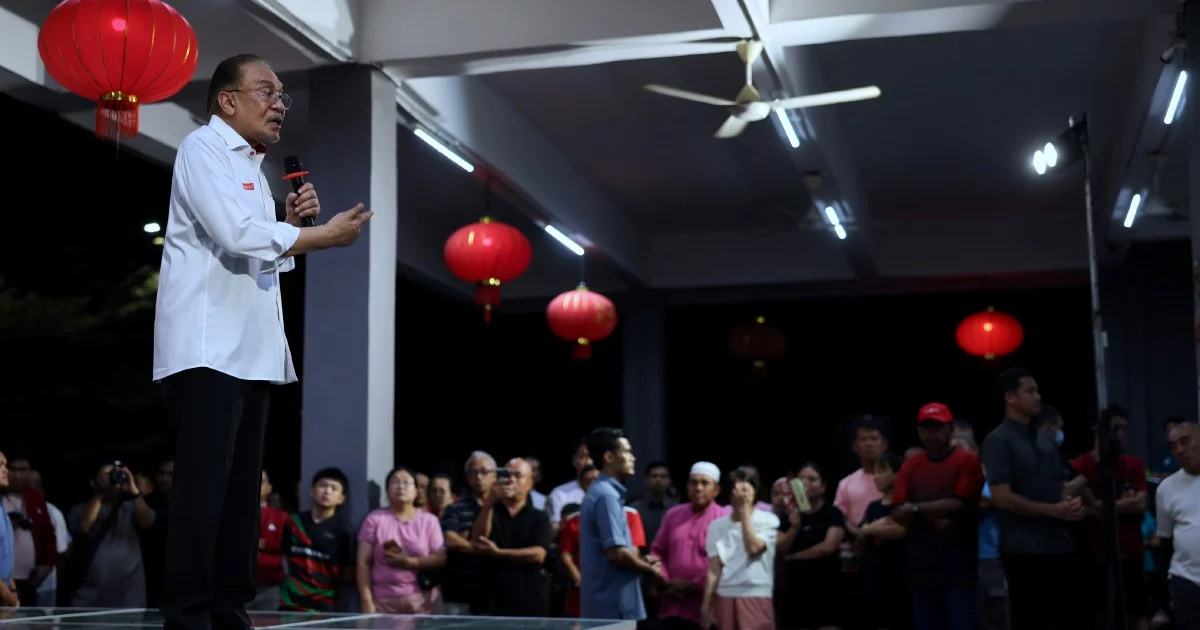
Prime Minister Datuk Seri Anwar Ibrahim has committed to bringing Malaysia's durian crisis to the negotiating table during his forthcoming visit to Beijing, signalling the government's growing urgency in addressing the commodity's troubled market dynamics. Speaking in Tangkak, a region central to the nation's durian industry, Anwar indicated that discussions with Chinese Premier Li Qiang will focus specifically on the steep price declines that have devastated growers across the country, with expanded trade access to China identified as a potential lifeline for the sector.
The Malaysian durian sector has been grappling with a severe structural challenge: overproduction has flooded domestic and regional markets, pushing prices to levels that leave many growers with razor-thin margins or outright losses. This glut represents a departure from the commodity's recent boom years, when scarcity and Chinese demand for premium Malaysian varieties sent prices soaring. The current downturn reflects both the successful expansion of Malaysian plantation capacity in recent years and broader regional supply increases, particularly from Thailand, which has become an increasingly formidable competitor in the Chinese market.
China remains the pivotal market for Malaysian durian exports, accounting for the overwhelming majority of overseas sales and commanding premium prices that sustain the industry's viability. The relationship between Malaysian producers and Chinese consumers has historically been mutually beneficial: Chinese buyers perceive Malaysian durians, particularly those from Pahang and other key regions, as superior in quality, while Malaysian exporters depend entirely on these high-value purchases to justify continued investment in cultivation and infrastructure. However, this asymmetry has also created vulnerability; any disruption to Chinese demand or a shift in purchasing patterns can rapidly destabilise the entire supply chain.
Anwar's pledging to address this issue diplomatically reflects an understanding that market forces alone may not resolve the current crisis within an acceptable timeframe. The Prime Minister's intervention signals that the government views the durian sector not merely as a agricultural commodity sector but as a strategically important industry supporting rural livelihoods, foreign exchange earnings, and regional development. By elevating the matter to the level of bilateral premier-level discussions, Malaysia is attempting to position durian export expansion as part of broader trade and economic cooperation between the two nations.
The timing of Anwar's Beijing visit carries significance for Malaysian domestic politics as well. The durian sector, though representing a relatively small proportion of national GDP, enjoys outsized political importance because of its concentration in specific regions and its role as an economic pillar for rural communities. Growers and distributors collectively represent a vocal constituency, and visible government action on their behalf demonstrates responsiveness to provincial concerns. By making this commitment public in Tangkak itself, Anwar has ensured the message reaches the affected communities directly.
The proposed discussions could encompass several practical dimensions. Trade barrier reductions or tariff adjustments might ease Malaysian durians' entry into the Chinese market. Discussions around quality standards, logistics infrastructure, and market access could facilitate increased volumes. Additionally, coordinated marketing campaigns or promotional initiatives targeting Chinese consumers might help stabilise demand or support price levels through enhanced brand positioning. The challenge, however, is that these solutions operate at the margins of what government-level discussions can achieve; fundamental market dynamics driven by global supply and pricing ultimately escape governmental control.
Thailand's rising durian competitiveness adds another layer of complexity to Malaysia's trade pitch. Thailand has developed its own substantial durian export industry, with lower production costs and increasingly sophisticated marketing strategies that compete directly with Malaysian exports. Any effort by Malaysia to gain preferential access in China or expanded export quotas must contend with the reality that Chinese buyers can source durians from multiple countries. However, Malaysia retains marketing advantages rooted in perceived quality and brand heritage, particularly for premium varieties, which provides some insulation from purely price-based competition.
For Malaysian policymakers, the durian crisis also highlights the risks of over-dependence on a single export market. While the sector cannot easily redirect volumes to other destinations given the particular appetite for Malaysian durians in China, the situation underscores the value of diversification. Conversations might also address developing alternative export corridors or cultivating secondary markets in other Asian nations, though such efforts would require sustained effort and face their own logistical and competitive challenges.
The government may also consider domestic support mechanisms, though these lie outside the scope of the Beijing negotiations. Direct subsidies to affected growers, replanting incentive schemes, or marketing initiatives supporting domestic consumption could provide relief while market conditions stabilise. However, such approaches carry fiscal costs and debate around whether government should intervene in commodity markets troubled by overproduction.
Anwar's statement reflects broader recognition across Southeast Asia that agricultural sectors require active governmental engagement, particularly when regional competitors are also state-supported. Indonesia, Thailand, and other regional producers all maintain government programmes supporting their agricultural export industries. For Malaysia to compete effectively, similar commitment and strategic coordination becomes essential.
The Beijing visit will offer insight into China's appetite for addressing the durian market through bilateral mechanisms. Chinese decision-makers, while sympathetic to Malaysian concerns, will ultimately balance such discussions against their own interests and the preferences of their domestic consumers and retailers. The outcome may involve commitments to specific volumes or facilitated access, or more general acknowledgements of the relationship's importance without concrete market protections.
Ultimately, Anwar's willingness to engage Chinese leadership on this issue demonstrates that Malaysia's government recognises the durian sector's economic and political significance. Whether such diplomatic efforts translate into meaningful market improvements remains uncertain, but the initiative signals that solutions to agricultural challenges increasingly require high-level strategic coordination alongside market adjustments and industry adaptation.

