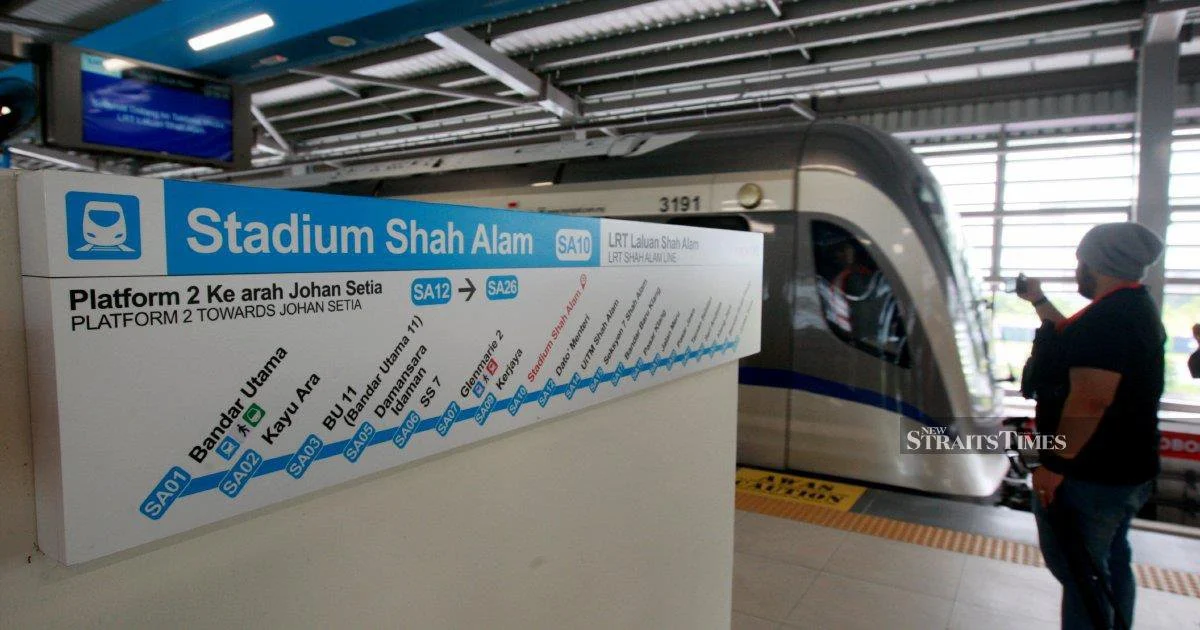
Prime Minister Datuk Seri Anwar Ibrahim is set to formally inaugurate the Light Rail Transit Line 3 (LRT3) Shah Alam extension this Sunday, with the line becoming operational for commuters from Monday onwards. The milestone comes as part of the broader efforts to enhance public transportation infrastructure in the Klang Valley, addressing growing congestion and mobility demands in the region's rapidly expanding suburbs.
The LRT3 Shah Alam line represents a significant extension of Kuala Lumpur's rapid transit network, linking the commercial and residential areas of Shah Alam more directly to the capital. The project has been among the most anticipated infrastructure developments in Selangor, with local residents and businesses anticipating improved connectivity and reduced travel times. The line's opening reflects the government's commitment to expanding the metropolitan rail network as part of its long-term urban transport strategy.
The timing of the launch ceremony just before revenue service commencement allows time for final safety checks and familiarisation sessions. Such inaugural events typically involve government officials, transport ministry representatives, and media coverage, serving both as public celebration and opportunity to showcase the nation's infrastructure development achievements. The Sunday launch gives commuters a day to understand the line's operations before Monday's official start of passenger services.
The Shah Alam extension forms a crucial piece of the greater LRT3 network puzzle, which has been progressively developed to serve western Klang Valley suburbs. These areas have experienced explosive residential and commercial growth over the past two decades, straining road infrastructure and creating traffic bottlenecks. The new rail connection is expected to divert significant traffic from congested highways, particularly during peak commuting hours.
For commuters in Shah Alam and surrounding areas, the opening promises tangible benefits through reduced journey times to central Kuala Lumpur and interconnected zones. The line integrates with existing rapid transit infrastructure, allowing seamless transfers to other LRT lines, monorails, and bus rapid transit systems. This integration strengthens the overall metro transport ecosystem and encourages shifts away from private vehicle dependence.
The project's completion also carries economic implications for the region. Improved transport connectivity typically catalyses property development, attracts businesses to accessible locations, and enhances the viability of commercial centres near stations. Shah Alam, as Selangor's administrative capital, stands to benefit from enhanced accessibility that might draw investment and facilitate inter-regional commerce.
Infrastructure projects of this scale involve substantial capital investment and years of planning and construction. The successful completion of the LRT3 Shah Alam extension demonstrates the government's capacity to deliver major transport initiatives despite various challenges including land acquisition, environmental considerations, and financing. Such projects are critical for modernising Malaysia's urban areas and positioning them competitively within Southeast Asia.
The expansion of the LRT network aligns with broader national development objectives to promote sustainable urban growth. By providing viable public transport alternatives, authorities aim to reduce transport-related emissions and environmental degradation. For policymakers, investing in mass rapid transit represents a fundamental approach to urban planning that prioritises accessibility and sustainability over sprawling car-dependent development patterns.
Commuters and stakeholders have awaited this opening for considerable time, with some delays during construction phases typical of major infrastructure projects. The Sunday launch and Monday operational commencement finally deliver on promises made to residents and businesses in the Shah Alam area. Initial weeks of operation will be closely monitored to assess passenger volumes, system reliability, and identify any operational adjustments needed.
The LRT3 Shah Alam extension's opening contributes to filling gaps in the Klang Valley's transport network, though planners continue evaluating additional routes and extensions to serve other underserved areas. Each completed line generates valuable operational data and experience that informs future transport development strategies. For Malaysian readers, particularly those in Selangor, this launch represents tangible progress in solving the region's persistent transport challenges that have plagued commuters for years.