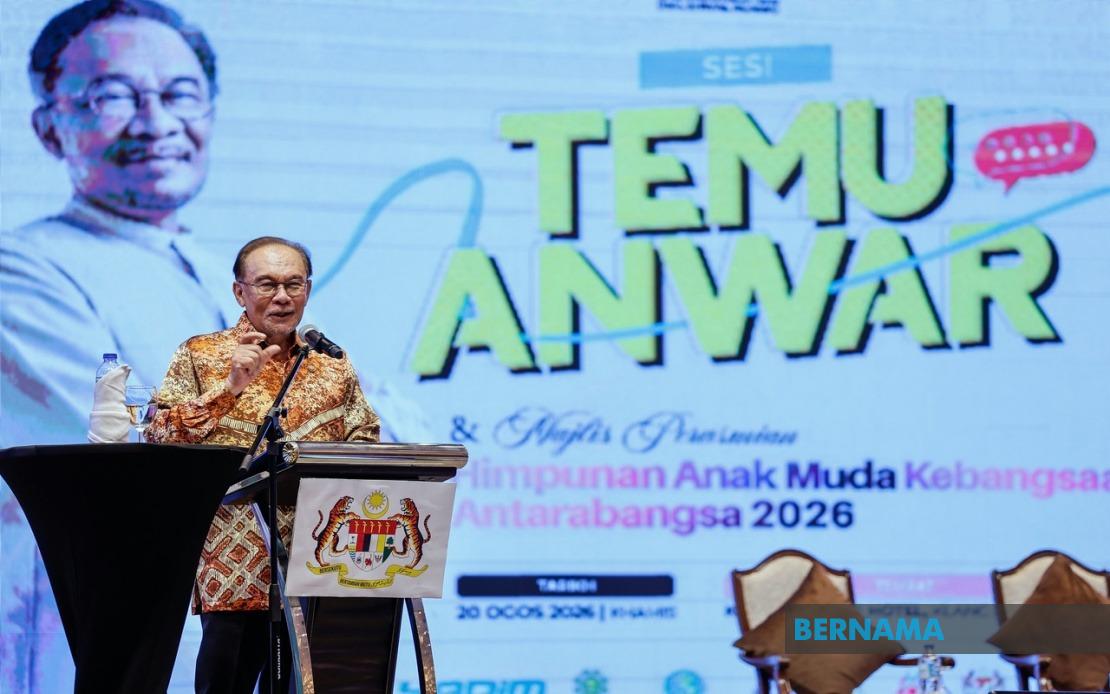
Prime Minister Datuk Seri Anwar Ibrahim has signalled that major policy announcements will be rolled out during two critical national observances this year, with the first coming ahead of National Day on August 30 and a second scheduled for Malaysia Day celebrations on September 16. Speaking at an event in Klang during the opening of Himpunan Anak Muda Antarabangsa (HAMKA) 2026, the Prime Minister refrained from disclosing the specific nature of these announcements, maintaining an element of anticipation around the government's plans. A third significant announcement is expected to follow in early October, coinciding with the tabling of the federal Budget, suggesting a coordinated rollout of economic and social policy measures over the coming weeks.
The timing of these announcements reflects strategic messaging around moments of national significance. By reserving major policy reveals for August 30 and September 16—dates steeped in Malaysian historical and cultural importance—the government appears intent on anchoring its development agenda to the nation's identity and values. The third announcement during Budget tabling would allow the Prime Minister to articulate how fiscal allocations support the broader policy framework introduced earlier in the year, creating a narrative arc connecting national pride to tangible economic measures.
During the Temu Anwar session, the Prime Minister addressed growing concerns among young Malaysians about employment security and financial stability, particularly those participating in the gig economy. This focus emerged in response to a student's direct question about governmental safeguards for gig workers, underscoring how youth anxieties about precarious work arrangements have become a priority discussion point in mainstream political discourse. The acknowledgement signals that policymakers recognise the structural challenges facing a generation increasingly reliant on freelance, contract, and platform-based employment rather than traditional corporate positions.
To address these concerns, the government has established the Malaysian Gig Economy Commission (SEGiM), representing a formal institutional commitment to studying and regulating this rapidly expanding employment sector. Beyond the creation of this body, the administration plans to introduce new legislation specifically targeting small business protections, aiming to establish a more robust regulatory framework that balances the flexibility gig workers value with necessary safeguards around income stability, benefits access, and dispute resolution. These measures acknowledge that the informal economy has become too significant to ignore and requires thoughtful governance rather than laissez-faire neglect.
The Prime Minister recognised that existing support mechanisms for gig economy participants remain insufficient in the eyes of many workers and advocacy groups. Rather than dismissing these critiques, he positioned the government as receptive to feedback and committed to strengthening protections within available fiscal constraints. This approach—while cautious about unlimited spending commitments—demonstrates political awareness that youth employment anxiety could become a flashpoint if left unaddressed through the next electoral cycle.
Beyond gig economy matters, Anwar signalled expanded support for young Malaysians aspiring to entrepreneurship. The government intends to improve access to business financing for recent graduates, leveraging existing mechanisms like the National Entrepreneurial Group Economic Fund (TEKUN) to lower barriers for first-time entrepreneurs. This represents a practical response to Malaysia's persistent unemployment challenges and the desire among many young people to create their own employment pathways rather than compete for limited corporate positions.
A particularly noteworthy element of the government's proposed approach involves reviewing entry requirements for business financing schemes. The existing mandate requiring applicants to demonstrate an established business track record before accessing capital has become increasingly problematic in an economy where traditional employment stability has declined. By reconsidering these gatekeeping mechanisms, the administration acknowledges that contemporary economic conditions differ markedly from the assumptions underlying older lending frameworks, and that unnecessarily restrictive access criteria may stifle entrepreneurial potential among capable younger Malaysians.
The Prime Minister's statements reveal a delicate balancing act between demonstrating genuine commitment to youth welfare while managing expectations about fiscal capacity. His repeated emphasis on listening to diverse viewpoints and acting "if we have the capacity" suggests awareness that demand for government support exceeds available resources, requiring careful prioritisation and transparent communication about constraints. This approach may resonate with pragmatic younger voters but could frustrate those seeking more aggressive spending on youth-oriented initiatives.
For Malaysian policymakers and regional observers, these announcements indicate that employment precarity among younger demographics has moved to the centre of governance discussions. The gig economy, once treated as peripheral or temporary, now commands dedicated institutional attention and legislative focus. This shift reflects demographic realities—younger Malaysians constitute a substantial voting bloc—and economic necessity, as informal employment patterns have become structural features rather than cyclical phenomena. How effectively the government implements announced measures will significantly influence youth political engagement and social cohesion over the medium term.
The staggered announcement schedule also suggests the government is managing multiple policy initiatives simultaneously, with distinct themes (national identity, youth welfare, fiscal priorities) being unveiled across August, September, and October. This phased approach allows each announcement to command media and public attention without being overshadowed, while creating a sense of continuous governmental activity and responsiveness. For Southeast Asian economies facing similar youth employment challenges, Malaysia's policy responses may offer useful models or cautionary lessons, depending on implementation effectiveness and outcomes.

