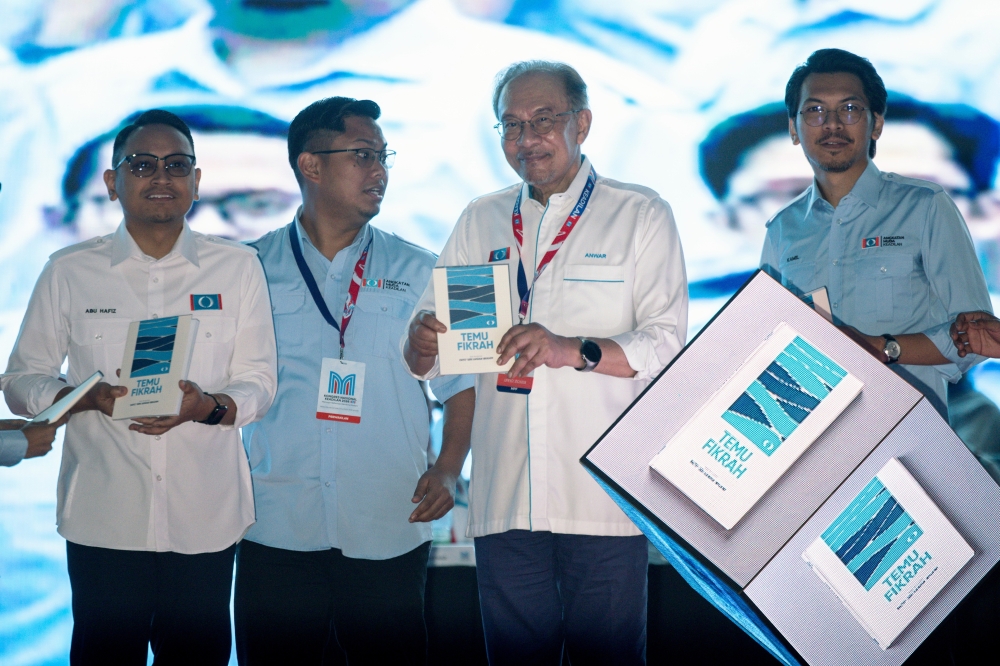
Prime Minister Datuk Seri Anwar Ibrahim unveiled Temu Fikrah, Parti Keadilan Rakyat's youth wing initiative, during an event in Melaka on August 16. The launch represents PKR's renewed commitment to nurturing a generation of party activists equipped with both ideological grounding and practical tools for grassroots engagement. Rather than a traditional manifesto, Temu Fikrah functions as a hybrid document—part philosophical framework, part operational manual—designed to translate abstract principles into concrete action at the community level.
The initiative carries particular significance within Malaysia's current political landscape, where coalition stability remains a central concern and the Madani governance framework has become the administration's defining platform. By investing in youth development and ideological clarity, PKR signals its intention to strengthen its institutional depth beyond mere electoral machinery. For younger Malaysians navigating complex policy environments, the document offers structured guidance on how party values align with broader nation-building objectives. The emphasis on creativity suggests PKR recognises that traditional top-down communication strategies increasingly fail to resonate with digitally-native constituencies, necessitating more innovative approaches to political engagement and civic participation.
Courage emerges as a thematic pillar throughout Temu Fikrah, reflecting PKR's positioning as a reform-oriented party willing to challenge established norms. Within Malaysia's political culture, where consensus-building and institutional respect traditionally constrain public discourse, this emphasis on bold thinking represents a deliberate rhetorical choice. The framing encourages youth members to take principled stands on governance issues, advocate for transparency, and champion accountability mechanisms—priorities that align with PKR's historical identity as an opposition force now adapted for governing responsibility. This duality—maintaining reformist zeal while demonstrating administrative competence—constitutes one of the governing coalition's central strategic challenges, particularly as various components negotiate shared decision-making power.
Creativity as an organising principle reflects broader demographic shifts in Malaysian activism. Younger generations expect political participation to accommodate diverse communication styles, from social media engagement to community-based initiatives that blend service delivery with advocacy. Temu Fikrah's elevation of creative problem-solving acknowledges that sustainable political movements require members capable of adapting messaging, developing locally-relevant initiatives, and leveraging contemporary tools. For PKR specifically, this approach helps differentiate the party from both its coalition partners and opposition competitors by establishing a distinctive brand centred on innovation rather than mere incumbency or nostalgic appeals.
The Madani governance framework underpinning the initiative deserves closer examination for regional observers. Madani represents the Malaysian government's articulation of how democratic institutions, human rights protections, economic opportunity, and social welfare should integrate into a cohesive state project. By embedding Madani principles into youth activism training, PKR attempts to create grassroots constituencies invested in the framework's success and capable of articulating its benefits to wider publics. This represents significant political labour, particularly given competing narratives about governance priorities circulating across Malaysian media and political discourse.
For Southeast Asian observers, PKR's institutional investments in youth development reflect patterns visible across the region's maturing democratic systems. As authoritarian threats and anti-democratic movements gain visibility globally, opposition-derived parties transitioning to government face persistent questions about whether they can maintain ideological coherence while managing bureaucratic complexity. Temu Fikrah positions PKR as grappling seriously with this tension, creating structures that theoretically allow both grassroots participation and policy implementation. Whether such structures produce genuinely autonomous youth movements or serve primarily as transmission mechanisms for top-down directives remains an open empirical question requiring longitudinal observation.
The document's reception within PKR's broader membership will indicate whether youth feel genuinely empowered by the initiative or view it as symbolic gesture obscuring limited real influence. Previous attempts by Malaysian political parties to institutionalise youth engagement have produced mixed results, with participation sometimes declining when young members discover formal structures constrain rather than enable their preferred activities. PKR's approach appears designed to minimise such disappointment through explicit encouragement of creative experimentation and recognition that multiple pathways toward organisational contribution exist. Nonetheless, resource allocation and decision-making authority will ultimately determine whether youth perceive the framework as substantive or performative.
The timing of the launch also warrants consideration. As Malaysia's political coalition navigates ongoing tensions—including debates about economic policy, demographic representation, and institutional reform—strengthening party cohesion through youth mobilisation serves defensive and offensive purposes simultaneously. Defensively, invested youth members constitute constituencies resistant to party fragmentation or defection to competing political projects. Offensively, expanded youth engagement expands PKR's capacity for community organising, policy advocacy, and electoral mobilisation ahead of eventual electoral contests. The initiative thus functions as both ideological statement and strategic investment in organisational sustainability.
Regional implications extend beyond Malaysia's borders, particularly for other ASEAN democracies experiencing coalition governance challenges. How PKR manages the relationship between ideological coherence and pragmatic governing partnership will influence how other parties assess similar transitions. Should Temu Fikrah succeed in creating vibrant youth constituencies capable of sophisticated political engagement without generating destabilising demands on coalition partners, the model might gain currency elsewhere. Conversely, if tensions emerge between youth-articulated principles and governing compromises, the initiative could inadvertently illustrate structural contradictions within coalition frameworks.

