%22%2F%3E%3C%2Fpattern%3E%3C%2Fdefs%3E%3Crect%20width%3D%22100%25%22%20height%3D%22100%25%22%20fill%3D%22url(%23ph4xlmcg)%22%2F%3E%3Crect%20width%3D%22100%25%22%20height%3D%22100%25%22%20fill%3D%22url(%23ph4xlmcp)%22%2F%3E%3Ctext%20x%3D%2250%25%22%20y%3D%2250%25%22%20text-anchor%3D%22middle%22%20dominant-baseline%3D%22central%22%20fill%3D%22rgba(255%2C255%2C255%2C0.95)%22%20font-family%3D%22Georgia%2C%20'Times%20New%20Roman'%2C%20serif%22%20font-weight%3D%22700%22%20font-size%3D%22272%22%20letter-spacing%3D%22-0.02em%22%3EAnwar%3C%2Ftext%3E%3C%2Fsvg%3E)
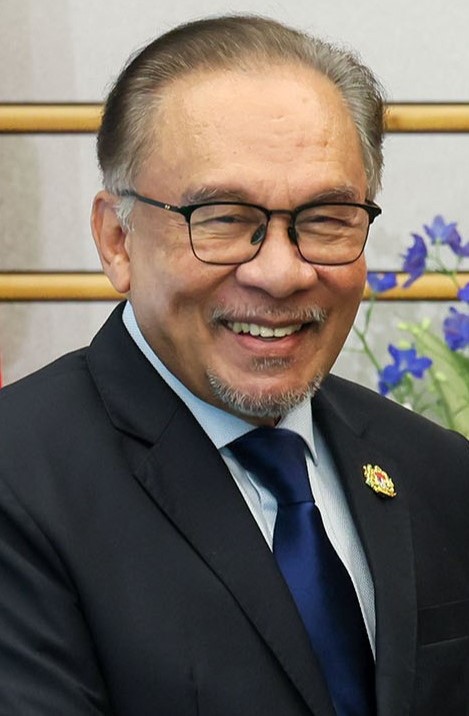
Prime Minister Datuk Seri Anwar Ibrahim has drawn a firm line separating Malaysia's electoral processes from its constitutional monarchy, arguing that campaigns and party competition should not extend to or implicate the institution of royalty. Speaking on the matter, he emphasised that democratic elections represent a contest between political organisations seeking to win voter support, and should be treated as such without drawing the sovereign or related institutions into the fray.
Anwar's remarks reflect growing attention to the intersection of Malaysia's political system and its constitutional arrangements. As a federation with nine hereditary rulers and a rotating monarchy, Malaysia's institutional framework places the Yang di-Pertuan Agong at the apex of the constitutional hierarchy while the prime minister serves as the chief executive. This unique arrangement has occasionally created tension when electoral politics touches upon matters traditionally seen as falling within the royal prerogative or institutional sphere.
The prime minister's intervention carries particular weight in Malaysia's current political landscape, where coalition-building and electoral strategies have frequently involved references to stability, institutional continuity, and the maintenance of constitutional safeguards. By explicitly confining electoral competition to the political party level, Anwar appears to be addressing concerns that campaigns or partisan activities could drift into territory that compromises the neutrality expected of the throne.
Historically, Malaysia's monarchy has maintained a carefully calibrated public distance from day-to-day partisan politics. The institution's strength derives partly from this distance, allowing the Yang di-Pertuan Agong to serve as a national symbol transcending factional interests. Any perception that royalty has become entangled in electoral contests risks eroding this unifying function, a consideration that likely underpins Anwar's call for clarity.
The distinction Anwar advocates reflects international norms governing constitutional monarchies. In systems such as the United Kingdom, Sweden, and Thailand, the royal institution deliberately remains aloof from electoral processes to preserve its constitutional legitimacy and public standing across party lines. Malaysia's experience with constitutional governance suggests similar principles have long been understood, though Anwar's explicit articulation suggests a desire to reinforce these boundaries in the current environment.
From a Malaysian governance perspective, the timing of these remarks matters. The country approaches a series of electoral cycles, including state-level contests and eventual federal elections, which will test political cohesion and institutional relationships. By preemptively establishing that elections are intra-party matters, Anwar may be seeking to prevent scenarios where politicians appeal to royal figures for legitimacy or intervention, a dynamic that could destabilise both electoral legitimacy and institutional neutrality.
Regional observers will note that Southeast Asia has witnessed recurring tensions between electoral politics and monarchical institutions. Thailand's experience demonstrates the complications that arise when these spheres become entangled, while other regional democracies have maintained clearer boundaries. Malaysia's track record of relatively stable institutional coexistence has been underpinned by conventions distinguishing royal and partisan spheres, making Anwar's restatement of these principles significant.
The prime minister's emphasis also carries implications for party discipline and campaign conduct. By establishing that elections are fundamentally contests between political organisations, he is implicitly directing party members and allied figures to conduct their activities within appropriate bounds. This addresses the risk that enthusiastic campaigners might, in seeking legitimacy or support, inappropriately invoke royal approval or institutional association for partisan purposes.
For Malaysian voters and civil society, Anwar's clarification serves an educational function. It reinforces that while the monarchy holds constitutional importance, its role differs fundamentally from that of elected governments and political parties. Elections determine which party governs, not which party enjoys royal favour. This distinction protects both democratic legitimacy, which depends on genuine voter choice, and institutional legitimacy, which depends on royal neutrality and constitutional propriety.
The practical implications extend to government messaging and official communications during election cycles. Anwar's framework suggests that while institutions may acknowledge electoral processes, they should not be positioned as participants in partisan contests. Government apparatus, similarly, should not be instrumentalised to suggest that state institutions endorse particular parties or candidates, a safeguard he appears committed to reinforcing.
Looking ahead, this intervention may establish a template for how Malaysia's leadership intends to conduct future electoral cycles. By placing the prime minister's authority behind the principle that elections belong to political parties alone, Anwar creates precedent and expectation for how politicians across parties should conduct themselves. This shared understanding strengthens the overall institutional framework by reducing uncertainty about appropriate conduct.
The underlying message extends beyond procedural rules. It reflects a commitment to preserving Malaysia's constitutional order, in which different institutions hold distinct roles and legitimacy derives from respecting those boundaries. For a nation navigating complex diversity and competing political interests, maintaining clear separation between the monarchy's unifying constitutional role and the competitive sphere of party politics remains essential to system stability and public confidence.