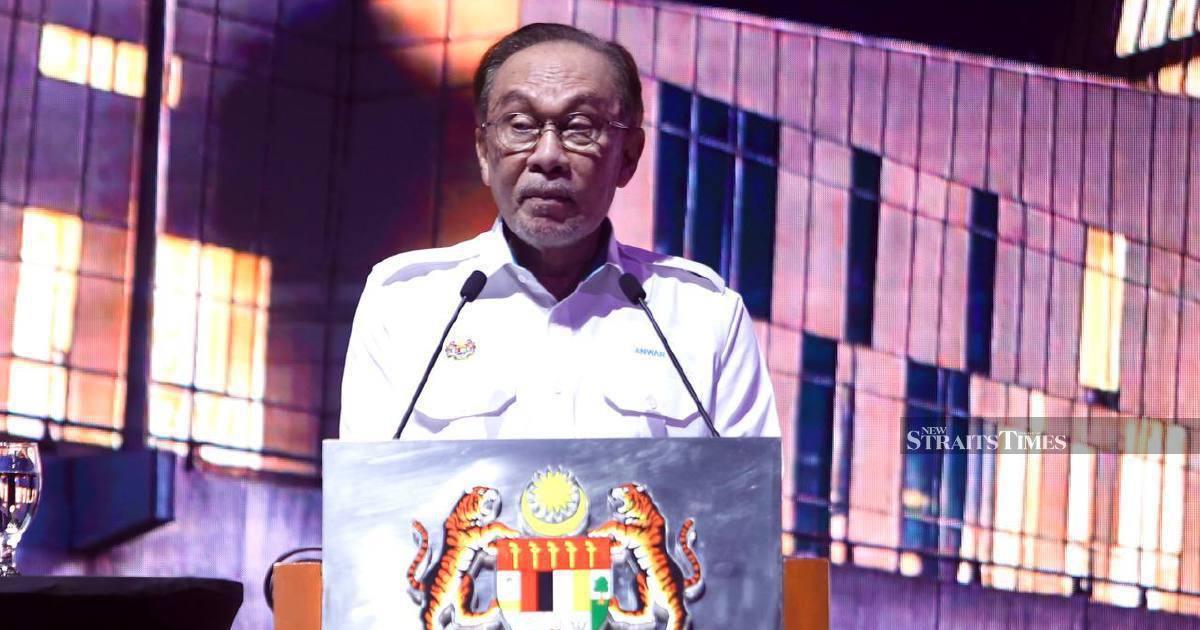
Prime Minister Datuk Seri Anwar Ibrahim has made a significant intervention into Malaysia's cultural policy landscape, advocating for a more permissive environment for filmmakers and creative professionals to express themselves. Speaking in Petaling Jaya, Anwar stressed the importance of unlocking greater artistic potential within the nation's film sector, recognising the tension between creative ambition and regulatory frameworks that have historically constrained local production. His remarks signal a potential shift in official thinking about how the government balances its role as guardian of traditional values with its aspiration to foster a vibrant, internationally competitive creative industries ecosystem.
The Prime Minister's call carries particular weight given Malaysia's position as a regional media hub with growing ambitions in cinema and content creation. For decades, the Malaysian film industry has operated under relatively stringent guidelines administered through the Film Censorship Board, which reviews narratives, imagery, and themes before granting exhibition approval. While such oversight has protected certain cultural sensibilities, critics have long argued that overly restrictive policies stifle innovation and push talented filmmakers to base their operations overseas or seek alternative platforms. Anwar's intervention suggests receptiveness to revisiting how these frameworks function in practice.
Central to Anwar's position is a nuanced distinction between liberalisation and abandonment of standards. He explicitly underscored that creative freedom cannot operate in a moral or cultural vacuum, emphasising that Malaysian values, heritage, and ethical considerations must remain foundational to artistic output. This formulation reflects a mature approach to cultural governance—one that recognises neither total restriction nor unlimited permissiveness serves the national interest. Instead, the framework appears to advocate for intelligent regulation that protects core societal principles while creating sufficient space for diverse voices and experimental storytelling approaches.
The timing of this statement is strategically significant for Malaysia's competitive position in Southeast Asia's rapidly expanding creative economy. Thailand, Indonesia, and the Philippines have each invested heavily in positioning themselves as regional production destinations, attracting international investment and talent by offering relatively flexible regulatory environments combined with diverse locations and skilled workforces. Malaysian filmmakers and producers have increasingly noted that restrictive local conditions push them to seek opportunities elsewhere, resulting in brain drain and reduced economic benefit to the nation. By advocating for greater freedom, Anwar is effectively signalling that Malaysia intends to compete more aggressively for creative talent and international production business.
The government's interest in this sector extends beyond cultural considerations into economic strategy. Malaysia's creative industries, including film, gaming, and digital content, represent a growing share of the economy and employment, particularly among younger demographics. Unlocking this sector's potential could generate significant revenue through domestic production, international co-productions, tourism tied to film locations, and ancillary industries. Film festivals like the Kuala Lumpur International Film Festival and growing awareness of Malaysian cinema internationally demonstrate latent potential waiting for supportive policy conditions.
Anwar's remarks also reflect generational shifts in Malaysian society regarding what constitutes acceptable creative expression. Younger audiences consume diverse global content through streaming platforms and social media, increasingly questioning why local productions face restrictions their international counterparts do not face. This demographic pressure has likely influenced policy-makers' calculations, as excessive censorship risks appearing outdated rather than protective. Younger filmmakers and content creators, a talented cohort educated in international film schools and exposed to global standards, represent potential assets that more permissive policies could retain within Malaysia.
The challenge facing policymakers now involves translating Anwar's rhetorical framework into concrete institutional change. The Film Censorship Board operates under established legislation with specific guidelines covering prohibited content categories. Moving from principle to practice requires careful calibration—identifying which current restrictions may be loosened, which should remain intact, and how to train censors to apply new, more nuanced standards consistently. This is fundamentally a question of trust: both in filmmakers' ability to exercise responsible creative judgment and in audiences' capacity to engage with challenging material thoughtfully.
Southeast Asian context matters here as well. Singapore's film industry has benefited from relatively professional, principle-based censorship that, while maintaining standards, avoids arbitrary decisions that undermine industry confidence. Indonesia's decentralised system sometimes produces inconsistent outcomes. Thailand's complex regulatory environment occasionally surprises filmmakers with unexpected restrictions. Malaysia could learn from these regional experiences, designing frameworks that appear professional and predictable while grounding decisions in clearly articulated values rather than bureaucratic discretion.
The creative community's response will be instructive in measuring the sincerity and sustainability of Anwar's position. Malaysian filmmakers, producers, and industry associations have long articulated specific grievances about overly restrictive classifications or arbitrary rejections. Whether subsequent policy adjustments address these concrete concerns will determine whether the Prime Minister's call translates into meaningful change or remains aspirational rhetoric. Industry observers will watch for signals regarding specific content categories, the appeals process, and whether censorship decisions incorporate input from creative professionals themselves.
Moving forward, the question becomes how Malaysia reconciles its multicultural, multireligious society with the desire for creative freedom. Unlike smaller, more homogeneous nations, Malaysia's diversity means content that challenges conservative sensibilities among one community must be navigated carefully within a framework that respects plural values. Perhaps this is precisely where Anwar's framing—creative freedom grounded in Malaysian values—offers a workable path. Rather than imposing a single aesthetic, policy could permit diverse expressions reflecting Malaysia's varied communities while maintaining guardrails against content genuinely harmful or contemptuous toward groups.
Ultimately, Anwar's intervention represents recognition that cultural policy cannot remain static while society evolves and the global economy transforms. Creating space for Malaysian filmmakers means competing for talent and investment against jurisdictions with fewer restrictions. Yet it also means respecting the nation's distinct character and social fabric. Achieving this balance requires thoughtful institutional design, sustained government commitment beyond rhetorical endorsement, and active dialogue between regulators, creators, and society. The coming months will reveal whether this moment represents a genuine recalibration of Malaysia's approach to film and artistic freedom or merely another cycle in ongoing debates about cultural governance.

