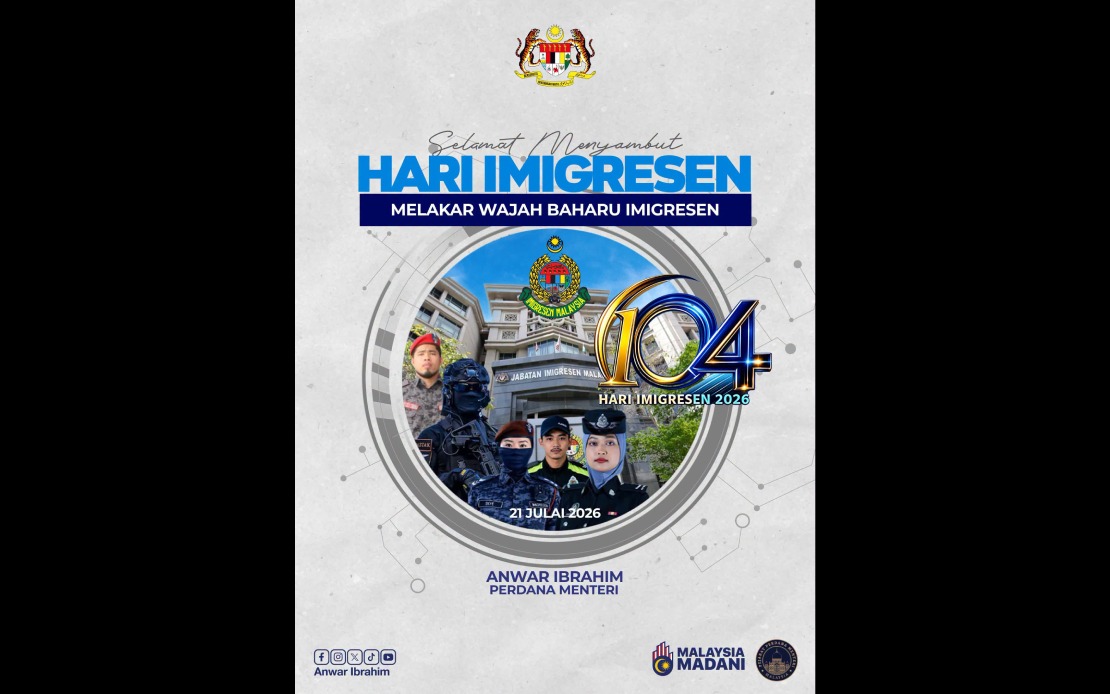
Prime Minister Datuk Seri Anwar Ibrahim has made a direct appeal to the entire Immigration Department workforce to maintain the highest standards of integrity whilst resisting all temptations toward corrupt practices and irregularities. Speaking on the occasion of Immigration Day, Anwar reinforced the fundamental expectation that border officials must conduct themselves with absolute probity in their day-to-day operations, signalling heightened official scrutiny of an institution that remains critical to national security.
The message carries particular weight given ongoing concerns about border management efficiency and public trust in government agencies. Immigration departments across Southeast Asia have faced recurring scrutiny over corruption allegations, with Malaysia's own experiences serving as cautionary examples of how institutional lapses can undermine both sovereignty and public confidence. Anwar's direct invocation of integrity suggests awareness within the highest echelons of government that proactive messaging remains essential for maintaining departmental credibility and preventing future scandals.
Beyond the anti-corruption emphasis, the Prime Minister articulated a broader vision for the Immigration Department that extends compassion as a guiding principle alongside procedural rigour. This dual approach reflects a contemporary understanding that border administration need not choose between security and humanity. Personnel are expected to balance vigilance with courtesy, professionalism with empathy—a recalibration that acknowledges that immigration services touch countless citizens and foreign nationals navigating complex bureaucratic systems.
The 2026 Immigration Day celebration carries the thematic banner of "Charting a New Face for Immigration," suggesting an institution undergoing transformation or rebranding. This framing implies recognition that Malaysia's immigration apparatus requires modernisation, whether in technological systems, training protocols, or cultural practices. For a nation positioned as a gateway between Asia and the world, with substantial migrant populations and significant tourism flows, the quality of immigration administration directly influences economic competitiveness and international standing.
Anwar's emphasis on safeguarding national sovereignty through immigration work underscores the critical intersection between administrative efficiency and geopolitical security. The Immigration Department functions as frontline defenders against irregular movement, human trafficking networks, and security threats. Their decisions affect trade flows, tourism revenue, and the movement of skilled workers essential to Malaysia's economic objectives. When sovereignty is invoked alongside service delivery, it acknowledges that border control represents far more than bureaucratic gatekeeping—it embodies state legitimacy itself.
The timing of such messaging during a commemorative day serves multiple functions. It recognises the labour and importance of immigration personnel, many of whom work demanding frontline roles with limited public acknowledgement. Simultaneously, it broadcasts official expectations to departmental leadership and individual officers, creating documented pressure for accountability. For Malaysian readers accustomed to occasional reports of immigration-related corruption or inefficiency, such statements signal that leadership attention has registered concerns.
The aspiration that immigration personnel will "elevate Malaysia's name on the world stage" reframes border work as diplomatic outreach. International visitors' experiences at airports and border crossings shape perceptions of Malaysia as a destination and partner nation. Professional, courteous treatment of travellers becomes an instrument of soft power, contributing to Malaysia's reputation amid increasingly competitive regional tourism markets. This perspective transforms what might seem routine administrative work into nation-branding activity.
The reference to efficient, courteous and professional services simultaneously identifies an area where Malaysian immigration administration has historically faced criticism. Public complaints regarding processing times, inconsistent application of regulations, and perceived discourtesy have periodically surfaced. Anwar's direct mention of these specific qualities suggests acknowledgment that service delivery standards require reinforcement and perhaps remediation, indicating that official awareness extends beyond aspirational messaging toward recognition of institutional shortcomings.
For Southeast Asian readers observing Malaysian governance, Anwar's address demonstrates how prime ministerial authority can be deployed to communicate expectations throughout the bureaucracy. Malaysia shares regional challenges with neighbour nations regarding migration management, irregular workers, and border security. The public articulation of anti-corruption principles and service standards may serve as implicit comparative messaging regarding Malaysia's commitment to institutional integrity relative to other ASEAN states.
The broader context of Immigration Day celebrations across the region reflects growing recognition that migration represents a defining policy challenge for contemporary Southeast Asia. Nations grapple with balancing humanitarian obligations, economic interests in labour mobility, security imperatives, and social stability. Malaysia's visible commitment to integrity and professionalism within its immigration apparatus positions the country within an evolving regional conversation about responsible border stewardship.
Implementation ultimately determines whether such messaging translates into substantive change. The gap between prime ministerial exhortations and ground-level practices often reflects resource constraints, training limitations, or systemic incentive structures that reward certain behaviours. For the Immigration Department to genuinely embed the values Anwar articulated requires complementary investments in personnel development, technological systems, and accountability mechanisms that move beyond rhetorical commitment.
Stakeholders from civil society, international partners, and business communities dependent on smooth immigration processing will assess whether this statement presages meaningful institutional reform. Malaysian readers should anticipate whether follow-up announcements specify concrete measures—enhanced oversight, modernised systems, personnel recruitment, or procedural reforms—that would substantiate the Prime Minister's call to excellence and integrity.

