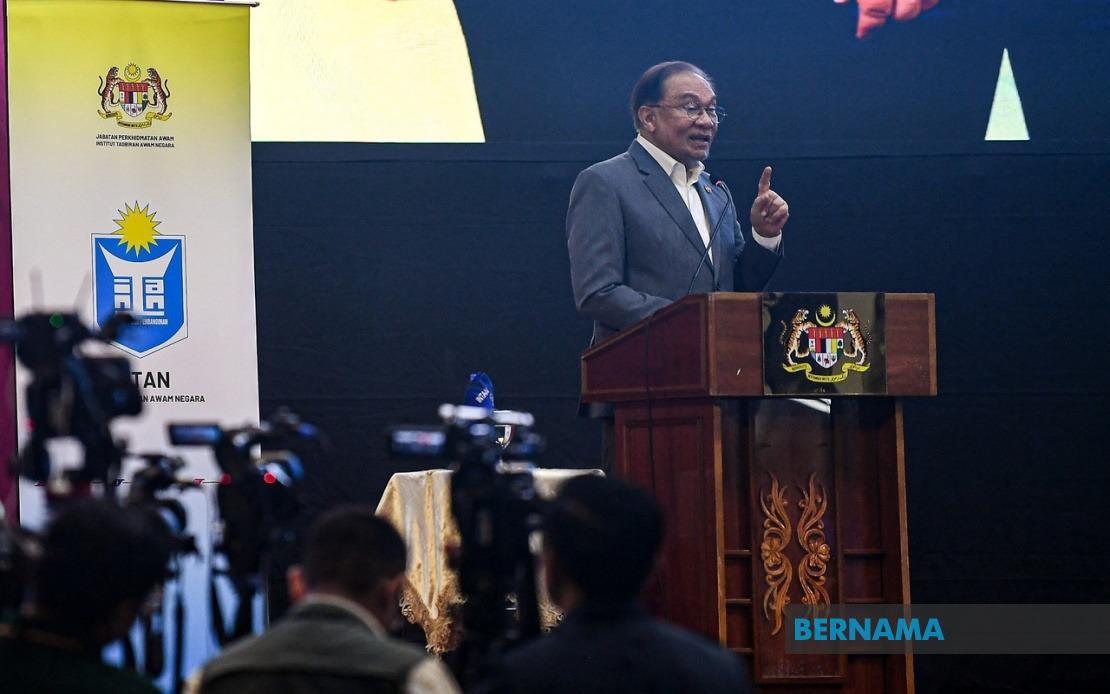
Prime Minister Datuk Seri Anwar Ibrahim has delivered a pointed challenge to Malaysian society, calling for a fundamental shift away from the lingering psychological legacy of colonialism that continues to shape how the nation's citizens view education, culture, governance and economic development. Speaking at a gathering with civil servants from the Central Zone at Universiti Islam Selangor in Bangi on July 20, Anwar argued that true independence means more than political sovereignty; it requires a conscious effort to build national institutions and systems rooted in Malaysian values rather than simply replicating foreign models.
The Prime Minister articulated a concern that resonates across many post-colonial societies in Asia: the persistent belief that Western approaches inherently represent the highest standard of achievement across multiple domains. He noted that even among Malaysians born after the nation's independence in 1957, there persists a tendency to regard Western systems as the inevitable benchmark for measuring progress and quality. This mindset, Anwar suggested, represents an incomplete decolonization of the Malaysian consciousness, where citizens may have shed colonial political structures but retained the psychological frameworks that position the West as superior.
Anwar illustrated his point through a specific example that cuts to the heart of Malaysia's ongoing educational and cultural tensions. He highlighted how some post-independence Malaysians believe that quality education must be conducted in English, that national culture should emulate Western norms, and that political and economic systems should fundamentally follow Western models. This perspective, he suggested, reflects a failure to recognize Malaysia's own intellectual and organizational traditions as valid and valuable alternatives for national development.
The timing of these remarks carries particular significance given Malaysia's ongoing debates surrounding medium of instruction, the role of Bahasa Melayu in higher education, and the direction of the nation's development strategy. These are not merely abstract philosophical questions but touch directly on educational policy, university rankings, economic competitiveness, and national cohesion. Anwar's intervention in this space suggests the government is moving toward more assertive policies that prioritize local languages and development models.
For Malaysia specifically, Anwar's message addresses a genuine tension within the country's development trajectory. As a middle-income nation with significant English-speaking capabilities and deep ties to Western financial and educational systems, Malaysia has benefited substantially from integration with global institutions modeled on Western principles. However, this integration has also created dependencies and mindsets that can marginalize indigenous knowledge systems, Bahasa Melayu as a vehicle for advanced learning, and locally-developed governance approaches.
The Prime Minister's framing also carries implications for Southeast Asia more broadly. His emphasis on national identity and values-based development aligns with broader regional conversations about how post-colonial nations can maintain cultural integrity while remaining economically competitive. Countries across ASEAN have grappled with similar questions about balancing Western-style globalization with preservation of local cultures and institutional traditions.
Anwar stressed that the responsibility of the current generation extends beyond merely enjoying the independence secured by their predecessors. Instead, today's Malaysians must actively construct a vision of national development that draws strength from local foundations while remaining open to beneficial external influences. This distinction is crucial: Anwar is not arguing for isolationism or technological rejection, but rather for conscious choice rather than unconscious imitation.
The address was delivered to civil servants, a significant audience in the Malaysian context. Bureaucrats and government officials occupy central roles in implementing policy and shaping institutional culture. By speaking directly to this audience, Anwar appears to be signaling that the government expects the civil service to actively champion a more assertively Malaysian approach to governance and service delivery. The presence of Chief Secretary to the Government Tan Sri Shamsul Azri Abu Bakar and Director-General of the Public Service Tan Sri Wan Ahmad Dahlan Abdul Aziz underscores the institutional weight behind these messages.
The colonial mindset Anwar references represents a psychological phenomenon that persists long after formal decolonization. It manifests in how elites educate their children, which languages are perceived as prestigious, whose perspectives are sought in policy discussions, and what development models are considered credible. Breaking these patterns requires deliberate cultural work, policy changes, and sustained leadership messaging—the kind Anwar's remarks appear designed to initiate.
For Malaysian readers and policymakers, Anwar's position suggests a government increasingly willing to promote greater use of Bahasa Melayu in higher education, to validate Malaysian approaches to governance and economics, and to frame this not as nationalist retreat but as mature independence. This could have substantial implications for university curricula, research directions, and how Malaysia positions itself within global academic and professional networks.
The challenge Anwar has articulated is substantial. Breaking deeply embedded psychological patterns requires more than rhetorical exhortation; it demands supporting institutions, alternative models that demonstrably work, and sustained commitment across multiple government agencies. Whether the government can translate these words into concrete policy shifts that strengthen Malaysian alternatives while maintaining global competitiveness will be closely watched by civil society, academia, and the international business community that continues to influence Malaysian development priorities.

