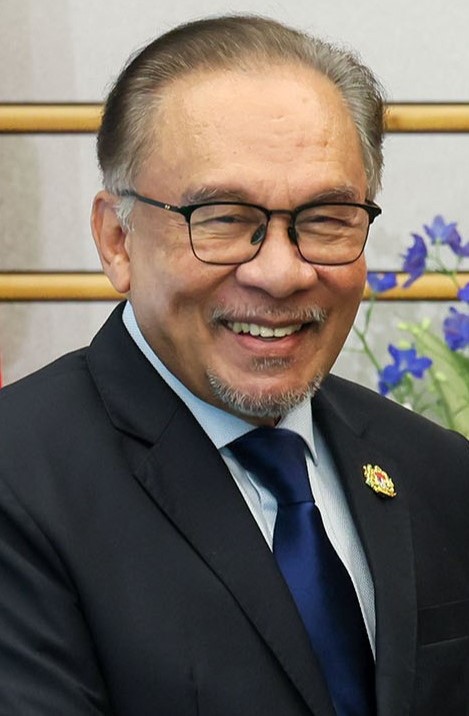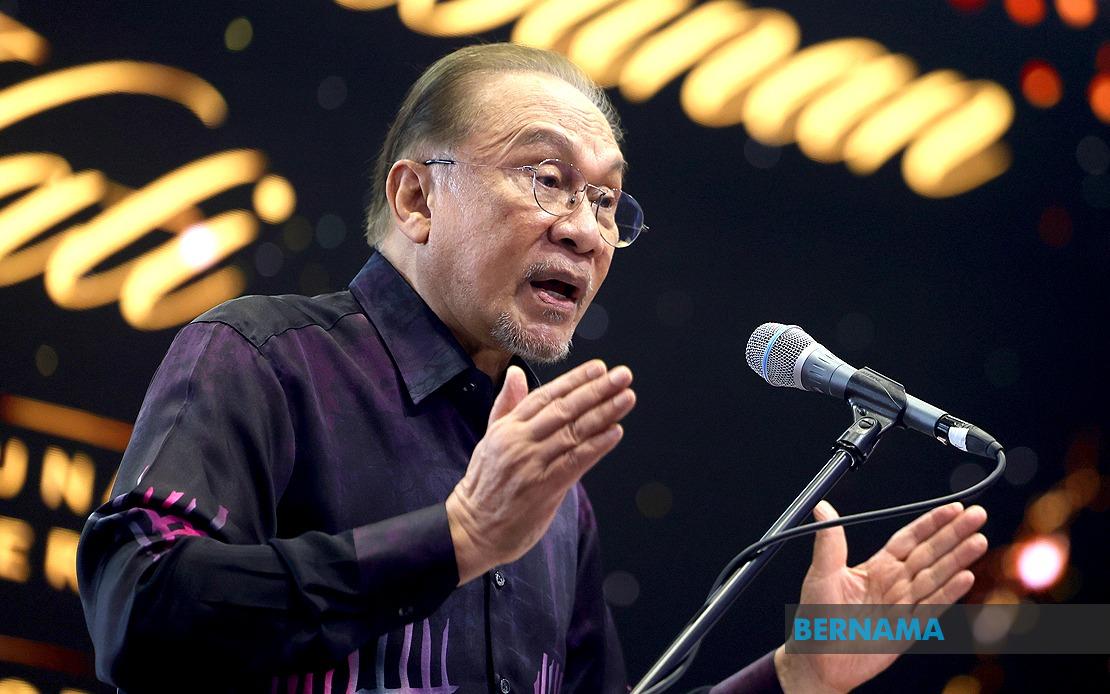
Prime Minister Datuk Seri Anwar Ibrahim has made a forceful appeal for national unity, challenging what he characterizes as deliberate attempts by certain political figures to exploit racial divisions for their own advantage. Addressing more than 1,000 members of Pertubuhan Lima Generasi (PLG) Malaysia at a gathering in Seremban on June 20, Anwar stressed that Malaysia's multi-ethnic composition represents a fundamental source of national strength rather than a weakness to be weaponized.
Anwar's remarks came against a backdrop of persistent political discourse that often invokes racial and religious sensitivities. His intervention suggests growing concern within government circles about the normalization of divisive rhetoric in Malaysian politics. The prime minister articulated a vision in which Malaysians transcend communal identities to work collectively toward shared national interests, a message that carries particular resonance given Malaysia's history of interethnic tensions and the ongoing challenge of maintaining social cohesion in a plural democracy.
The appeal directly challenges political actors who, in Anwar's view, seek to manufacture antagonism between major ethnic groups. He explicitly rejected the false binary of "Malays against Chinese, Chinese against Indians, Indians against Malays," framing such polarization as a deliberate distraction from genuine policy debates and governance priorities. This language suggests Anwar is attempting to reclaim the discourse around national identity from those who deploy ethnic grievance as a mobilizing tool.
Anwar underscored that Malaysia's ethnic and religious pluralism—encompassing Malays, Chinese, Indians, Kadazans, and other communities—functions effectively only when underpinned by genuine mutual respect and substantive cooperation across communal lines. This framing moves beyond mere tolerance toward a positive articulation of diversity as a competitive advantage in an increasingly globalized economy. The implicit argument is that divisions weaken Malaysia relative to competitors in Southeast Asia and beyond, whereas unity strengthens the nation's capacity to address shared challenges.
The gathering at PLG's event provided an opportunity for Anwar to address a sympathetic audience, yet the persistence of his message across multiple forums suggests this remains a priority area for his administration. Negeri Sembilan Menteri Besar Datuk Seri Aminuddin Harun's presence at the dinner indicated alignment with the prime minister's message at the state government level, suggesting an attempt to build consensus across both federal and state leadership on this issue.
For Malaysian readers, Anwar's intervention reflects the ongoing tension between inclusion-oriented governance narratives and identity-based political mobilization. The prime minister's emphasis on unity does not deny the reality of distinct communal interests within Malaysian society; rather, it proposes that these interests are better served through collaborative rather than adversarial frameworks. This approach faces the practical challenge of competing with more emotionally resonant divisive messaging that can energize certain voter bases.
The timing of Anwar's appeal also reflects broader regional trends. Across Southeast Asia, polarizing identity politics has gained traction even as economic interdependence and transnational challenges demand greater cooperation. By positioning unity as essential to Malaysia's development trajectory and international competitiveness, Anwar attempts to reframe the stakes of political discourse away from zero-sum communal competition toward mutual benefit.
Critically, Anwar's message confronts what scholars of Malaysian politics identify as the persistent resort to ethnic framing by certain political actors when substantive policy alternatives prove difficult to articulate. Whether such calls for unity can effectively counter deeply rooted patterns of identity-based mobilization remains an open question, particularly given the institutional incentives within Malaysia's electoral system that can reward ethno-communal appeals.
The broader context for Anwar's statement includes ongoing debates about religious authority, constitutional interpretations regarding bumiputera rights, and competition for resources and political power among Malaysia's major communities. His insistence on transcommunal cooperation must therefore be understood as a deliberate choice to reorient these conversations, though the resistance to such reorientation from various quarters suggests the challenge is formidable.
For regional observers, Anwar's emphasis on unity also carries implications for Malaysia's role in Southeast Asian affairs. A Malaysia riven by internal division has diminished capacity to exercise regional influence or serve as a model for plural governance. Conversely, a Malaysia that demonstrates effective management of ethnic diversity could contribute meaningfully to regional stability and prosperity. The prime minister's rhetorical investment in this narrative suggests awareness of these wider ramifications.
Moving forward, translating Anwar's calls for unity into concrete policy outcomes and institutional reforms will be essential to demonstrating genuine commitment beyond rhetoric. This might encompass educational curriculum reform, representation in public institutions, and economic opportunity distribution in ways that reinforce rather than undermine interethnic cooperation. The success of such efforts will ultimately determine whether appeals to unity gain traction against alternative political narratives.