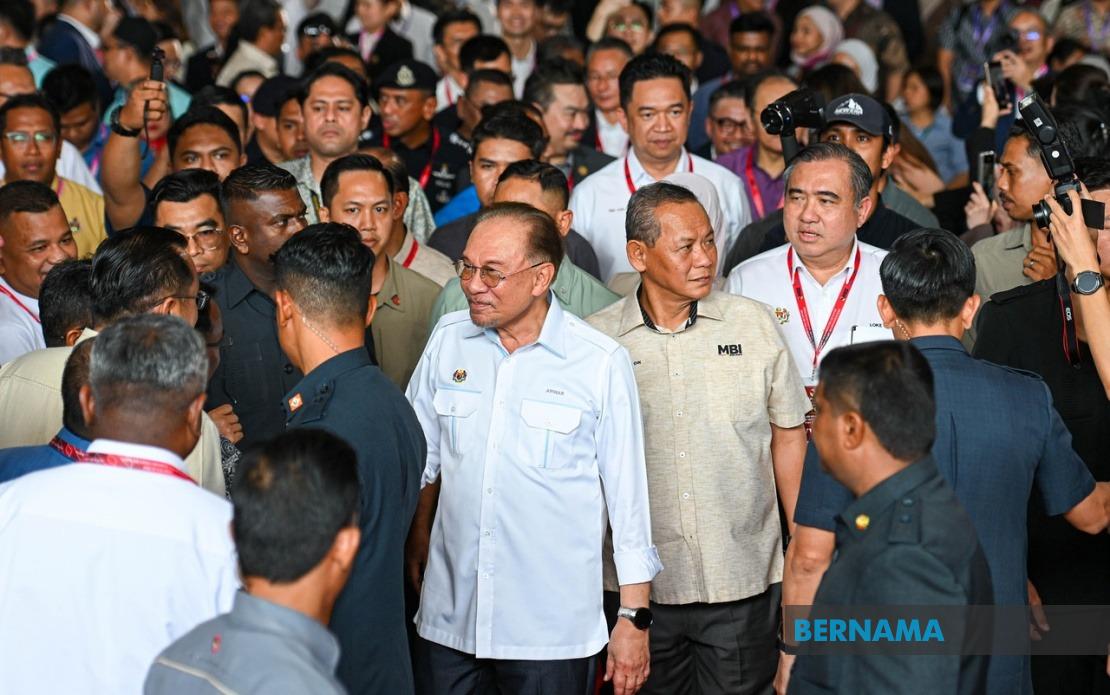
Prime Minister Datuk Seri Anwar Ibrahim made an urgent appeal to Melaka DAP on July 14, asking the party to shelve its decision to withdraw from the state government so that focus remains on infrastructure projects and public welfare. Speaking after inaugurating the AI-powered Midport Smart Container Terminal in Port Dickson, Anwar indicated he had already engaged DAP secretary-general Anthony Loke and Melaka Chief Minister Datuk Seri Ab Rauf Yusoh on the matter, signalling that dialogue channels remained open for finding common ground.
The intervention came after Melaka DAP announced its immediate exit from the state administration following the passage of constitutional amendments in the Melaka State Legislative Assembly. The amendments would allow for the appointment of nominated assemblymen—a move Melaka DAP chairman Khoo Poay Tiong opposed, arguing it conflicted with democratic principles and the spirit of electoral competition. The controversy highlights underlying tensions within the Pakatan Harapan coalition as it navigates competing ideological positions among its constituent parties.
As Pakatan Harapan chairman, Anwar framed the dispute within the broader reality of managing a multi-party ruling coalition. He acknowledged that disagreements between coalition partners were inevitable and natural, but stressed that such differences should not compromise the government's core mission of driving economic development and safeguarding citizens' welfare. This pragmatic stance reflects his long experience holding fractious alliances together during his previous tenure as Finance Minister and earlier political chapters.
Anwar's plea to postpone the withdrawal takes on particular significance given the timing. With a general election eventually looming, prolonging coalition unity and demonstrating effective governance becomes strategically important for Pakatan Harapan's electoral prospects. A fractured state government in Melaka could undermine the coalition's narrative of competent administration and create opening for opposition forces to exploit divisions within the ruling bloc. The timing also matters because maintaining momentum on development projects—such as the Midport facility Anwar inaugurated—provides voters with tangible evidence of government delivery.
The constitutional amendments dispute reflects deeper philosophical disagreements about representation and electoral systems within Pakatan Harapan. DAP, with its traditional emphasis on democratic accountability and electoral legitimacy, views nominated assemblymen as an undemocratic practice that diminishes the voice of ordinary voters. However, other coalition partners may see nominated positions as a practical tool for ensuring diverse representation and providing a mechanism for co-opting talent outside the electoral system. These competing visions of governance are not easily reconciled through policy discussion alone.
For Malaysian observers, this episode demonstrates how grand coalitions at state level must constantly negotiate tensions between their component parties' ideological commitments and pragmatic governing imperatives. Melaka's specific political configuration has historically been volatile, with the state experiencing multiple leadership changes and coalition reconfigurations over recent years. A DAP departure would further destabilise the equilibrium and potentially force the state government into seeking support from other quarters, potentially including former opposition parties.
The regional significance extends beyond Melaka itself. How Pakatan Harapan manages this crisis will reverberate across other states where the coalition governs and where DAP holds important positions. If DAP's concerns are dismissed or overridden, it may weaken the party's confidence in the broader coalition project. Conversely, if the coalition successfully mediates this dispute and reaches a compromise, it demonstrates institutional capacity to manage internal disagreements constructively. This test of coalition resilience matters for Southeast Asia's democratic development, as successful multi-party governance at sub-national level requires robust mechanisms for managing internal conflict.
Anwar's specific request for a postponement rather than outright cancellation of DAP's withdrawal decision suggests flexibility in his approach. By asking parties to continue negotiating rather than imposing a solution, he preserves face for all involved and keeps multiple pathways toward resolution open. The reference to discussions with both the DAP leadership and the Chief Minister indicates he is attempting to broker understanding between the parties rather than simply pressuring DAP to back down. This mediatory posture, while potentially frustrating for those seeking clear outcomes, reflects the reality that coalition politics often requires patience and incremental compromise.
The infrastructure project Anwar was inaugurating—the Midport Smart Container Terminal—represents precisely the kind of development achievement the coalition wishes to highlight. The facility's AI-powered operations exemplify modernisation and technical advancement, areas where government investment and policy reform can generate visible economic benefits. Anwar's choice to make this plea immediately after inaugurating such a project underscores his argument: the state government has concrete accomplishments to point to, and withdrawing from that administration would forfeit the opportunity to build on this record.
Stakeholders in Malaysia's business and investor communities are watching closely. The Midport project demonstrates that despite coalition tensions, the state government remains capable of delivering major economic infrastructure. However, persistent political instability and component party conflicts can deter investment and complicate long-term planning. Foreign and domestic investors typically prefer predictable governance environments, and a fragmented state coalition raises questions about policy continuity and administrative capacity during transition periods.
The constitutional amendment itself merits scrutiny in the Malaysian context. Nominated positions exist in various state legislatures and have been employed by governments across the political spectrum. The tension between electoral legitimacy and appointed representation is not unique to Melaka but plays out differently depending on which parties control the appointments and how they are deployed. DAP's principled stance against nominated assemblymen reflects its historical positioning as a pro-democracy party, even as it navigates the compromises inherent in coalition governance.
Looking forward, the resolution of this dispute will likely hinge on whether Pakatan Harapan can craft a face-saving formula that addresses DAP's democratic concerns while preserving coalition governance. This might involve procedural concessions, commitment to future constitutional review, or agreements about how nominated positions would be filled. The negotiation process itself becomes important, as demonstrating willingness to listen to coalition partners' concerns can rebuild trust and reinforce the principle that the coalition functions as a genuine partnership rather than a hierarchy.
For Malaysian readers and regional observers, this episode encapsulates the broader challenges facing multi-party democracies: how to maintain ideological integrity while accepting the necessary compromises of coalition politics, how to balance principle with pragmatism, and how to manage disagreements without allowing them to paralyse governing institutions. The outcome in Melaka will likely set precedents for how Pakatan Harapan addresses future internal conflicts across other territories it administers.

