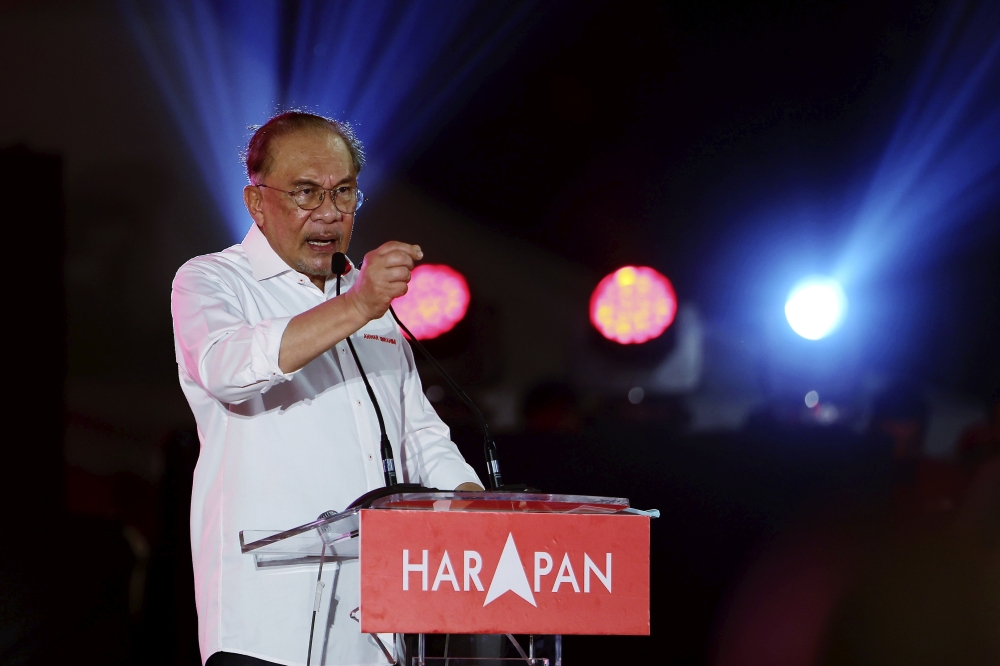
Prime Minister Datuk Seri Anwar Ibrahim has made a direct appeal to the voters of Negeri Sembilan to preserve their support for Pakatan Harapan, arguing that continuity in state governance is essential for accelerating development programmes and safeguarding the economic gains achieved since the coalition's return to power. Speaking at a public gathering in Seremban on July 16, Anwar framed the electoral choice as a straightforward question about whether the state should maintain its current trajectory of progress or risk disruption through a change in political administration.
The Prime Minister's appeal reflects a broader strategy by the ruling coalition to emphasise stability and tangible results in its messaging to voters across Malaysia. For Negeri Sembilan specifically, the administration has highlighted infrastructure improvements, job creation initiatives, and investments in key sectors such as manufacturing and services as evidence of Pakatan's ability to govern effectively at the state level. By campaigning on a platform of developmental continuity rather than radical transformation, Anwar and his coalition partners are attempting to consolidate support among voters who might otherwise be tempted by opposition promises or political alternatives.
Anwar's focus on development outcomes reflects a calculated political strategy that recognises the importance of delivering visible improvements to citizens' daily lives. Infrastructure projects—from road upgrades to educational facilities—represent tangible achievements that can be demonstrated to voters during campaign seasons. In Negeri Sembilan, where economic diversification remains an ongoing challenge amid competition from neighbouring Selangor and the Klang Valley region, maintaining investment momentum is presented as critical to the state's long-term competitiveness.
The emphasis on maintaining a Pakatan mandate also carries implications for federal-state relations. When state governments align with the federal administration's political coalition, resource allocation, project approvals, and intergovernmental coordination typically flow more smoothly. A change in state leadership could introduce friction in these relationships, potentially slowing the implementation of jointly funded projects or creating bureaucratic complications. This practical argument complements the broader narrative about political stability.
Negeri Sembilan's particular political context adds nuance to Anwar's messaging. The state has experienced considerable political volatility in recent years, with shifts in coalitional arrangements and leadership transitions creating uncertainty about long-term policy directions. Voters in the state have grown accustomed to a degree of political instability that distinguishes Negeri Sembilan from some other Malaysian states with more entrenched political alignments. Against this backdrop, the Prime Minister's call for continuity may resonate with those concerned about further disruption.
The opposition's response to such appeals typically centres on criticism of the ruling coalition's governance record, promises of alternative development visions, and allegations of unfulfilled campaign pledges from previous elections. Opposition parties will likely argue that different leadership could unlock economic potential through different policy priorities or more efficient project execution. These countervailing narratives frame the election as a choice between competing visions for the state's future rather than a simple endorsement-or-rejection referendum on Pakatan's performance.
For Southeast Asian observers and Malaysian analysts, Anwar's campaign approach exemplifies how development governance has become central to electoral politics across the region. Voters increasingly evaluate parties on their capacity to deliver infrastructure, maintain employment, and generate economic opportunities rather than on ideological grounds alone. This pragmatic orientation has shifted political competition away from historical factional disputes and towards performance-based assessments, though regional and communal considerations continue to influence voting patterns in significant ways.
The development continuity argument also reflects Pakatan's attempt to position itself as the party of stability in a region where political uncertainty remains a concern for investors and international observers. Malaysia's recovery from the political turbulence of recent years depends partly on sustained confidence in governance institutions and predictable policy environments. By emphasising continuity at the state level, Anwar signals to domestic and international audiences that Pakatan represents a stabilising force capable of providing the institutional reliability necessary for economic growth.
However, continuity arguments carry inherent limitations in electoral persuasion. Voters dissatisfied with current conditions or seeking change through alternative leadership may view appeals for maintaining the status quo as unresponsive to their concerns. If development outcomes in Negeri Sembilan have not met voter expectations—through delays in project completion, perceived unfair distribution of resources, or limited employment generation—then emphasising continuity may reinforce rather than alleviate voter frustration.
The broader challenge for Anwar and Pakatan lies in translating administrative achievements into electoral support while simultaneously addressing legitimate grievances about unequal development or unmet promises. In Negeri Sembilan, where economic pressures persist and competition for resources remains intense, campaign messages about continuity must be paired with credible commitments to accelerate progress on specific, highly visible initiatives that directly improve citizens' material circumstances.

