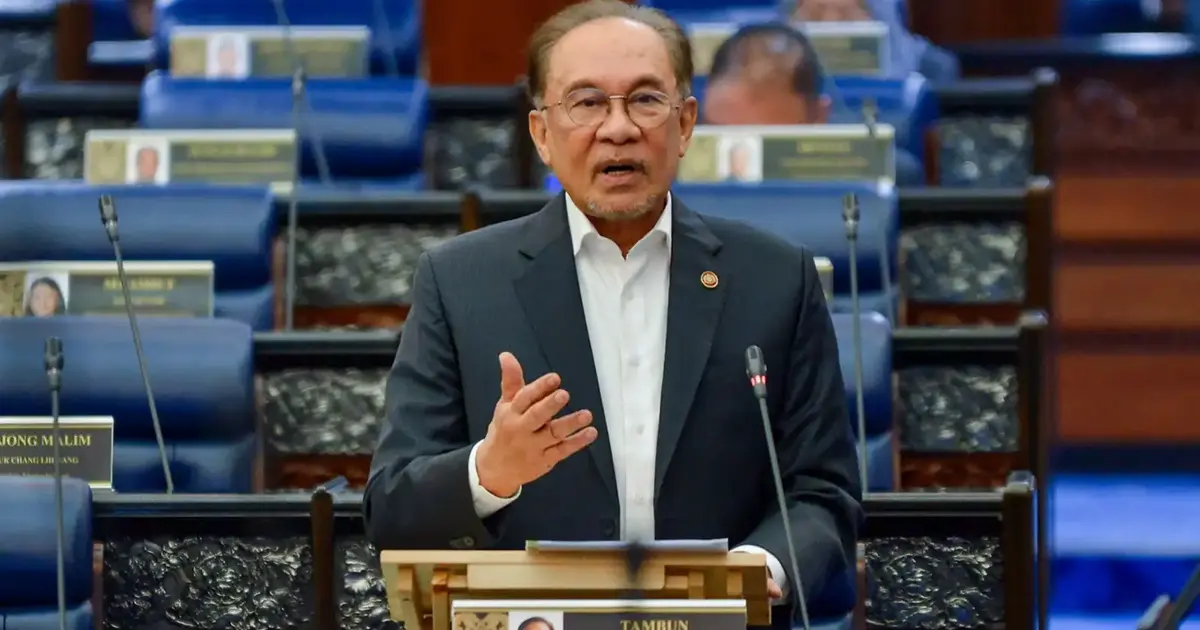
Prime Minister Anwar Ibrahim has once more deflected pressure to dissolve parliament prematurely, maintaining that the electorate values governmental continuity and tangible economic improvements above the disruption of another immediate campaign cycle. The remarks underline a strategic positioning by the premier as he navigates competing demands from coalition partners and opposition figures while seeking to consolidate his administration's policy agenda.
The repeated rejection of early election scenarios reflects a broader calculation within government circles that Malaysia's economic challenges—ranging from fiscal pressures to inflation concerns—demand sustained focus rather than the institutional paralysis that typically accompanies electioneering. By framing stability as a popular preference rather than merely a governmental advantage, Anwar positions the administration as responsive to citizen priorities rather than self-interested in extending its tenure.
Malaysia's political landscape has grown increasingly fluid since the 2022 general election delivered a fractured parliamentary outcome, necessitating coalition-building across traditionally distinct political camps. The government's reliance on a diverse coalition spanning Pakatan Harapan, Barisan Nasional, and independent lawmakers creates inherent vulnerabilities to defection or withdrawal of support. Against this backdrop, calls for fresh elections represent not merely parliamentary procedure but implicit expressions of confidence or lack thereof from political actors uncertain about their standing in the current arrangement.
The Prime Minister's insistence on completing the administration's mandate echoes positions staked by regional counterparts managing similarly complex coalitions. In Thailand, Singapore, and Indonesia, premiers have similarly argued that fragmentary political settlements require time to demonstrate governance competence and deliver measurable improvements in living standards. This regional pattern suggests recognition that frequent elections in deeply divided societies can entrench dysfunction rather than resolve underlying tensions.
For ordinary Malaysians, the government's pro-stability stance carries real implications for household economics. Extended uncertainty around election timing—if elections were triggered unpredictably—could spook investor confidence, complicate business planning horizons, and increase consumer hesitancy around major expenditures. International observers of Malaysian politics have noted that the 2022 election's prolonged transition and subsequent period of political jockeying already imposed measurable costs on economic sentiment. A fresh campaign cycle would potentially revive such disruption at a moment when managing inflation and employment remain pressing priorities.
The PM's rhetorical framing also serves an important communicative function within his coalition. By publicly committing to a full term, Anwar signals to coalition partners that the government intends to pursue substantive policy initiatives rather than merely securing electoral advantage through early advantage-timing. This reassures longer-term oriented figures within his administration that their portfolios and initiatives will persist rather than dissolve into campaign mode. For ministers overseeing significant reform or development projects, such signals carry weight in determining how ambitiously they pursue their mandates.
However, the calculus surrounding early elections remains volatile. Coalition stability depends substantially on ministerial satisfaction with portfolio allocation and influence over policy direction. Should significant figures grow dissatisfied with their standing or become convinced that electoral timing favours their positions, early election pressure could intensify irrespective of the PM's public positioning. Malaysia's experience with snap elections in Sabah and Sarawak demonstrates the rapid speed at which political dynamics can shift when powerful constituencies conclude that elections serve their interests.
The opposition's election advocacy carries its own strategic logic. By proposing fresh contests, opposition parties signal to constituents their readiness for power and implicitly argue that current arrangements lack legitimacy. This appeal particularly resonates with voters frustrated by coalition compromises or unhappy with specific ministerial decisions. For opposition figures personally aggrieved by current portfolios or convinced of electoral advantage, continued calls for elections represent rational political positioning even as government communication emphasises stability.
Regionally, Malaysia's situation mirrors broader Southeast Asian patterns where coalition management has become increasingly complex. The region has witnessed multiple instances of governments seeking stability through extended tenures—sometimes successfully, sometimes collapsing despite such rhetoric. The durability of Malaysia's current arrangement will partly depend on whether government programmes demonstrably improve conditions that matter to coalition members and their constituencies. Growth figures, employment data, and inflation trajectories thus become not merely economic statistics but political survival indicators.
The debate over early elections also illuminates differing public philosophies regarding representation and governance cycles. Those favouring stability prioritise executive competence and policy coherence, accepting that democratic legitimacy can endure for extended periods between electoral moments. Those pressing for elections emphasise perpetual democratic accountability and the notion that frequent contests better reflect evolving public opinion. Malaysia's multicommunal and multi-party landscape has historically accommodated both perspectives unevenly, creating perennial tension between these governance models.
Looking ahead, the Prime Minister faces the challenge of delivering sufficient economic and policy momentum to justify continued coalition patience. Ministerial scandals, policy failures, or macroeconomic deterioration could quickly erode the government's stability narrative and embolden internal defectors or opposition critics. Conversely, demonstrable improvements in infrastructure delivery, business confidence, or employment metrics could transform stability rhetoric from mere political positioning into genuine popular preference. The next election therefore remains less a matter of calendar than of governmental performance against public expectations.

