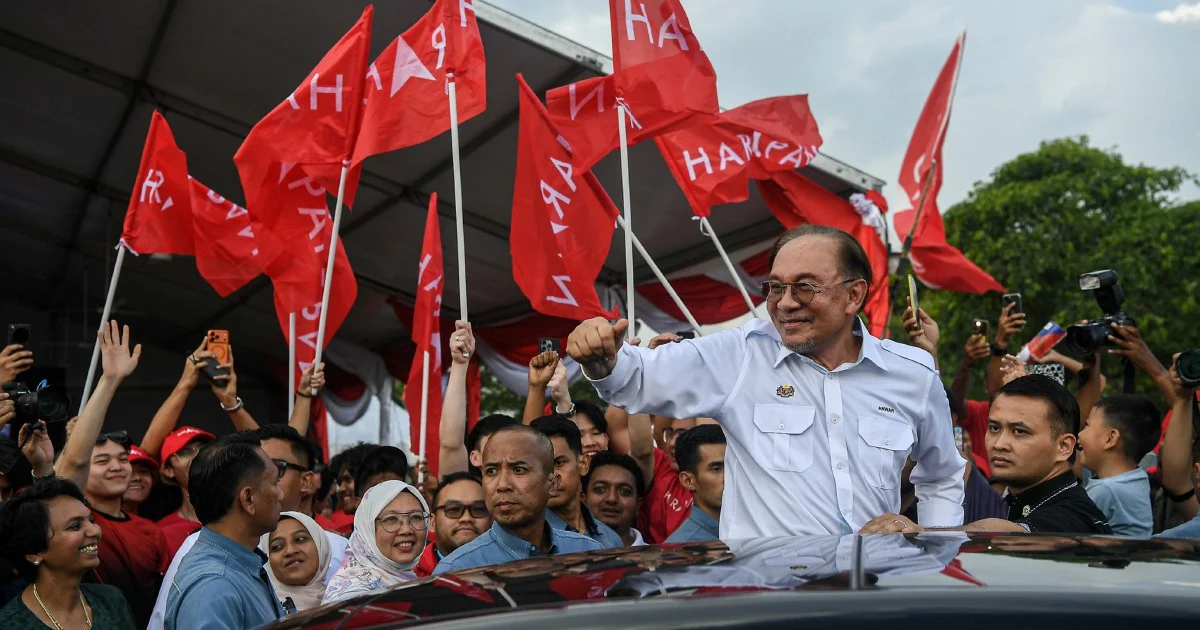
Pakatan Harapan chairman Datuk Seri Anwar Ibrahim has taken aim at political opponents who refuse to collaborate with the Democratic Action Party, characterising such positions as fundamentally incompatible with democratic principles. Speaking in Segamat, Anwar argued that politicians unwilling to engage with DAP or participate in joint endeavours undermine the very foundation upon which Malaysia's electoral system rests—the obligation to respect the will of the people as expressed through the ballot box.
The Pakatan Harapan leader's comments reflect ongoing tensions within Malaysia's political landscape, where some opposition figures and parties have historically maintained distance from DAP due to communal sensitivities and perceptions shaped by decades of political messaging. This reluctance to work across political divides has complicated efforts to build broader coalitions and has occasionally fragmented opposition efforts at both federal and state levels.
Anwar's position represents a deliberate framing of the cooperation between Pakatan Harapan components—which include PKR, DAP, Amanah, and associated parties—not as a temporary political arrangement but as a reflection of voters' considered judgment. In successive elections, Malaysian voters have demonstrated their willingness to endorse multiethnic, multiconfessional coalitions despite historical narratives emphasising ethnic and religious divisions. The Pakatan victory in the 2022 general election, despite not securing an outright majority, demonstrated that significant portions of the electorate were comfortable supporting DAP candidates and the coalition's inclusive platform.
The defence of DAP carries particular weight given that the party, despite its substantial representation in Parliament and state assemblies, continues to face scepticism from certain quarters within Malaysia's political establishment. Critics have sometimes challenged DAP's positioning on national issues, and some rival parties have previously avoided formal cooperation, citing various concerns about the party's ideology or agenda. Anwar's intervention appears designed to reset this conversation, positioning acceptance of DAP not as a matter of political convenience but as a democratic imperative.
For Malaysian politics more broadly, Anwar's remarks underscore the challenge of building stable governing coalitions in a system where voters have expressed appetite for diversity and cross-ethnic collaboration, even as traditional power structures and political messaging sometimes reinforce separatism. The Pakatan coalition itself has navigated these tensions since its inception, balancing the inclusion of a predominantly Chinese-supported party within a coalition claiming to represent all Malaysians.
The statement also carries implications for state-level politics, where Pakatan commands governments in Selangor, Penang, and Negeri Sembilan. In these administrations, DAP holds significant ministerial portfolios and roles. Any broader acceptance of DAP's legitimate place within Malaysian governance structures could facilitate more effective executive cooperation and policy implementation. Conversely, resistance to DAP engagement complicates these arrangements and potentially weakens governing capacity.
Anwar's intervention signals that Pakatan Harapan does not intend to marginalise or downplay DAP's role within the coalition in response to external criticism. This represents a strategic choice to defend the coalition's architecture rather than sacrifice components to appease critics. Such steadfastness could strengthen Pakatan's internal cohesion, though it may also intensify political polarisation if other parties respond by further entrenching their own positions.
The broader context involves Malaysia's ongoing evolution as a multiethnic democracy where political parties must navigate sensitivity around representation, national identity, and communal interests. The rise of Pakatan Harapan as a competitive force has challenged conventional wisdom about the necessity of ethnically monolithic political structures. Anwar's defence of DAP participation represents a counter-narrative to traditional frameworks that portrayed such diversity as inherently problematic.
For regional observers, Malaysia's experience with managing multiethnic coalitions offers lessons—both positive and cautionary—for other Southeast Asian democracies grappling with similar challenges. The tension between exclusive and inclusive approaches to political representation remains unresolved across the region, and Malaysia's trajectory will likely influence neighbouring countries' approaches to coalition-building and minority representation.
Looking forward, Anwar's comments establish a baseline expectation that legitimate political competitors should engage across party lines, particularly when those competitors have demonstrated electoral support. Whether such appeals shift the behaviour of political rivals remains uncertain, but they establish clear philosophical markers for how Pakatan Harapan intends to defend its inclusive positioning and challenge those who resist cooperation with DAP on principle rather than policy grounds.
The debate ultimately reflects deeper questions about Malaysian democracy itself: whether the country's electorate has genuinely shifted toward supporting cross-communal cooperation, and whether political elites will eventually align themselves with this apparent voter preference or continue resisting it. Anwar's Segamat remarks suggest he believes the democratic mandate has already been delivered, and that fellow politicians must adapt accordingly.

