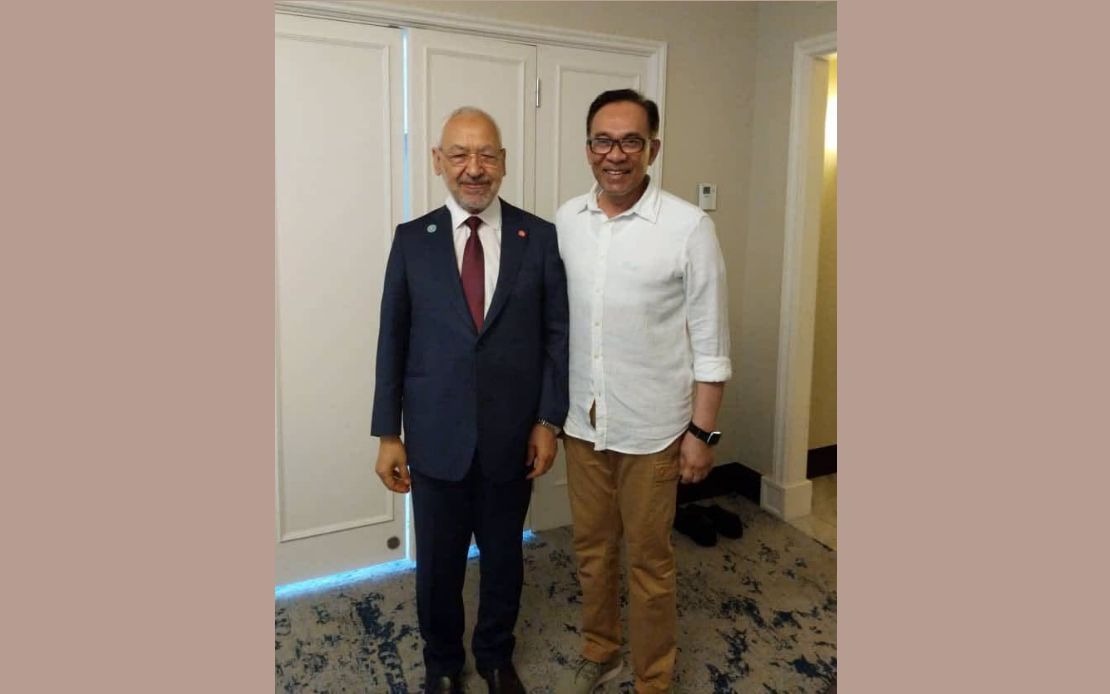
Prime Minister Datuk Seri Anwar Ibrahim has formally petitioned the Tunisian government for the release of prominent political detainee Sheikh Rached Ghannouchi, framing his request around the octogenarian's declining health and humanitarian imperatives. The appeal, conveyed through an official letter to Tunisian President Kais Saied, reflects Anwar's growing concern about the welfare of the 84-year-old figure, whom the Malaysian premier describes as a longtime personal acquaintance.
The diplomatic overture marks a notable intervention by Malaysia's leadership in an internal Tunisian matter, signalling the weight Anwar places on maintaining regional ties and supporting figures he considers intellectual allies. By explicitly grounding his petition in compassion rather than political solidarity, Anwar attempts to sidestep potential accusations of interfering in Tunisia's domestic judicial affairs while still advocating forcefully for a change in Ghannouchi's circumstances.
Ghannouchi's detention has drawn international scrutiny, with human rights organisations expressing alarm over both the length and conditions of his incarceration. The veteran Islamic political thinker, whose Ennahda movement shaped post-2011 Tunisia, faces charges that critics argue have been pursued with questionable rigour. His ongoing confinement despite advanced age and reported medical complications has become a rallying point for regional figures concerned with judicial fairness and proportionality in the North African nation.
Anwar's intervention carries particular resonance given Malaysia's own history of balancing Islamic political movements with democratic governance. His administration has positioned itself as a bridge between traditional values and contemporary pluralism, and his willingness to champion Ghannouchi suggests consistency with that philosophy. The Malaysian premier's explicit emphasis on respecting Tunisia's sovereignty and legal processes—while simultaneously pushing for reconsideration—demonstrates delicate diplomatic choreography intended to apply pressure without appearing confrontational.
The humanitarian framing of Anwar's appeal proves strategically significant. Rather than mobilising arguments around political ideology or religious brotherhood, the Malaysian leader centres the petition on universal principles of mercy and human dignity. This rhetorical choice broadens potential receptivity among international audiences and Tunisian decision-makers who might resist explicitly political appeals but could be persuaded by arguments rooted in basic ethical considerations and age-related vulnerabilities.
For Malaysia and Southeast Asia more broadly, the episode underscores how regional powers increasingly interweave foreign policy with principled stands on individual cases. Anwar's willingness to expend diplomatic capital on Ghannouchi's behalf, despite the lack of immediate Malaysian interests at stake, reflects an evolving approach to regional diplomacy that privileges personal relationships and ideological affinity alongside strategic calculation. This posture distinguishes Malaysia's positioning within global conversations about detained political figures and Islamic intellectuals.
Ghannouchi's situation illuminates broader tensions within Tunisia's post-2011 transition. The country's revolutionary trajectory, once celebrated as the Arab Spring's success story, has faced mounting criticism for erosions of judicial independence and recycled authoritarianism. The detention of a founder of Tunisia's most significant post-dictatorship political party, even amid legitimate governance concerns, invokes uncomfortable parallels with the very systems the 2011 uprising sought to dismantle.
Anwar's intervention also reflects the maturation of his own political thinking since assuming office. Rather than leading with revolutionary rhetoric or Islamic nationalism, his approach prioritises reasoned discourse emphasising shared values and mutual respect. This evolution mirrors Malaysia's broader strategic recalibration, emphasising stability, institutional integrity, and principled engagement over ideological posturing or confrontational regional positioning.
The appeal arrives amid Tunisia's broader political fragmentation and economic turbulence. President Kais Saied, who consolidated authority following a 2021 power grab, faces mounting international pressure regarding democratic backsliding and human rights compliance. Within this context, granting Ghannouchi's release would signal concessions to external pressure while potentially easing domestic tensions among constituencies loyal to the detained opposition figure. Conversely, continued incarceration reinforces perceptions of political revenge and judicial instrumentalisation that further isolate Tunisia internationally.
For observers tracking regional Islamic political movements, Anwar's explicit friendship with Ghannouchi and his public advocacy carry symbolic weight. The Malaysian leader's willingness to couple personal regard with political principle demonstrates how transnational Islamic intellectual networks persist despite geographical distance and varying political contexts. Such connections increasingly shape regional diplomacy in ways traditional state-centric analyses sometimes overlook.
The practical prospects for securing Ghannouchi's release remain uncertain, dependent on calculations within Saied's administration regarding political feasibility and international pressure accumulation. However, Anwar's intervention ensures that the case maintains prominence within regional consciousness and demonstrates that Malaysia considers the matter sufficiently important to warrant formal diplomatic engagement. This sustained attention, even if insufficient alone to secure release, contributes to the international pressure architecture gradually constraining Tunisia's authorities and amplifying voices demanding reconsideration of continued detention for an elderly political figure with significant historical and intellectual standing.

