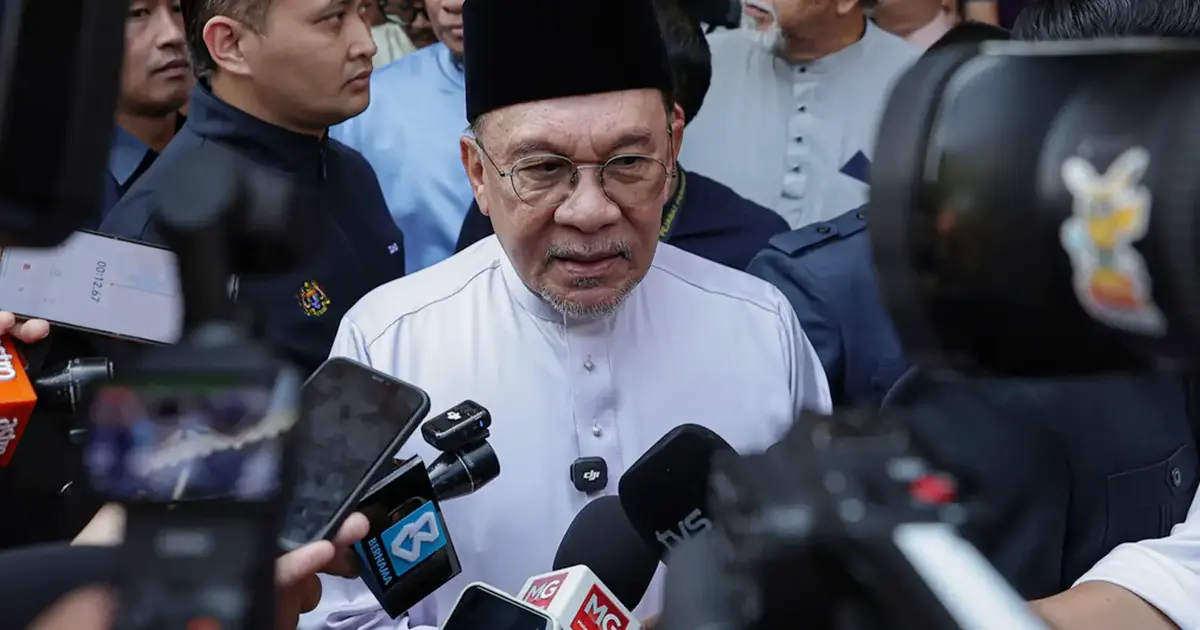
Prime Minister Anwar Ibrahim has signalled that strong public approval numbers should energise rather than satisfy the government, using the latest Merdeka Center survey results as a springboard to recommit to his administration's reform agenda. The positive sentiment reflected in the polling data, which placed his government ahead of previous administrations, comes at a critical juncture as Malaysia navigates economic headwinds and structural challenges that demand sustained political focus.
Anwar's characterisation of the survey findings as motivation rather than vindication reveals a strategic mindset attuned to the precarious nature of public support in Malaysian politics. The Merdeka Center, a respected independent polling institution, has long served as a barometer of government performance and public sentiment across demographic and geographic lines. That his administration has registered measurable approval gains underscores the effectiveness of certain policy initiatives, yet the prime minister's emphasis on redoubled efforts suggests awareness that electoral goodwill is earned incrementally and lost swiftly.
The timing of these remarks carries weight in the context of Malaysia's political trajectory. The unity government that emerged from the 2022 general election was constructed on a fragile coalition of competing interests, and maintaining that stability requires demonstrable governance wins that translate into tangible improvements in citizens' lives. Manufacturing consensus across a broad-based administration demands constant negotiation, and public support serves as both currency and leverage in those internal dynamics.
Anwar's framing also addresses a persistent vulnerability in Malaysian politics: the perception of entitlement that can accumulate when a government believes its position secure. History demonstrates that approval can reverse sharply when administrations lose momentum or when external economic shocks, unexpected scandals, or policy missteps erode public confidence. The prime minister's insistence that praise demands greater diligence reflects lessons learned from previous Malaysian governments that squandered political capital through perceived inaction or insensitivity to mounting pressures.
From a practical governance standpoint, the survey results likely validate elements of the administration's focus areas. Economic stabilisation remains central to the government's agenda, alongside efforts to address inflation, manage employment, and attract foreign investment. Social cohesion initiatives and institutional reforms aimed at strengthening democratic norms and anti-corruption measures have featured prominently in Anwar's messaging since assuming office. Public acknowledgement of progress in these domains, reflected in improved ratings, vindicates the strategic direction but simultaneously raises expectations for acceleration.
The renewed commitment to hard work also carries implications for Malaysia's regional standing. As a major Southeast Asian economy and an active participant in regional forums, Malaysia's political stability and effective governance influence perceptions of the ASEAN bloc's collective stability. An administration that demonstrates resilience and momentum contributes to investor confidence and diplomatic leverage across regional partnerships, from trade negotiations to security cooperation frameworks.
For Malaysian voters and observers, Anwar's response to the Merdeka Center survey data suggests an administration determined to translate approval into policy achievement rather than rest on laurels. This posture contrasts with historical patterns where governments have consolidated power following electoral or polling success, often at the expense of reform momentum. The emphasis on continued effort signals recognition that the Malaysian electorate has become more demanding, less forgiving of stagnation, and increasingly attentive to the gap between political rhetoric and administrative delivery.
The survey results themselves warrant examination within the broader context of Malaysian governance expectations. Public approval for a government typically reflects assessments of economic management, social stability, corruption perception, and the perceived competence of leadership. That Anwar's administration has achieved measurably better standing than its immediate predecessor suggests meaningful shifts in at least some of these dimensions, though regional challenges including inflation, currency volatility, and global economic uncertainty continue to constrain policy options.
Anwar's insistence that positive polling should drive intensified effort also acknowledges the competitive nature of Malaysian politics, where opposition parties and potential rival coalition partners continuously manoeuvre for advantage. Complacency invites challenge; demonstrable progress on priority issues consolidates support across constituencies that may not yet be fully aligned with the government's vision. The urgency embedded in his comments reflects understanding that the unity government framework remains a work in progress, requiring constant care and results-oriented momentum to sustain.
Moving forward, the degree to which the Anwar administration can convert stated resolve into measurable policy implementation will determine whether this survey moment becomes a genuine inflection point in Malaysia's governance narrative or merely a temporary plateau. Voters will assess subsequent developments in cost-of-living pressures, employment opportunities, institutional reform progress, and the government's ability to manage competing demands within its coalition. The prime minister's determination to work harder, if translated into visible achievement, could reshape perceptions of what governance under the unity administration can accomplish.

