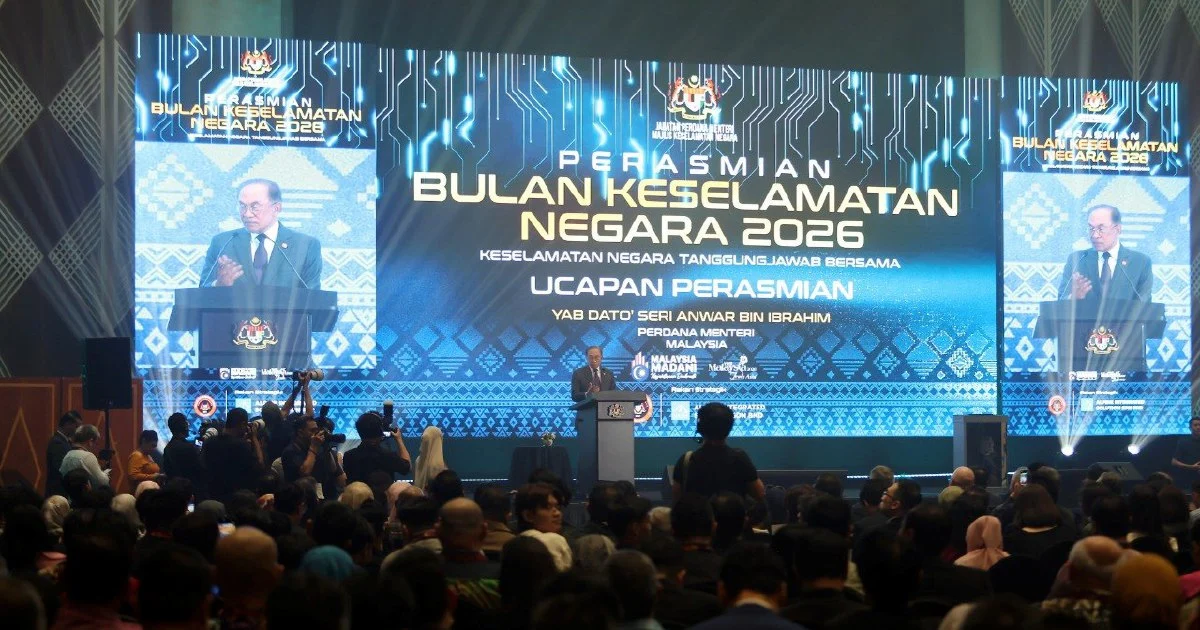
Prime Minister Datuk Seri Anwar Ibrahim has sounded an alarm over the resurgence of racially-charged narratives in Malaysian political discourse, particularly as Johor prepares for state elections. Speaking in Putrajaya, the Prime Minister expressed deep concern that the country risks becoming ensnared by outdated divisive rhetoric at precisely the moment when the nation requires unity and forward-thinking governance. His intervention underscores the growing anxiety within the federal government that electoral contests, especially in major states like Johor, could become flashpoints for communal tensions rather than platforms for policy debate.
Anwar's remarks come amid a sensitive period for Malaysian politics. Johor, Malaysia's second-largest state and historically a battleground between competing political coalitions, is entering an election season that will test the current administration's commitment to moving beyond the racial and regional fault lines that have long characterised Malaysian electoral campaigns. The Prime Minister's warning reflects a broader governmental strategy to elevate campaign discourse beyond identity politics and toward economic performance, governance delivery, and nation-building narratives that appeal across communal lines.
The timing of Anwar's statement carries particular significance given Malaysia's recent political instability and the fragile consensus that underpins the current ruling coalition. By flagging the dangers of racialised political messaging, the Prime Minister is attempting to establish clear parameters for acceptable electoral conduct—a signal directed both to his own coalition partners and to opposition forces that may be tempted to exploit communal anxieties for electoral gain. The underlying message is that politicians who resort to divisive racial rhetoric risk delegitimising themselves and destabilising the political environment.
For Malaysian readers, particularly those in Johor, Anwar's intervention highlights a fundamental tension in the nation's political culture. While Malaysia's constitutional framework and electoral system are organised around concepts of ethnic representation and communal interests, successive prime ministers have grappled with the challenge of channelling this reality toward constructive governance rather than allowing it to devolve into polarisation. Anwar's explicit concern about becoming "trapped" in old narratives suggests that he views such rhetoric not as inevitable but as a choice that politicians make—and therefore something that can be resisted.
The reference to "regional narratives" is equally telling. Johor has long been viewed by political analysts as a state where geography, economic dynamics, and historical settlement patterns have created distinct identities and interests. The Prime Minister's caution against allowing these regional factors to be weaponised in electoral campaigns implies that his administration is conscious of how state-level politics can either reinforce or transcend national divisions. This is especially relevant in Johor, where questions of economic development, access to opportunities, and state autonomy have often intersected with broader questions of national identity.
For the Southeast Asian region more broadly, Anwar's statement reflects a pattern increasingly visible across the bloc: established democracies grappling with the challenge of deepening polarisation and the temptation for political actors to mobilise identity-based constituencies. Malaysia, with its multi-ethnic, multi-religious composition, offers both a cautionary tale and a potential model for how competitive electoral systems can function without descending into communal conflict. The Prime Minister's intervention suggests that maintaining this balance requires constant, explicit commitment from political leaders.
The practical implications for Johor's upcoming election are substantial. If respected, Anwar's warning could elevate the quality of political debate and create space for candidates and parties to compete on grounds of competence, vision, and economic performance. Conversely, if such warnings are ignored or if opposition figures calculate that racial appeals carry electoral benefits, the campaign could reinforce patterns that the government ostensibly seeks to move beyond. The credibility of Anwar's cautionary message will depend significantly on whether his own coalition partners and government representatives adhere to the standards he is articulating.
From a longer-term perspective, Anwar's concerns also point to anxieties about generational attitudes toward Malaysia's foundational political bargains. As Malaysia's workforce increasingly consists of citizens born after the country's major constitutional settlements and racial violence of the 1960s, politicians face choices about whether to refresh social contracts around contemporary concerns—employment, housing, education quality, environmental sustainability—or to rely on invocations of communal identity and historical grievances. The Prime Minister's stance suggests that he views the former as preferable and necessary for national development.
The institutional context matters here as well. Anwar leads a coalition government that depends on securing consensus among diverse components with sometimes competing communal constituencies. In this environment, his public warning against racialised politics serves a dual function: it sets expectations for national discourse while simultaneously asserting his authority as Prime Minister to define the terms of acceptable political competition. Whether Johor's election becomes a vindication or repudiation of this approach remains to be seen, but Anwar has clearly signalled that the federal government views the stakes as extending far beyond state-level politics.

