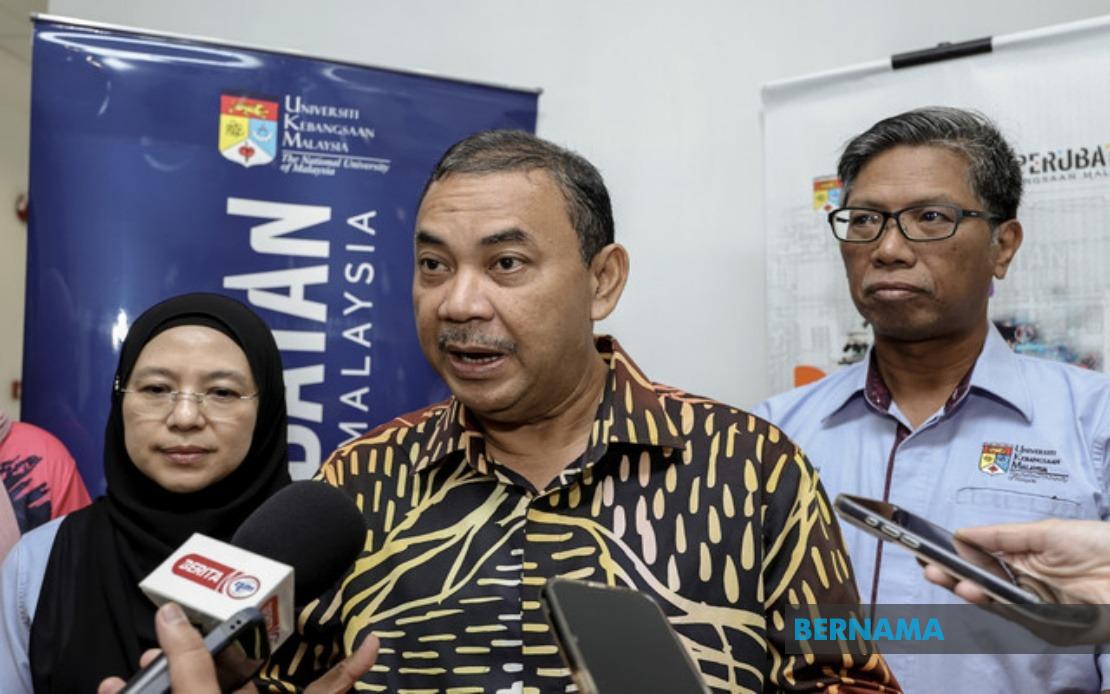
The MADANI Government under Datuk Seri Anwar Ibrahim is receiving widespread acknowledgement for its track record in driving investment, bolstering economic activity and stabilising the Malaysian ringgit, according to Datuk Azman Abidin, the Prime Minister's political secretary. Speaking in Kuala Lumpur, Azman contended that these tangible achievements demonstrate the Prime Minister's leadership capacity and create a compelling foundation for voters to extend his administration's tenure in the next electoral cycle.
Azman's remarks underscore a critical narrative emerging from government circles as Malaysia approaches its next general election cycle. The political secretary argued that denying the Prime Minister's demonstrated performance and administrative capabilities would be untenable, particularly when examining the measurable improvements registered across investment inflows, economic indicators and currency management. These domains have traditionally served as barometers of government effectiveness and public confidence in any administration's economic stewardship.
The endorsement reflects growing confidence within the government that its reform initiatives and policy achievements have generated sufficient momentum to sustain political support. Azman suggested that independent political analysts have similarly reached conclusions favourable to the MADANI administration, characterising its performance as strong enough to warrant an additional mandate to advance its reform programme and pursue excellence across key sectors. This alignment between official messaging and analyst assessments appears designed to project a sense of broad-based validation for the government's approach.
Looking ahead, Azman indicated that the administration intends to maintain its momentum by ensuring that the benefits of government initiatives reach all demographic and socioeconomic segments of society. He flagged forthcoming announcements tied to significant national occasions—particularly the National Day and Malaysia Day celebrations—and indicated that the government will present its Budget 2027 proposal, presumably containing additional initiatives intended to demonstrate continued commitment to public welfare and economic development.
Crucially, Azman expressed confidence that ordinary Malaysians will evaluate the government's track record comprehensively and make electoral decisions based on rational assessment of actual performance rather than partisan rhetoric. This appeal to public reason represents an implicit acknowledgement that electoral outcomes depend fundamentally on whether voters believe their material circumstances have improved under current leadership and whether future prospects appear promising under continued MADANI governance.
Beyond electoral calculations, Azman's comments occurred during his address at the STEM Exploration 2.0 programme at Universiti Kebangsaan Malaysia, where he emphasised the government's commitment to developing scientific and technical talent among Malaysian youth. The programme engaged 200 Form Three students from the Klang Valley and Negeri Sembilan in hands-on exploration of science and medicine, featuring laboratory work in microbiology, biological systems understanding and cutting-edge applications such as three-dimensional printing technology in medical contexts.
Azman advocated for elevating science and technology education from optional subject status to foundational curriculum necessity, framing STEM competency as indispensable for national competitiveness amid accelerating global technological change. His argument reflects international consensus that countries requiring sustained economic development and high-value employment generation must prioritise deep engagement with science, technology, engineering and mathematics from secondary school onwards. For Malaysia specifically, this emphasis addresses longstanding concerns about the nation's ability to move decisively up the value chain in manufacturing and services sectors.
The political secretary called upon participating students to leverage this educational exposure as inspiration for ambitious career aspirations in scientific and medical fields, invoking the principle that transformative leadership and scientific breakthrough emerge incrementally through foundational knowledge acquisition. By positioning educational engagement at UKM as the starting point for future innovation leadership, Azman implicitly connected the MADANI Government's commitment to talent development with its broader economic ambitions.
Expanding the STEM Exploration programme nationwide represents a significant educational ambition, particularly given initial participation limitations. Rollout to schools across Malaysia's peninsula and east Malaysian territories would substantially increase access to hands-on scientific experience, though implementation would require considerable investment in infrastructure, training qualified educators and ensuring equitable geographic distribution of programme benefits.
The convergence of electoral messaging with investment in youth scientific development illustrates how governments typically integrate short-term political objectives with longer-term institutional development priorities. By simultaneously advancing claims about current economic performance while investing in future human capital formation, the MADANI administration attempts to demonstrate both present competence and future-oriented thinking.
For Malaysian voters and observers across Southeast Asia, these developments merit attention as indicators of how the region's leading ASEAN economy is positioning itself for the coming decade. The emphasis on investment attraction, economic resilience and scientific talent suggests a government betting that sustained growth and technological advancement will ultimately prove more persuasive to electorates than alternative political messaging.

