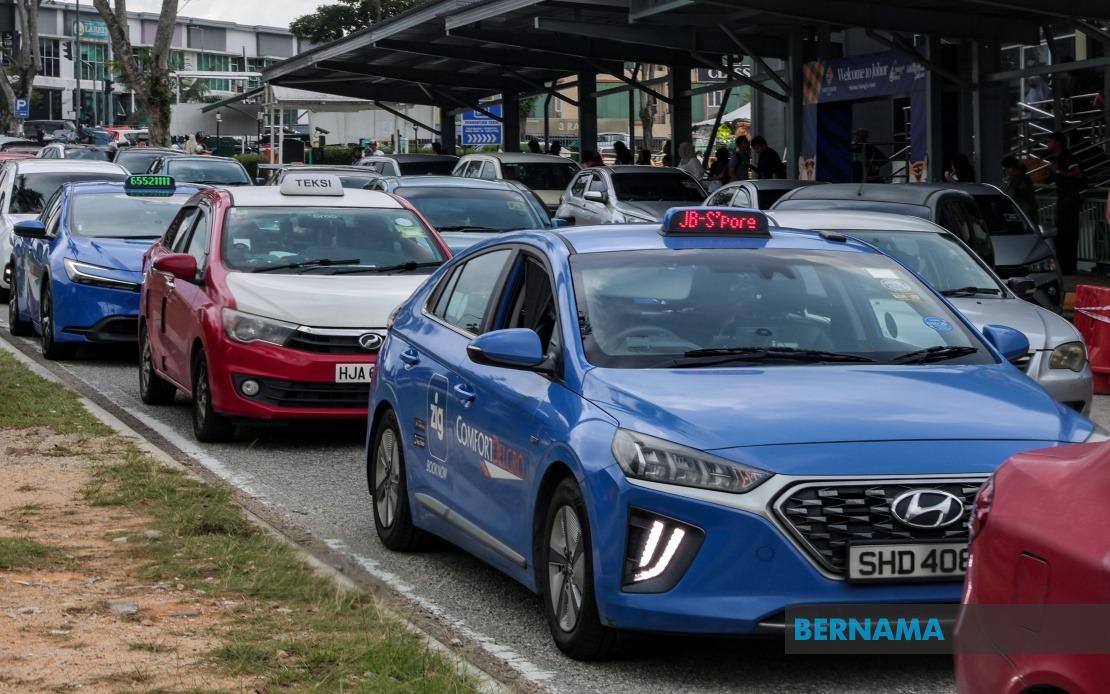
The Land Public Transport Agency (APAD) has announced a significant policy adjustment to the National MADANI Taxi Renewal Programme, permitting taxi drivers to license or replace their vehicles with models beyond the government-mandated Proton S70. This flexibility marks a pragmatic response to real-world challenges faced by applicants navigating the programme's implementation, particularly those who already operate existing vehicles or encountered obstacles securing hire-purchase financing.
While the Transport Ministry's initial policy framework announced on April 23 designated the Proton S70 as the exclusive vehicle model for new applications and replacements under Teksi MADANI, the regulatory environment has evolved to accommodate broader industry needs. APAD's clarification represents a recalibration designed to prevent unnecessary barriers that could discourage taxi drivers from participating in what represents a transformative shift in vehicle ownership structures within Malaysia's taxi industry.
The allowance for alternative vehicles specifically targets two distinct applicant groups. First, drivers who already possess functioning taxis and may prefer to maintain their current assets rather than transition to new models face fewer compulsory requirements under this revised approach. Second, and perhaps more significantly, drivers who applied for Teksi MADANI financing but were rejected by hire-purchase providers now retain the ability to continue operating taxis under alternative arrangements, preventing their effective exclusion from the broader industry modernisation initiative.
Texi MADANI itself represents a watershed moment for Malaysia's taxi sector. Launched by Prime Minister Datuk Seri Anwar Ibrahim on July 3, the programme fundamentally restructures the relationship between drivers and vehicle ownership, transitioning away from the traditional lease-based model that has long characterised the industry. This shift grants drivers legal ownership of their vehicles, a development with profound implications for driver welfare, business sustainability, and long-term financial security within what has historically been a fragile occupational category.
The Proton S70 sedan, selected as the official Teksi MADANI vehicle, represents a modernisation effort extending beyond mere aesthetics. The model features contemporary design elements, operates without traditional rooftop identification signs, and utilises a distinctive vehicle registration series commencing with the letters "GET". This branding approach signals a deliberate repositioning of taxi services as contemporary urban transport rather than perpetuating outdated imagery, reflecting broader aspirations to elevate the sector's professional standing and passenger perception.
Financial support underpinning the programme has expanded significantly. The government originally allocated RM10 million under Budget 2026 specifically for Teksi MADANI implementation. Following encouraging early uptake, the Prime Minister announced an additional RM10 million allocation dedicated to the Old Vehicle Replacement Matching Grant Programme, targeting taxi drivers directly. This supplementary funding reflects confidence in the programme's trajectory and commitment to ensuring broader participation beyond early adopters.
An important distinction within the policy framework permits existing taxis not replaced through Teksi MADANI to continue operating until reaching specified vehicle age thresholds. This graduated transition approach avoids precipitating economic hardship among drivers unable or unwilling to participate immediately, allowing market forces and individual circumstances to guide conversion timelines rather than imposing rigid deadlines. Such flexibility acknowledges the diverse financial situations and operational preferences across Malaysia's heterogeneous taxi driver population.
For Malaysian readers and Southeast Asian observers, the APAD adjustment carries instructive implications regarding government programme implementation. Even carefully designed transformation initiatives require course corrections when encountering practical realities. The willingness to accommodate alternative vehicle choices while maintaining core programme objectives—driver ownership, financing support, modernised fleet composition—suggests a sophisticated understanding that rigid adherence to initial specifications can undermine broader policy goals. This principle extends beyond taxi regulation to encompass broader economic and social policy domains.
The financing dimension remains critical to programme success. Hire-purchase rejections reflect both applicant creditworthiness concerns and lender risk assessments, realities that cannot be legislated away despite policy intentions. By permitting alternative vehicle selections, the framework avoids concentrating programme benefits exclusively among drivers with superior credit profiles, instead distributing opportunities more equitably across income and financial status gradients within the profession.
Looking forward, data regarding participation rates across both Proton S70 selections and alternative vehicle choices will illuminate how Malaysian taxi drivers respond to structured incentive frameworks balanced against operational flexibility. Whether most drivers eventually transition to Teksi MADANI vehicles or significant cohorts maintain alternatives will indicate the programme's effectiveness in achieving desired modernisation without sacrificing inclusivity. The distinction matters profoundly for sector-wide transformation timelines and the achievement of broader government objectives regarding professional standards and passenger experience enhancement.
The APAD clarification ultimately reflects recognition that transformative policy requires adaptive implementation. By maintaining programme ambitions while accommodating practical constraints, Malaysia's transport regulatory authorities have demonstrated capacity to learn and adjust in real-time—an increasingly essential capability as governments pursue complex, multi-stakeholder initiatives requiring sustained participation from economically vulnerable population segments dependent upon regulatory frameworks for their professional survival and advancement.

