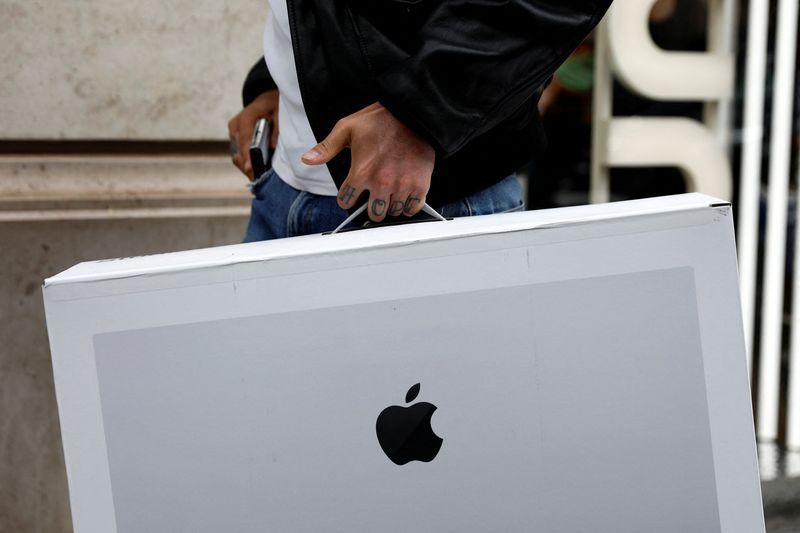
Apple has reclaimed the mantle of world's most valuable company after Nvidia's extended reign, with the iPhone maker's valuation reaching $4.88 trillion on Friday whilst the chipmaker declined to approximately $4.86 trillion following a 3.5% drop in its share price. The reversal marks a significant moment in the technology sector's hierarchy, underscoring how investor expectations around artificial intelligence are evolving beyond the initial wave of enthusiasm for dedicated AI chip manufacturers. Nvidia had dominated the rankings for nearly a year following its groundbreaking status as the first company to breach a $5 trillion valuation threshold in October, establishing what appeared to be an insurmountable lead over competitors.
The repositioning reflects a fundamental recalibration in how investors evaluate artificial intelligence opportunities across the technology industry. Rather than concentrating capital on companies racing to develop foundational AI models and the infrastructure supporting them, market participants are increasingly recognising the commercial potential embedded within established consumer technology ecosystems. Apple's ascension is particularly noteworthy given the company's historic perception as a latecomer to the artificial intelligence revolution, a position that had previously weighed on its valuation despite its status as one of the world's most profitable enterprises.
Investment strategists point to a crucial distinction in how different technology companies can extract value from the artificial intelligence transition. Toni Meadows, head of investment at BRI Wealth Management, articulates the emerging consensus that Apple's business model sidesteps the capital intensity plaguing chipmakers and generative AI developers. Rather than investing billions in training large language models and fabricating specialised processors, Apple can monetise artificial intelligence through its existing services ecosystem, the locked-in customer base across its hardware portfolio, and device refresh cycles that encourage adoption of new capabilities. This approach promises more sustainable and predictable earnings growth compared to speculative bets on whether emerging AI startups will successfully commercialise breakthrough technologies.
Apple's strategic positioning within the artificial intelligence landscape has undergone notable transformation in recent months. The company unveiled a comprehensive overhaul of its Siri voice assistant following years of stagnation, attempting to narrow the widening gap between its offerings and those of competitors ranging from OpenAI to Amazon. This initiative represents a significant commitment to reasserting relevance in a sector where Apple had been dismissed by critics as playing catch-up. Yet the genuine advantage Apple possesses lies in an underutilised reservoir of personal data accumulated across billions of active iPhones globally. This information, encompassing user preferences, communication patterns, and device usage habits, could theoretically enable Siri to deliver dramatically more personalised and contextually appropriate responses than competitor systems lacking similar insights.
The challenge confronting Apple's artificial intelligence ambitions remains formidable despite these inherent advantages. The company has constructed its brand identity partly around privacy commitments, encrypting user data locally on devices rather than transmitting information to centralised servers for analysis. Extracting commercial value from this treasure trove of personal information whilst maintaining the privacy guarantees that distinguish Apple from rivals like Google and Meta requires sophisticated technical solutions and potentially difficult philosophical compromises. The company must discover methods to leverage aggregate user data insights without violating the privacy expectations its customers have come to expect, a balancing act that remains largely unresolved.
Nvidia's displacement from the top position should not be interpreted as evidence of fundamental weakness or diminished long-term prospects. The semiconductor manufacturer continues capturing enormous revenue streams from enterprises investing heavily in artificial intelligence infrastructure, with its graphics processing units powering most contemporary generative artificial intelligence applications. The chipmaker's graphic processors remain essential components in data centres worldwide, and the adoption of artificial intelligence systems by enterprises shows no signs of deceleration. Market leadership positions between these corporate titans can shift rapidly based on sentiment, and Nvidia retains the capacity to reclaim the top spot if investor enthusiasm around chip-related artificial intelligence opportunities strengthens.
Apple faces distinct vulnerabilities that temper optimism about its elevated valuation. The company has pursued pricing strategies designed to maintain profit margins despite rising manufacturing and supply chain expenses, a defensive tactic that necessarily constrains unit sales growth. Consumers often delay upgrades when device prices climb substantially, particularly in markets where competing alternatives offer improved value propositions. This structural headwind could materialise as a significant constraint on Apple's ability to deliver the consistent revenue expansion that justifies its premium valuation.
The artificial intelligence enthusiasm circulating through financial markets has increasingly dispersed across the semiconductor industry rather than concentrating entirely upon Nvidia. Memory chip manufacturers like Micron have emerged as substantial beneficiaries of infrastructure spending, with Micron surpassing a $1 trillion valuation threshold in May as investors recognised the essential role of memory capacity in artificial intelligence systems. South Korea's SK Hynix recently commenced Nasdaq trading, introducing another participant competing for investor capital within the semiconductor ecosystem.
Sector rotation within the semiconductor industry accelerated following a turbulent July as institutional investors began reassessing the sustainability of artificial intelligence-driven technology spending. The Philadelphia SE Semiconductor Index declined nearly 19% from its peak as skepticism regarding valuations and spending trajectories gained traction among market analysts. Despite this substantial pullback, the index has nevertheless delivered stronger year-to-date performance than Nvidia specifically, suggesting that investor diversification across semiconductor manufacturers has provided some portfolio resilience. Benjamin Hall, vice president of alpha research at Segal Marco Advisors, notes that expanding investor focus toward a broader constellation of semiconductor beneficiaries rather than exclusively dominant "Magnificent Seven" technology firms reflects maturing market assessment of artificial intelligence's commercial trajectory across multiple sectors.
The leadership transition occurring within Apple adds an additional dimension to the company's artificial intelligence positioning and strategic direction. Chief Executive Officer Tim Cook will surrender his position to hardware specialist John Ternus in September, marking the conclusion of Cook's transformative tenure guiding the company through multiple product cycles and market transitions. Cook's final months at the helm will inevitably be assessed partly through the prism of Apple's successful reassertion of technological leadership in artificial intelligence, lending heightened significance to the company's recent accomplishments and near-term strategic initiatives. The perception of Apple as having successfully navigated the artificial intelligence transition could substantially influence how Cook's legacy is ultimately evaluated by shareholders and technology industry observers.
The pecking order reshuffling among global technology companies underscores the dynamic nature of competitive positioning within rapidly evolving sectors. Nvidia's previous dominance had appeared almost unassailable during the artificial intelligence boom's initial phase, yet the market's maturation and broadening recognition of diverse paths to artificial intelligence monetisation have shifted capital allocation patterns. For Southeast Asian investors and technology sector observers, this competition among technology titans demonstrates that artificial intelligence's commercial opportunities extend well beyond companies directly building foundational models or manufacturing chips. Services-oriented approaches, ecosystem lock-in, and hardware manufacturers leveraging existing customer bases represent equally viable pathways to artificial intelligence-driven growth, potentially offering more durable returns than speculative exposure to pure artificial intelligence infrastructure plays.

