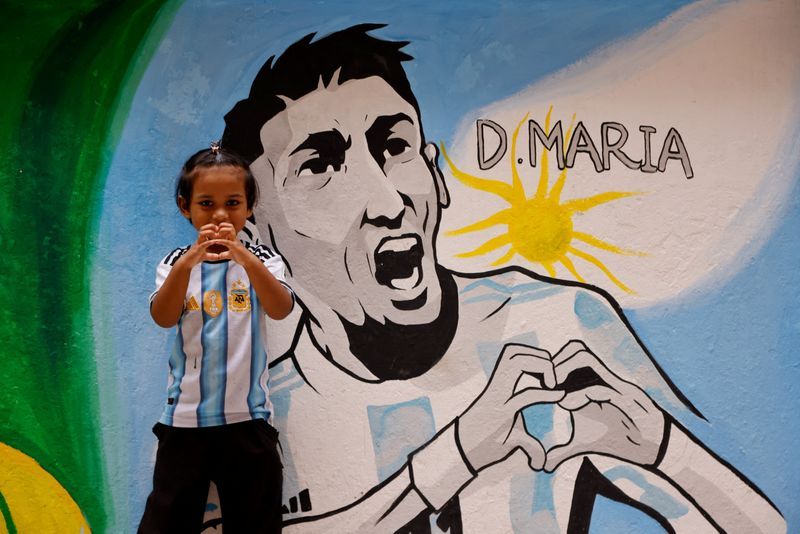
Argentina and Switzerland will clash in the World Cup knockout stage on Saturday, carrying the weight of history as they prepare for a matchup that echoes across 12 years and a continent. The two nations last met in Brazil during the 2014 tournament's round-of-16 stage, a tense encounter resolved when Angel Di Maria's extra-time goal secured Argentina's passage and kept Lionel Messi's World Cup dream alive. Now, in Kansas City, Missouri, they collide again on football's grandest stage, yet the circumstances could hardly be more different for either side.
The landscape of international football has shifted dramatically since that sultry afternoon in Sao Paulo. Argentina entered 2014 as perpetual contenders weighed down by absence, desperately seeking to win their first World Cup since 1986 and to fully harness Messi at his absolute peak. Switzerland, meanwhile, had become reliable tournament regulars but remained trapped in a historical pattern, unable to break through to the quarter-finals despite reaching the finals stages repeatedly since 1954. The imbalance was evident: one nation chasing redemption with the world's best player in their ranks, the other seeking merely to step beyond a recurring ceiling.
Argentina now arrives in Kansas City as defending world champions, having claimed the trophy in Qatar 2022 and finished as runners-up four years earlier. The continental landscape has transformed beneath their feet. Yet paradoxically, the tournament still orbits around Messi, despite the 39-year-old captain no longer possessing the explosive athleticism of his younger years. In the last-16 encounter against Egypt, Argentina demonstrated both their championship mettle and underlying fragility, overturning a two-goal deficit with just eleven minutes remaining to secure an improbable 3-2 victory. The manner of that comeback—desperate, thrilling, and ultimately victorious—encapsulates their tournament experience thus far.
Messi's reflections on the Egypt match revealed the psychological texture of Argentina's campaign. "We suffered a lot again, but this is the World Cup. Every game is going like this," the Argentine captain observed, gesturing toward a group that refuses to surrender regardless of circumstance. "This group never gives up and keeps trying until the end." That resilience, blended with individual moments of genius, has carried the two-time finalists through the early rounds despite inconsistent performances that have troubled observers.
Switzerland's journey to this quarter-final represents their own watershed moment. Under Murat Yakin's stewardship, they achieved something that eluded their predecessors for seven decades: reaching the final eight at the World Cup. Their passage came through a penalty shootout triumph over Colombia in a goalless stalemate, a victory that required composure and technical excellence in equal measure. The Swiss squad now believes they possess the tactical discipline and attacking unpredictability to trouble even the defending champions, a confidence born from having navigated to unfamiliar territory.
Only three survivors from the 2014 encounter remain to bookend this rivalry. Messi is self-evident; Granit Xhaka, Switzerland's 33-year-old captain and Arsenal midfielder, represents the continuity of Swiss resistance; and Ricardo Rodriguez, the veteran defender, completes the trio. Xhaka's respect for Messi borders on reverence—he acknowledged the privilege of competing in an era containing such talent—yet his comments also reflected a hard-headed assessment of the challenge ahead. "We played against him when we lost in 2014 in Brazil. We know the quality, what he has, but all the team as well," the midfielder stated, signalling that Argentina's threat extends beyond any individual, however transcendent.
Rodriguez echoed this balanced perspective, recognizing Argentina as fundamentally formidable while refusing to treat them as untouchable. "Argentina are a great team. Very strong players, a good coach. We know how they play," the defender said. "And they have the best one." The acknowledgment carries no defeatism, merely realism about the calibre of opposition they will face.
Switzerland's tactical evolution has moved beyond the stereotype of defensive solidity alone. Johann Manzambi's creativity in midfield proved crucial during their Colombia encounter, though a knee injury threatens his availability for the Argentina fixture. Coach Yakin's willingness to deploy a more offensive approach reflects Switzerland's growth as a tournament force, moving beyond the rigid defensive structures that long defined their World Cup participation.
Yakin has identified potential fractures in Argentina's armour, pointing to their recent struggles against Cape Verde and Egypt as evidence that the defending champions possess exploitable vulnerabilities. "We're up against the defending champions, which is a unique opportunity. At the same time, we've realised that Argentina are not invincible," the Swiss coach said strategically. "It should be an interesting match from a tactical point of view." This assessment carries weight; Argentina have displayed moments of defensive indiscipline that superior opponents might ruthlessly punish.
Argentina coach Lionel Scaloni, preparing his squad for what promises to be a demanding examination, views Switzerland with appropriate respect and caution. He expects to maintain the core of his side that defeated Egypt, trusting in the collective resilience and individual quality that has sustained Argentina's campaign. Scaloni recognized his opponents as possessing "an incredible World Cup tradition" and "outstanding players," framing the encounter as a proper test rather than a coronation.
The symmetry of this rematch carries profound meaning. Twelve years ago, Di Maria's moment of genius resolved an impasse and advanced Argentina toward their eventual final. Now Switzerland finally occupy that quarter-final space they sought for so long, only to discover that Argentina and Messi stand directly before them once more. The roles have inverted—Argentina now defend rather than pursue, Swiss ambitions have crystallized into reality rather than remaining aspirational—yet the fundamental dynamic persists. Both nations will battle for passage, but the 2014 ghosts will surely haunt the touchlines.

