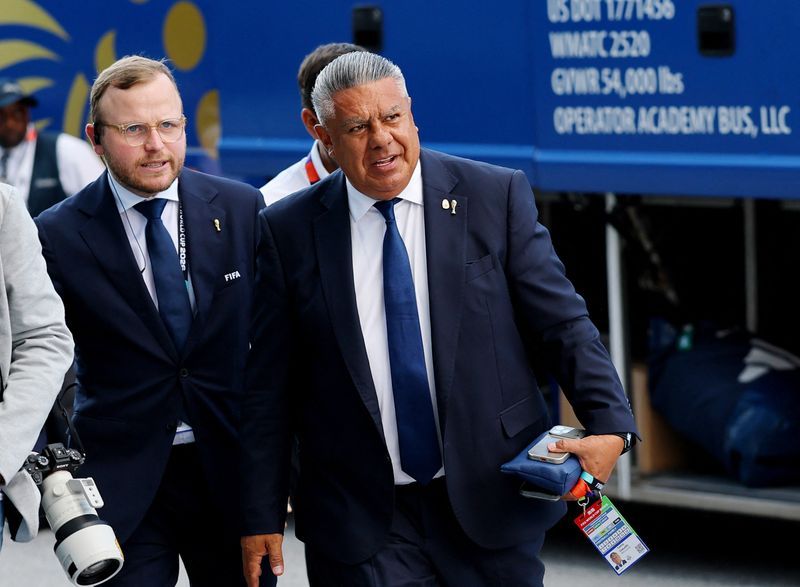
Argentina's football association moved swiftly on Wednesday to distance its leadership from mounting legal scrutiny in the United States, flatly denying that president Claudio Tapia or treasurer Pablo Toviggino had been summoned to provide testimony to American courts. The denial came amid conflicting reports of airport encounters and growing concerns about the governance and finances of South American football's flagship organization during a period of intense international oversight.
The association's statement acknowledged that a third party, whom it declined to identify, had indeed received a subpoena to appear before a US grand jury and offer evidence regarding multiple individuals connected to the organization. This carefully worded admission suggests that while the AFA's top leadership may have escaped direct legal obligation, the organization itself remains firmly in the investigative crosshairs of American authorities—a distinction that carries significant implications for how the association operates internationally.
Reports in Argentine media painted a more dramatic picture of events at New York's JFK Airport, alleging that FBI agents had detained both Tapia and Toviggino on Monday morning as the Argentina national squad prepared to depart on a charter flight following the World Cup final. According to eyewitness accounts, federal agents questioned both officials for approximately thirty minutes aboard a bus positioned on the airport tarmac, a detail that underscores the seriousness with which American authorities approached the matter despite the AFA's subsequent denials.
The scope of the investigation extends substantially beyond a routine compliance review. Infobea reported that US authorities are examining more than $300 million in commercial contracts linked to the AFA, representing what appears to be a comprehensive financial audit of the association's major revenue-generating transactions. This enormous sum reflects the commercial scale of modern professional football and suggests that investigators are concerned about potential irregularities across multiple contractual relationships and deals.
The American investigation arrives amid a broader reckoning with Argentine football's financial structures. In December, authorities in Argentina conducted raids focused on money-laundering concerns within the sport, triggering a wider examination of how funds flow through football organizations in South America. The convergence of domestic and international scrutiny creates a challenging environment for the AFA's leadership as they navigate competing regulatory jurisdictions and mounting questions about governance standards.
Median reports also claimed that federal agents had requested access to Tapia's electronic devices, purportedly seeking digital communications that might illuminate financial decision-making or contractual negotiations. The AFA's categorical denial of this assertion—stating explicitly that no cell phones or electronic equipment belonging to either Tapia or Toviggino were seized—directly contradicts some of the more specific allegations circulating in Argentine journalism, though it does not dispel questions about the nature and extent of the investigation.
The association's formal statement went beyond simple denials, attempting to establish a legal framework that distinguished between investigative interest and formal legal obligation. The AFA emphasized that any document related to the matter did not impose personal legal requirements on either the president or treasurer, did not mandate their appearance before courts, and contained no record of property confiscation. This legalistic approach suggests the organization's leadership understood the reputational stakes of being perceived as targets of foreign law enforcement.
For Malaysian and Southeast Asian observers of international football governance, this episode illustrates the complex intersection of sport, finance, and geopolitical enforcement. As regional football associations in Asia increasingly engage in substantial commercial partnerships with international broadcasters and sponsors, the precedent being set by American regulators examining the AFA carries direct relevance. Investigations into football finances in one region can trigger scrutiny in others, particularly when international broadcasting rights and sponsorship arrangements cross multiple jurisdictions.
The situation also highlights tensions between national sporting sovereignty and international financial oversight. While Argentina's football association may successfully contest whether its officials face direct legal obligation in American courts, the broader investigation into hundreds of millions of dollars in contracts suggests that American authorities view themselves as having legitimate interest in examining transactions that flow through or touch American financial systems or involve American entities. This expansive interpretive approach to jurisdiction reflects modern enforcement priorities around financial crimes and corruption.
The incident raises questions about the adequacy of governance structures within major football confederations across the developing world. If the AFA—arguably South America's most prominent and well-resourced football organization—faces investigation into the transparency and propriety of its commercial dealings, the implications for governance standards elsewhere merit serious consideration. Regional football bodies in Southeast Asia may find themselves subject to similar scrutiny as they negotiate increasingly complex international broadcasting and sponsorship agreements.
The unfolding controversy also carries domestic political dimensions within Argentina itself. The AFA's leadership, having just overseen Argentina's triumphant World Cup campaign, now confronts questions about the stewardship of the organization's finances that could affect its standing with member clubs and national football constituents. Whether the investigation ultimately leads to formal charges or substantive findings against organization officials remains unclear, but the reputational damage from being placed under international scrutiny is already evident.
Moving forward, the AFA faces the challenge of maintaining operational credibility while an American investigation proceeds through its course. The organization's relationship with US-based sponsors, broadcasters, and financial partners may face complications if the investigation uncovers evidence of problematic dealings. Simultaneously, the association must navigate its relationships with CONMEBOL, the South American confederation, and FIFA, which maintain their own governance frameworks and could independently pursue investigations or sanctions based on findings emerging from the American process.

