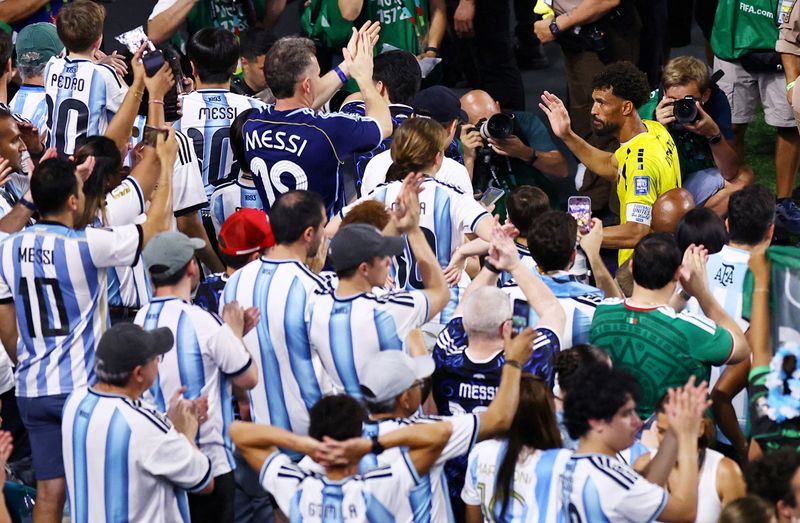
The defending World Cup champions scraped through to the knockout stages with a 3-2 extra-time victory over Cape Verde in Kansas City on July 4, but the match left a troubling question hanging over Argentina's campaign: are they truly as dominant as their flawless group stage suggested? The African nation's spirited performance forced Argentina into their toughest examination so far, twice rallying from behind before succumbing to a Cristian Romero header that was deflected in by Cape Verde's Diney Borges in the additional period.
Argentina had entered the tournament as the side to beat after winning three consecutive group matches with impressive scorelines—3-0 over Algeria, 2-0 against Austria, and 3-1 versus Jordan. The quality of opposition faced in the initial phase, however, had already drawn muted criticism from observers who questioned whether these victories truly reflected the team's readiness for the challenges ahead. Coach Lionel Scaloni had publicly flagged Cape Verde as potentially problematic opponents, noting their earlier draws with Spain and Uruguay in qualifying matches, yet the tournament newcomers still managed to exceed expectations and test Argentina in ways the South Americans have not experienced throughout their campaign.
The narrow escape is likely to intensify debate about the defensive vulnerabilities that emerged in the final stages of regular play and throughout extra time. Cape Verde's ability to recover from deficit positions revealed gaps in Argentina's pressing game and highlighted concerns that had been building since their warm-up matches. The side's defensive struggles against a team making their first World Cup appearance starkly contrasts with the perceived strength of Scaloni's setup, and raises legitimate questions about whether they have genuinely been battle-tested before facing Egypt in Atlanta on Tuesday.
Lionel Messi, who extended his World Cup goal record to 20 with a first-half strike, spoke candidly about the physical demands of the encounter and Argentina's tactical shortcomings. The 39-year-old captain acknowledged that his team's pressing proved ineffective, with the lines between midfield and defence positioned too far apart to suffocate Cape Verde's advances. "We couldn't press them properly," Messi explained, pointing to how his side was forced into a reactive mode rather than controlling possession in dangerous areas as they had done previously.
Former River Plate coach Marcelo Gallardo, who represented Argentina at the 1998 and 2002 World Cups, suggested that the scare against Cape Verde might ultimately prove beneficial if it prompts the necessary tactical adjustments. Speaking on ESPN Argentina, Gallardo framed the struggle as a potential catalyst for improvement, arguing that complacency had perhaps begun to set in after the dominant group stage performances. His assessment highlights how elite teams at major tournaments often need a reality check to recalibrate their approach heading into decisive knockout football.
Scaloni himself acknowledged the need for refinement whilst defending his team's character and mental fortitude. The manager emphasised that whilst there remain areas for improvement, Argentina demonstrated the required resilience to fight back when circumstances became difficult. He deflected criticism about overall performance quality by reiterating a familiar mantra—that no World Cup match is straightforward, and a team's ability to respond under pressure ultimately matters more than stylistic perfection.
Argentina's passage through was propelled partly by the symbolic contributions of two defenders whose recent injury recoveries underscored the team's depth. Lisandro Martinez, returning from an anterior cruciate ligament injury sustained in early 2025, registered Argentina's second goal and appeared emotionally moved by his contribution after months of rehabilitation. Similarly, Cristian Romero's involvement in the decisive moment carried extra significance given his recent battle with knee problems that had limited his availability throughout the tournament. Both players' presence and performance suggested that Argentina's injury management had been carefully orchestrated to ensure key personnel would be available at the tournament's critical juncture.
Martinez's post-match comments revealed the personal investment these players had in proving their fitness and reliability. The defender expressed profound gratitude to the club and national team medical staff whose work enabled his participation, describing the emotional release of scoring after enduring such a demanding rehabilitation process. This human dimension to Argentina's progression adds texture to what might otherwise appear as merely a fortunate result against an opponent ranked far below them in world football standings.
Argentina now faces Egypt in the round-of-16 stage, a fixture that will provide a more meaningful indication of whether Scaloni's team has adequately addressed the defensive and pressing issues exposed by Cape Verde. The group of 16 stage will demand greater tactical precision and intensity than was demonstrated against the African qualifiers, and Egypt presents a considerably more sophisticated challenge. Argentina's coaching staff will have limited time to implement corrective measures during their Miami training camp this Saturday before travelling to Atlanta for Tuesday's encounter.
The Cape Verde result has injected uncertainty into a narrative that was previously one of dominant progression. Whilst Argentina's advancement was never genuinely in doubt given the gulf in overall quality, the manner of their progression signals that complacency could prove dangerous against opponents with superior technical ability and tactical discipline. How Scaloni responds to these vulnerabilities in the coming days will likely determine whether Argentina can mount a genuine title defence or whether the cracks exposed against the tournament debutants widen under increased pressure.

