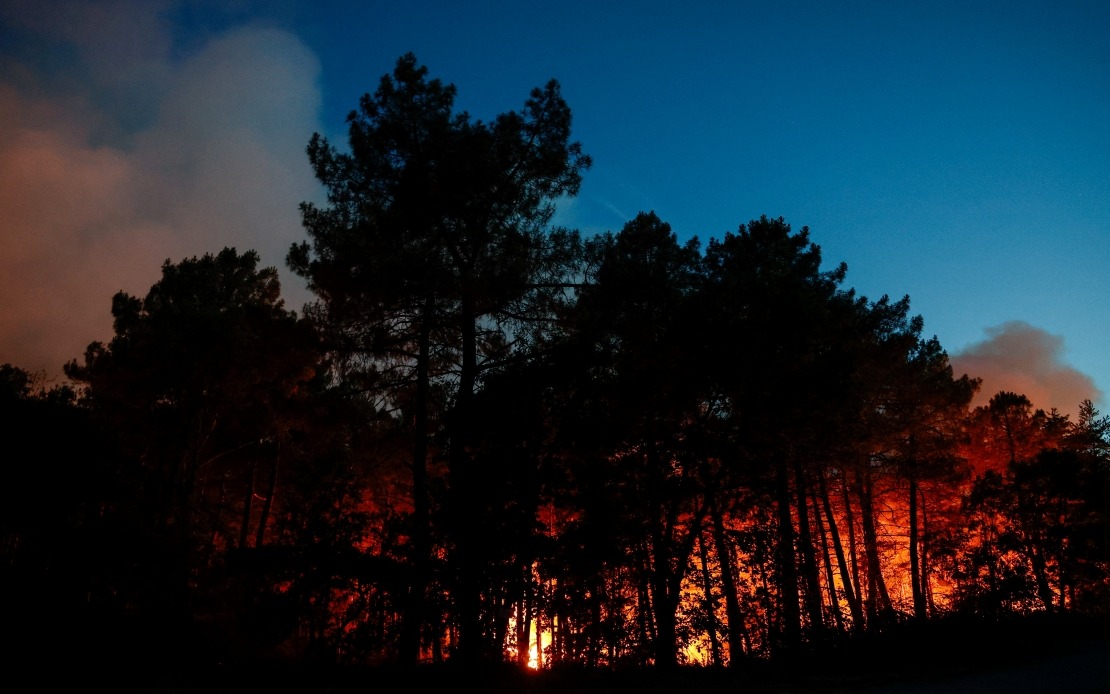
A massive wildfire tearing through the Fontainebleau forest south of Paris has prompted French authorities to launch an arson investigation, as 400 firefighters work to contain a blaze that has already consumed vast tracts of one of Western Europe's most significant woodlands. The fire, which erupted late on Sunday near a motorway, has destroyed approximately 800 hectares of forest, with officials calling the situation exceptional given the rarity of such large-scale wildfires in northern France.
The scale of the suspected arson is suggested by the pattern of ignition points identified by investigators. French Interior Minister Laurent Nuñez, who visited the scene on Monday, indicated that the presence of multiple fire outbreaks within just 1,000 metres of each other strongly suggests intentional fire-setting rather than natural causes. The gendarmerie has consequently opened a formal investigation into the incident, marking a significant development in what has become one of the most serious forest fires to strike the region in recent memory.
The Fontainebleau forest holds considerable historical and ecological significance, serving as the location of the renowned Château de Fontainebleau and encompassing one of the largest continuous forested regions in Western Europe. The threat posed by the advancing flames has forced emergency services to prioritise both the protection of this cultural heritage site and the safety of surrounding communities. The speed with which the fire has spread has been remarkable, with witnesses describing an advancing wall of flames that rapidly approached the outer edges of residential areas.
Evacuation efforts have displaced more than 1,000 residents and tourists from the village of Le Vaudoué and surrounding areas, according to the local mayor speaking to French broadcaster BFM TV. The rapid spread of the blaze left little time for orderly evacuation, with residents witnessing the fire advance towards their homes with alarming speed. The mayor's account of the flames reaching the first houses at the community's periphery underscores how closely the wildfire came to destroying civilian infrastructure and potentially causing significant casualties.
Firefighting operations have been bolstered by aerial support, with two water-bombing aircraft now engaged in dropping water extracted from the Seine river to douse the flames. This deployment of aerial resources represents the commitment of substantial state resources to combating what the French government has characterised as an exceptional crisis. The involvement of aircraft capable of drawing water directly from major rivers demonstrates the scale of coordination required to address the emergency.
The timing of the fire coincides with France's third major heatwave of the current year, which has created dangerously dry conditions across large portions of the country and driven temperatures to levels that accelerate fire spread. The national weather service Météo-France had placed 37 French departments under its highest red heat alert at the beginning of the week, indicating the widespread nature of extreme weather conditions across the nation. These meteorological circumstances have created ideal conditions for wildfire proliferation, with dry vegetation providing abundant fuel for rapid flame propagation.
French government spokeswoman Maud Bregeon emphasised that authorities are deploying every available resource to contain the spreading blaze and prevent further destruction. Her description of the situation as exceptional reflects the unusual nature of such major wildfires occurring in northern France, where forest fires of this magnitude have historically been less common than in southern regions of the country. This relative rarity underscores both the severity of current conditions and the challenges facing emergency services accustomed to managing smaller-scale incidents.
For Malaysian observers, the Fontainebleau fire offers important lessons about climate vulnerability and the increasing frequency of extreme weather events affecting developed nations. Southeast Asian countries, already familiar with seasonal haze from transboundary fires, face similar risks as warming temperatures and changing weather patterns create conditions favouring wildfire development. The rapid escalation of the French fire and the substantial resources required to combat it illustrate how even wealthy nations with advanced firefighting capabilities face significant challenges when facing nature at full force.
The investigation into potential arson adds a troubling dimension to the disaster, suggesting that environmental crimes may compound the dangers created by climate change itself. The deliberate ignition of fires in forested areas represents a serious criminal act with potentially catastrophic consequences, particularly during periods of heightened fire danger. If confirmed, the arson would represent not merely property destruction but a threat to ecosystems, cultural heritage, and human lives, raising questions about security measures protecting vulnerable forested areas during high-risk periods.
The broader context reveals that France is simultaneously battling multiple wildfires across different regions, with firefighting resources stretched thin by the combination of exceptional heat and widespread dry conditions. This reflects a pattern increasingly seen across Europe and globally, where climate change is creating simultaneous crises in different locations, overwhelming emergency response capabilities. The concentration of extreme weather events in compressed timeframes challenges traditional disaster management approaches designed for isolated incidents rather than cascading crises.

