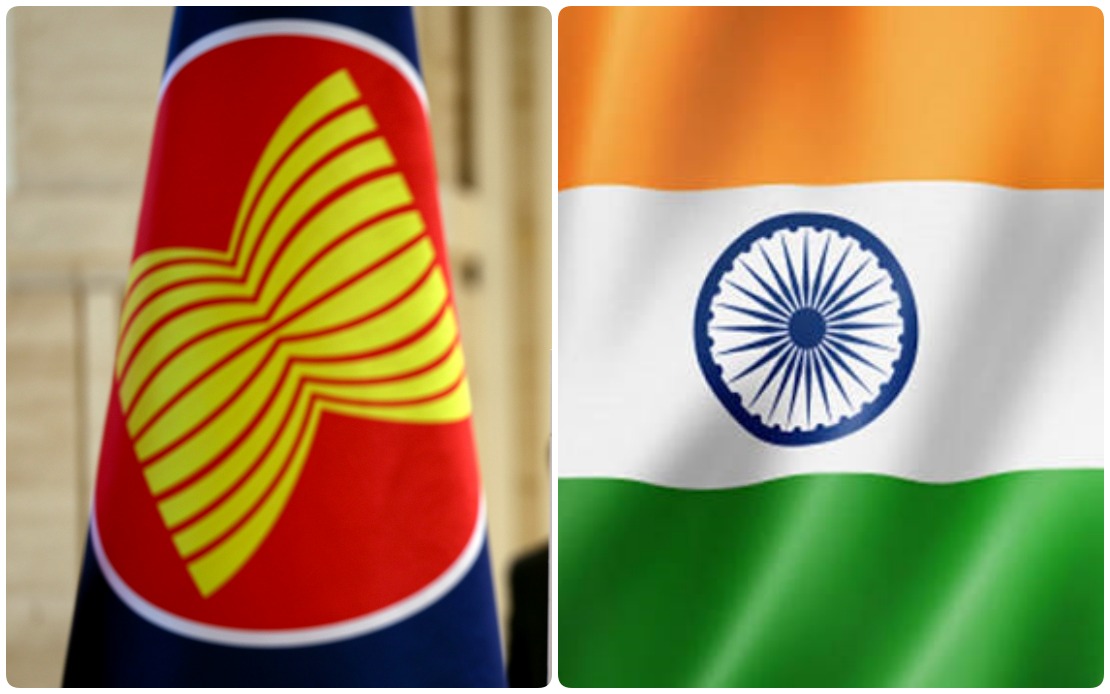
The partnership between ASEAN and India is entering a new phase of intensity, with both regional bodies moving beyond ceremonial affirmations to concrete cooperation frameworks that address pressing contemporary challenges. During the Post-Ministerial Conference following the 59th ASEAN Foreign Ministers' Meeting in Manila, officials from across the ten-member bloc and New Delhi signalled their intention to transform their relationship from a longstanding but sometimes underutilised dialogue into a driver of regional prosperity and stability. The timing is significant: as traditional alliances face strain and global supply chains fracture along geopolitical lines, Southeast Asian nations and India are positioning their partnership as a pragmatic alternative rooted in shared economic interests and values.
Philippine Foreign Affairs Secretary Theresa P. Lazaro, speaking in her capacity as country coordinator for the ASEAN-India relationship, framed three decades of diplomatic engagement as a foundation stone rather than a finished edifice. Since dialogue relations commenced 34 years ago, she noted, the partnership has matured substantially, earning recognition as one of ASEAN's most consequential external relationships alongside ties with major powers. The 2022 elevation to comprehensive strategic partnership status reflected more than ceremonial upgrading; it acknowledged that ASEAN and India face interconnected challenges as Global South nations navigating a multipolar world order. This recalibration matters for regional observers because it suggests both parties view their relationship less as a counterweight to other powers and more as a platform for addressing development deficits and security imperatives internal to Asia itself.
The breadth of cooperation now under discussion extends across multiple dimensions of regional concern. Tourism exchanges administered through ASEAN's dedicated Tourism Year initiatives create people-to-people connections that soften diplomatic channels and generate economic benefits for smaller economies throughout the region. Simultaneously, 2026's designation as the ASEAN-India Year of Maritime Cooperation signals that both sides recognise the Indo-Pacific's centrality to their futures. Maritime affairs carry particular weight for Southeast Asia, where waterways constitute the economic lifeblood connecting manufacturing hubs to global markets and where territorial disputes periodically surface tensions. By anchoring cooperation in practical capacity-building—marine bioprospecting, ocean engineering, marine energy development and maritime law enforcement training—ASEAN and India signal intentions to build institutional competence rather than engage in performative gestures.
India's External Affairs Minister Subrahmanyam Jaishankar articulated a worldview that should resonate across Southeast Asia, particularly among policymakers increasingly anxious about instability. His observation that contemporary global turbulence cannot be addressed by single nations or isolated groupings reflects a sophisticated understanding of interdependence in the modern era. For Malaysian readers particularly, Jaishankar's emphasis on maritime security is directly relevant: Malaysia's economy and geopolitical position depend critically on freedom of navigation through the Strait of Malacca and surrounding waters. His insistence on respecting international law in maritime affairs—delivered in a regional context where competing sovereignty claims periodically threaten stability—represents a diplomatic signal favouring rules-based frameworks over unilateral assertion.
The litany of shared vulnerabilities Jaishankar identified—pressures on global supply chains, energy insecurity, food insecurity and health vulnerabilities—maps precisely onto challenges confronting Southeast Asia. The region's dependence on imported energy and food creates strategic exposure that individual nations cannot remedy through domestic policy alone. India, similarly positioned as an energy-importing economy serving over a billion people, understands these constraints intimately. By framing cooperation in these terms, both ASEAN and India position their partnership as a mechanism for mutual resilience-building rather than a vehicle for projecting power. This matters for regional stability: it suggests neither bloc is pursuing hegemonic ambitions through their relationship.
Marked attention to maritime trade routes reflects geographic realities that shape Southeast Asian strategic thinking. Between 80 and 90 percent of Asian trade by volume transits through maritime channels, with chokepoints including the Strait of Malacca and South China Sea representing critical vulnerabilities. Jaishankar's warning that maritime security can no longer be taken for granted implicitly acknowledges rising geopolitical tensions in these waters. By elevating maritime cooperation from a peripheral concern to a central pillar of the ASEAN-India partnership, both sides signal commitment to preserving the rules-based order that enables their prosperity. For Malaysia and other ASEAN nations dependent on these waters for survival, this commitment carries material significance.
The framing of ASEAN-India cooperation as "practical, people-orientated, and anchored in delivering benefits to both our regions" distinguishes this relationship from great-power competition increasingly visible in the region. Major powers often pursue relationships instrumentally, seeking leverage or alignment against rivals. ASEAN nations, having navigated the Cold War through non-alignment and maintaining that instinct in the contemporary era, appear to value partnerships evaluated primarily on tangible returns: trade flows, technology transfer, capacity-building and security cooperation. The emphasis on workshops, training programmes and capability development suggests both sides understand that regional stability depends on institutional strength at the national level, not merely diplomatic coordination at the summit level.
Globalised supply chain vulnerabilities have become a primary concern for Southeast Asian economies that serve as manufacturing nodes connecting resource suppliers to consumer markets. The semiconductor industry, medical device production, agricultural processing and petrochemicals all depend on uninterrupted flows of inputs and secure market access. India's position as a growing manufacturing hub and technology centre offers complementary opportunities; ASEAN's role as a manufacturing platform and services exporter creates reciprocal benefits. Energy security concerns, intensified by geopolitical disruption to traditional supplier relationships, make India's emerging role in renewable energy and LNG markets increasingly relevant to Southeast Asian energy planners. By institutionalising cooperation across these domains through the comprehensive strategic partnership framework, ASEAN and India are building resilience into their economies.
The blue economy represents perhaps the most innovative dimension of deepening cooperation. Coastal ASEAN nations possess marine resources, fishing grounds, and aquaculture potential that remain substantially underdeveloped. Ocean engineering, marine biotechnology and sustainable fisheries management represent sectors where India can offer expertise while ASEAN can provide implementation scale. Tourism tied to marine environments—diving, island hospitality, cultural experiences—generates employment throughout Southeast Asia and remains a critical revenue source for nations like the Philippines, Thailand and Indonesia. By promoting these activities through dedicated cooperation mechanisms, ASEAN and India create economic incentives for maintaining regional stability and environmental sustainability.
Optimism about future prospects must be tempered by recognition of implementation challenges. Previous ASEAN partnership frameworks have sometimes produced elaborate institutional structures that generate limited tangible output. Jaishankar's insistence that cooperation should address "shared challenges while capitalising on opportunities" suggests awareness of this risk. The selection of concrete, measurable cooperation areas—rather than abstract aspirations—provides grounds for cautious optimism that this partnership will produce results exceeding previous iterations. For Malaysian observers and policymakers, the implications are substantial: a genuinely functional ASEAN-India partnership could significantly enhance regional economic dynamism and security architecture during a period of considerable geopolitical uncertainty.
The partnership's emphasis on rules-based frameworks carries particular importance as competing visions of regional order clash throughout Asia. China's expansionist approach to territorial claims, uncertainty surrounding American commitment to regional stability, and questions about the effectiveness of multilateral institutions create an environment where ASEAN nations must exercise considerable diplomatic skill. India's explicit commitment to international law in maritime affairs aligns with ASEAN's consistent preference for resolving disputes through legal frameworks rather than coercion. This shared orientation towards institutionalised, law-based cooperation represents a stabilising force in a region where major-power competition increasingly dominates strategic calculations. Whether this partnership can deliver meaningful results on maritime security, supply chain resilience and capacity-building will substantially determine its contribution to regional stability over the coming years.

