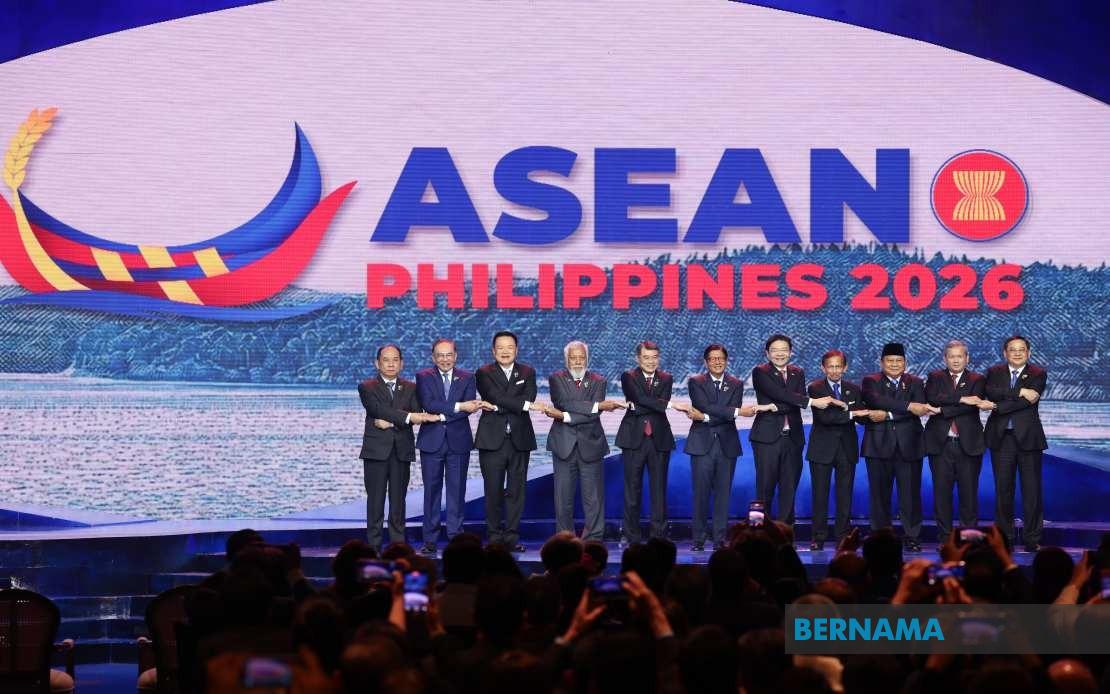
The Association of Southeast Asia Nations marked its 59th anniversary yesterday at a defining moment for the ten-member grouping, which confronts a rapidly evolving geopolitical landscape that demands both introspection and decisive action. Founded on August 8, 1967, by Indonesia, Malaysia, the Philippines, Singapore, and Thailand, ASEAN has grown to encompass eleven nations following successive expansions that brought in Brunei, Vietnam, Laos, Myanmar, Cambodia, and most recently Timor-Leste. Yet as the bloc enters its seventh decade, the challenges it faces are fundamentally different from those of its early years, requiring a recalibration of its strategic approach and institutional priorities.
After nearly six decades of demonstrating organizational resilience and building a formidable international presence, ASEAN no longer needs to justify its existence or prove its relevance on the world stage. The bloc has successfully positioned itself as a significant player in regional affairs and commands respect from major powers. However, this very success has obscured a deeper challenge: the internal coherence and practical integration that remain patchy across member states. Regional analysts now contend that ASEAN's future viability hinges less on external validation and more on the capacity of member states to forge genuine unity and deliver tangible benefits to their 700 million combined population, particularly as the organization navigates its ASEAN Community Vision 2045 framework.
The geopolitical environment has become measurably more volatile in recent months. The escalating tensions between the United States and Iran, coupled with wider instability across West Asia, have created immediate ripple effects for Southeast Asia, particularly regarding energy security and the stability of global supply chains upon which the region's economies depend. These external shocks underscore a fundamental vulnerability: ASEAN's prosperity and security are intimately linked to developments beyond its borders, yet the bloc's ability to respond cohesively remains constrained by internal divisions and competing national interests. Simultaneously, the deepening strategic competition between Washington and Beijing, combined with accelerating disputes over the South China Sea, presents challenges that demand both unified messaging and coordinated practical responses.
According to Prof Dr Phar Kim Beng, director of the International Islamic University Malaysia's Institute of International and ASEAN Studies and a former ASEAN Secretariat official, the bloc's centrality cannot be taken for granted merely because external powers acknowledge it diplomatically. Rather, ASEAN member states themselves must actively insist on and reinforce their bloc's pivotal role through concrete actions and institutional strengthening. This requires moving beyond rhetorical commitment to the vision of a single, integrated economic community and instead implementing substantive reforms that would genuinely harmonize policies, regulations, and practices across borders. Phar emphasized that the organization must invest considerably more effort in expanding labour mobility across member states, developing seamless digital connectivity infrastructure, and deepening government-to-government cooperation mechanisms that transcend the current pattern of episodic summits and dialogue sessions.
Dr Rahul Mishra, an associate professor at India's Jawaharlal Nehru University's Centre for Indo-Pacific Studies, offered a complementary diagnosis: while ASEAN has cultivated considerable normative influence as an organization and demonstrated aptitude in managing both internal disagreements and external pressures, this soft power advantage must now be matched with tangible functional cooperation with regional and international partners. The bloc has recently expanded its external engagement architecture, elevating Turkey to full dialogue partner status and welcoming four new signatories to the Treaty of Amity and Cooperation in Southeast Asia—Sweden, Poland, Romania, and Lithuania—bringing the total number of High Contracting Parties to 62. Yet this widening network of partnerships, Mishra cautioned, risks remaining superficial unless ASEAN transitions from dialogue-focused diplomacy to action-oriented collaboration.
The Myanmar crisis presents perhaps the most pressing test of ASEAN's internal solidarity and external credibility. The military coup and subsequent violence have exposed deep fissures within the bloc regarding how to handle a member state's internal affairs, with some capitals advocating stronger intervention and others prioritizing the principle of non-interference. This standoff has weakened ASEAN's ability to project a unified position to the international community and has raised questions about the bloc's commitment to its own Charter and stated values. Compounding this challenge is the rise of transnational cyber scam operations emanating from the region, which have become a major source of revenue for criminal networks and have drawn increasingly sharp criticism from regional governments and international law enforcement agencies. Without a more coordinated, time-bound, and resolute response to these interconnected challenges, ASEAN risks appearing incapable of addressing even basic governance and security issues within its own borders.
The organization's ability to address rising geopolitical competition will depend significantly on how it manages its relationships with the United States, China, and other major powers without compromising its strategic autonomy. ASEAN's traditional doctrine of centrality presumes that the bloc can maintain balanced relationships with all major powers while reserving the right to chart its own course. However, the intensifying great power competition may force member states into more zero-sum choices that could fracture the organization's unity. The South China Sea disputes exemplify this tension; while ASEAN collectively has an interest in maintaining freedom of navigation and upholding international law, individual member states have divergent economic interests and security dependencies that complicate unified positioning.
This year's ASEAN Day celebration proceeded under the banner "Navigating Our Future Together," a theme that will carry through to 2026 when the Philippines assumes the bloc's rotating chairmanship. The motif captures the essential challenge facing the organization: negotiating a course through uncharted geopolitical waters while maintaining internal cohesion. The Vision 2045 framework represents an ambitious blueprint for regional development, economic integration, and social progress, but achieving these aims requires member states to prioritize collective objectives over narrow national interests in numerous policy domains.
At its core, ASEAN's challenge is institutional and political rather than merely diplomatic. The bloc possesses the economic weight, geographic importance, and diplomatic infrastructure to remain a significant regional actor, but only if it can translate rhetorical commitment into substantive policy coordination. This means establishing binding mechanisms for resolving interstate disputes, harmonizing regulations that currently fragment markets, and creating enforcement mechanisms that encourage compliance with agreed frameworks. It also means confronting uncomfortable questions about accountability within member states and whether ASEAN's commitment to non-interference can coexist with its stated dedication to democracy and human rights.
The consensus among regional experts is clear: ASEAN's next chapter will be determined less by external validation from major powers and more by the willingness of member states to invest in real integration and address shared challenges with genuine resolve. The bloc has proven its organizational resilience over nearly six decades, but resilience alone is insufficient for the period ahead. What ASEAN requires now is the political will to move beyond dialogue and toward coordination, from soft consensus toward harder commitments, and from internal accommodation toward external influence. Whether ASEAN can accomplish this transformation while preserving the consensus-based decision-making model that has defined the organization since 1967 remains the essential question for its future relevance.

