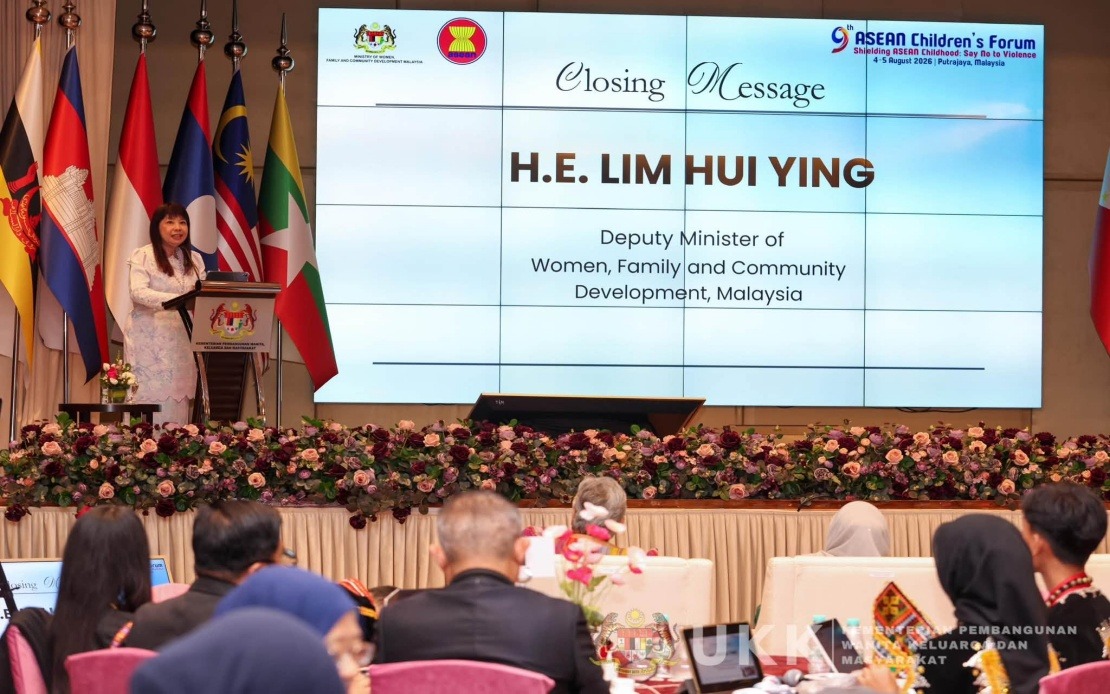
The 9th ASEAN Children's Forum has culminated with a powerful set of recommendations aimed at transforming child protection across the region. Convened in Putrajaya, the hybrid gathering brought together young representatives from every ASEAN member state to deliberate on one of Southeast Asia's most pressing concerns: safeguarding children from all forms of harm. The forum's closing ceremony marked the conclusion of discussions that centred on violence against children in its multiple manifestations—physical, emotional, psychological, and sexual abuse—each demanding urgent policy responses at national and regional levels.
Deputy Women, Family and Community Development Minister Lim Hui Ying emphasised that the recommendations emerging from child participants deserve serious attention from policymakers. Rather than treating these as advisory observations, she argued, governments and regional bodies must view them as evidence-based proposals grounded in children's actual lived experiences. This framing is significant: it positions children not merely as subjects of protection but as knowledgeable stakeholders whose insights into their own vulnerabilities and needs carry genuine policy weight. The minister stressed that translating these recommendations into concrete legislation, programmes, and initiatives represents both a moral obligation and a practical necessity for ASEAN institutions.
The breadth of the forum's recommendations reflects a sophisticated understanding of the multiple environments where children encounter danger. Rather than concentrating solely on criminal law reforms, participants identified four critical settings requiring targeted interventions: the home, educational institutions, online platforms, and broader community spaces. This multisectoral approach acknowledges that child protection cannot be the responsibility of government alone. The forum explicitly recognised the interconnected roles played by parents, educators, business enterprises, civil society organisations, media outlets, and peer networks in constructing protective environments. This inclusive framework suggests that effective reform requires coordinated action across society, not merely top-down legislative mandates.
Among the specific measures recommended, strengthening child protection legislation stands foremost. Current laws across ASEAN vary considerably in their scope, enforcement mechanisms, and penalties. Some nations maintain outdated statutes that fail to address contemporary threats, particularly those emerging in digital spaces. By advocating for enhanced legislation, forum participants signalled recognition that legal frameworks must evolve to address evolving threats. This is especially pertinent for Southeast Asia, where rapid digital adoption has outpaced regulatory development, leaving children exposed to online exploitation, cyberbullying, and grooming by predators operating across borders.
The call for expanded child-friendly reporting channels addresses a critical gap in current protection systems. Many child abuse cases go unreported because victims fear retribution, lack trust in authorities, or find formal complaint mechanisms intimidating and inaccessible. Creating channels specifically designed for children—whether through helplines, online platforms, school-based counsellors, or community intermediaries—can dramatically increase disclosure rates. For Malaysia and other ASEAN nations, this recommendation implies investing in training staff who interact with children to recognise signs of abuse and respond with appropriate sensitivity. It also requires establishing clear protocols ensuring that reports lead to prompt investigation and intervention rather than becoming lost in bureaucratic processes.
Enforcing anti-bullying policies represents another area demanding renewed commitment. While many schools across ASEAN have adopted such policies on paper, implementation remains inconsistent. The forum's emphasis on this issue underscores the pervasiveness of bullying as a form of peer violence with documented impacts on mental health, academic performance, and long-term wellbeing. Effective anti-bullying work requires more than punitive measures against perpetrators; it demands whole-school cultural change, peer education programmes, and support systems for both victims and those exhibiting harmful behaviour. The recommendation implicitly calls for governments to mandate regular audits of school-based safeguarding, ensuring that policies translate into changed practices.
Broadening psychosocial support emerged as a critical need, reflecting growing recognition of mental health dimensions in child protection. Children experiencing or witnessing violence often suffer lasting psychological consequences that extend far beyond physical injuries. Expanding access to counselling, trauma-informed therapeutic services, and peer support groups can help children process their experiences and develop resilience. For Southeast Asian contexts with limited mental health infrastructure, this recommendation poses significant resource challenges. However, it points toward innovative solutions such as training community health workers, leveraging school counsellors, and utilising digital platforms to extend psychological support beyond urban centres.
The forum's emphasis on providing inclusive services for vulnerable children acknowledges that protection must be specially calibrated for those facing compounded risks. Street children, orphans, children with disabilities, migrant children, and those in minority ethnic or sexual orientation groups often fall outside mainstream protection systems. Inclusive services require governments to disaggregate data on child protection, identify gaps in coverage, and design targeted interventions. This aspect of the recommendations carries particular relevance for ASEAN nations contending with significant migration, informal employment sectors, and substantial populations living in poverty where child protection oversight is minimal.
Beyond specific policy measures, the forum fostered a pledging culture among participating children themselves. By committing to support one another and cultivate mutual respect, young participants modelled the kind of peer-driven protection that can complement formal systems. This grassroots dimension is crucial because children often turn to peers before approaching adults when facing difficulties. Peer support networks, youth-led initiatives, and child-to-child education programmes can amplify the reach of formal protections and create social norms that stigmatise violence and abuse.
The regional dimension of these recommendations carries significant weight. ASEAN's interconnected economies and populations mean that child protection challenges transcend national borders. Trafficking networks, online predators, and labour exploitation operate across jurisdictions. The forum's emphasis on regional coordination implies that ASEAN sectoral bodies must establish common standards, share best practices, and coordinate investigations. This requires strengthening ASEAN mechanisms for child protection cooperation and ensuring that national implementations align sufficiently to prevent gaps that traffickers and abusers can exploit.
For Malaysia specifically, these recommendations provide a roadmap for elevating its child protection frameworks. While the nation has made progress through initiatives like the Child Act and the establishment of specialised police units, persistent gaps remain in enforcement consistency, resource allocation to rural areas, and integration of digital safety measures. The recommendations offer an opportunity for Malaysia to benchmark its approaches against regional standards and peer learning with other ASEAN nations.
Translating the 9th ASEAN Children's Forum recommendations into reality demands sustained political will and adequate resourcing. It requires moving beyond symbolic commitments to genuine investments in legislative reform, institutional capacity building, and behaviour change. The coming months will be critical in determining whether policymakers across ASEAN take these child-centred recommendations seriously or allow them to languish as well-intentioned but unimplemented proposals. Regional children have spoken clearly about their needs; the responsibility now rests with adults in positions of authority to act decisively.

