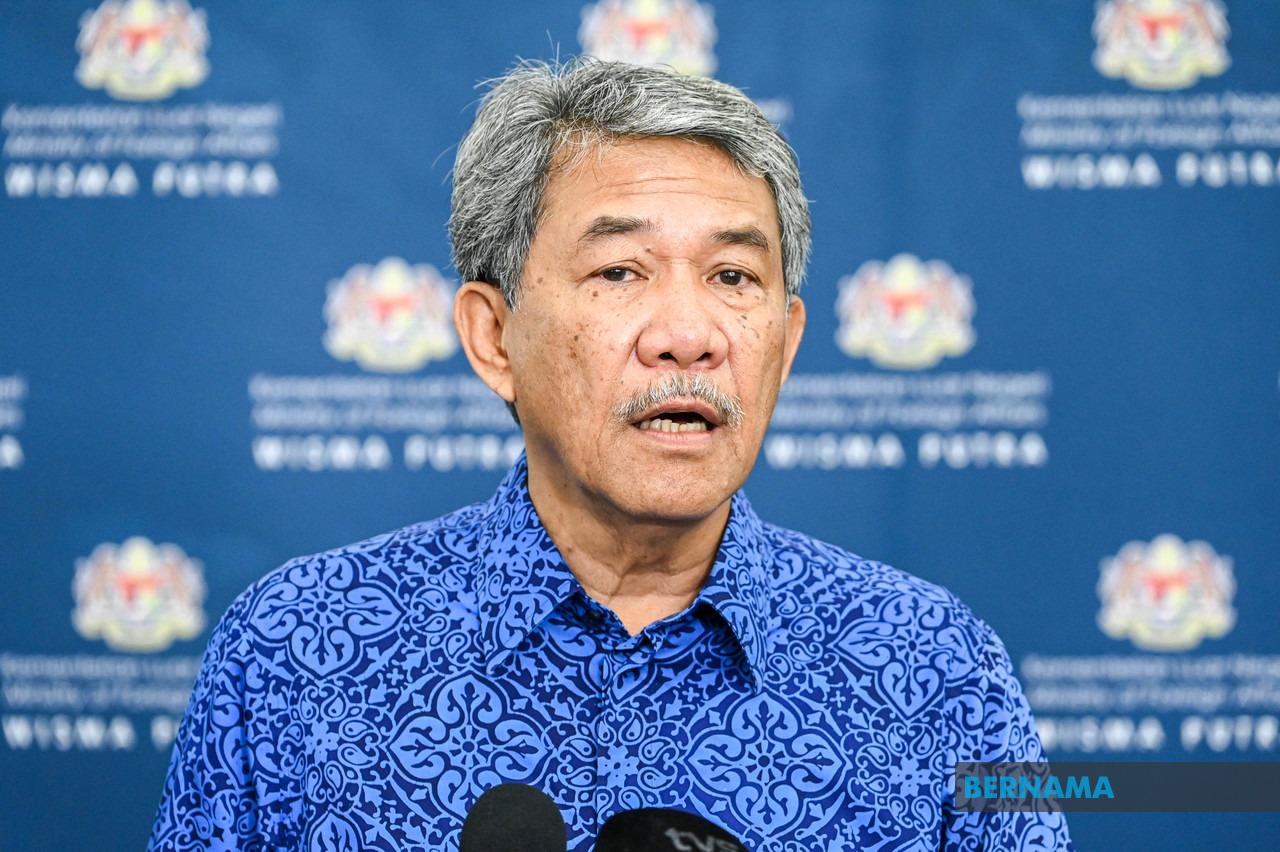
Foreign Minister Datuk Seri Mohamad Hasan has called for ASEAN to maintain its foundational role as an autonomous guiding force within the region, stressing that member states must recognise this position not as an entitlement but as a carefully earned privilege requiring constant vigilance and renewal. Speaking at the 59th ASEAN Day celebration in Putrajaya on Monday, Mohamad articulated a vision of the ten-nation bloc as a stabilising force capable of steering Southeast Asia through unprecedented geopolitical turbulence marked by great power competition and the unravelling of established international frameworks.
The regional organisation operates in an environment increasingly characterised by systemic fragmentation, with major powers jostling for influence, economic rivalries shaping policy decisions, and traditional multilateral institutions losing their binding authority. Mohamad emphasised that this challenging landscape demands clarity of strategic purpose from ASEAN itself—the bloc must consciously position itself as a voice of reason and a cohesive community steadfastly committed to advancing peace and mutually beneficial economic development across Southeast Asia.
At a moment when geopolitical competition threatens to pull individual Southeast Asian nations into competing spheres of influence, ASEAN's capacity to maintain internal cohesion emerges as perhaps its most critical asset. Mohamad warned explicitly against the dangers of internal fragmentation, cautioning that member states cannot permit bilateral disputes or divergent foreign policy preferences to undermine the collective leverage the organisation wields in global affairs. The interconnectedness of member economies means that the prosperity of any single nation rises or falls in tandem with regional stability; therefore, collective strength becomes an enlightened self-interest rather than an abstract principle.
The Foreign Minister's remarks reflect growing anxiety among ASEAN leadership regarding the bloc's ability to navigate competing strategic interests from major powers. Rather than passively accepting external pressure, ASEAN must actively shape the global rules and normative frameworks governing international behaviour, ensuring these remain accessible and accommodating rather than restrictive. This requires the organisation to position itself as an agent of strategic change, one that has successfully influenced how the international system operates and what principles it embraces.
Central to ASEAN's ability to punch above its weight is the deliberate cultivation of diverse partnerships across the globe. Mohamad stressed that deepening strategic ties with multiple partners is not merely advantageous but strategically essential for regional security and prosperity. However, this engagement must occur on a foundation of equality; Southeast Asian nations must approach all partnerships as independent actors capable of shaping outcomes rather than as subordinate parties accepting external dictates. In essence, ASEAN should be the speaker authoring its own narrative rather than the subject being spoken about by more powerful actors.
Regionalisation and commitment to multilateral institutions represent the anchoring mechanisms through which ASEAN has historically maintained stability and achieved incremental progress on shared challenges. Mohamad reaffirmed the organisation's dedication to these principles even as the broader international multilateral architecture experiences stress and fragmentation. By maintaining these commitments, ASEAN preserves the diplomatic and institutional infrastructure through which member states can resolve differences peacefully and coordinate responses to transnational challenges from pandemic disease to maritime security.
Economic transformation will determine ASEAN's capacity to sustain relevance and prosperity in the coming decades. Mohamad identified the digital economy as a critical growth driver, highlighting ongoing efforts to finalise the ASEAN Digital Economy Framework Agreement and to modernise existing trade arrangements with major partners including China, India, and the Republic of Korea. The digital sphere presents both opportunities for developing competitive advantage and risks of technological dependency or data sovereignty compromise; therefore, ASEAN must approach digitalisation strategically rather than embracing wholesale transformation without careful consideration of implications.
Sustainability must be embedded at the centre of ASEAN's economic strategy going forward, according to Mohamad. The region's historic reliance on resource extraction and carbon-intensive manufacturing can no longer serve as the foundation for long-term prosperity. The acceleration of the ASEAN Power Grid represents a concrete commitment to supporting the green energy transition, which simultaneously attracts foreign investment, enhances energy security, and addresses climate imperatives. This integrated approach recognises that environmental protection and economic development are mutually reinforcing objectives rather than competing priorities.
ASEAN's institutional history demonstrates the durability of the regional framework despite significant challenges to its cohesion and effectiveness. Established through the Bangkok Declaration on August 8, 1967, by Indonesia, Malaysia, the Philippines, Singapore, and Thailand, the organisation has expanded from five founding members to eleven through successive waves of enlargement. Brunei joined in 1984, Vietnam and Laos in the mid-1990s, Myanmar and Cambodia as the century turned, and most recently Timor-Leste achieved full membership in October of the previous year. This enlargement process, while occasionally contentious, reflects ASEAN's commitment to inclusivity and its role as a unifying framework for Southeast Asia.
The current year's ASEAN Day observance adopted the theme "Navigating Our Future Together," which will carry forward as the organising principle for ASEAN 2026 during the Philippines' tenure as chair. This thematic emphasis on collective navigation speaks to the requirement that member states consciously steer a shared course rather than drifting individually. The choice of language—emphasising navigation rather than destination—acknowledges uncertainty about the future while affirming ASEAN's capacity to shape its trajectory despite external pressures and unpredictable strategic circumstances that continue to challenge the region's cohesion and strategic autonomy.

