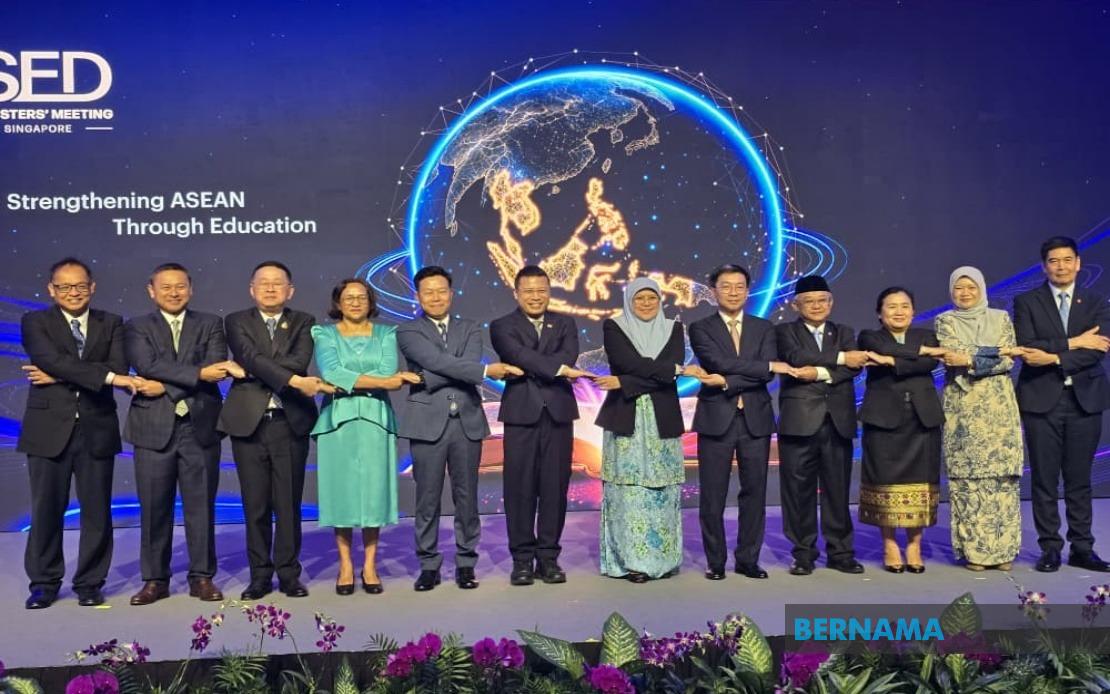
Regional education authorities gathered in Singapore this week to formally introduce an ambitious education roadmap designed to guide ASEAN member states through the next five years, with particular emphasis on preparing students for an increasingly digital and technology-driven global economy. The Five-Year Work Plan on Education 2026-2030 represents a collective commitment from the bloc's education leadership to establish learning systems that are both inclusive and forward-thinking, capable of addressing contemporary challenges while nurturing the region's human capital.
The strategic framework addresses several critical dimensions of educational development across Southeast Asia. At its core lies an intention to cultivate individuals who possess both intellectual depth and practical resilience, underpinned by technical competencies that employers demand in an evolving labour market. Equally important is the cultivation of a distinctly ASEAN identity grounded in shared cultural values and regional consciousness, reflecting the bloc's broader integration objectives.
Singapore Education Minister Desmond Lee, speaking as his nation assumes leadership of the ASEAN Education Sector for 2026-2027, articulated how the initiative responds to transformative global trends. The minister emphasized that the work plan positions ASEAN's education systems as adaptive mechanisms capable of absorbing rapid technological change while maintaining focus on fundamental learning outcomes. This dual emphasis on innovation and foundational quality addresses longstanding regional variations in educational access and performance.
Three priority areas emerged from discussions at the 14th ASEAN Education Ministers Meeting (ASED), each reflecting distinct but interconnected challenges facing the region. The integration of artificial intelligence into educational delivery and curriculum design has become unavoidable as nations grapple with how to harness AI's pedagogical potential while managing its disruptions. Science, Technology, Engineering and Mathematics education requires sustained investment and capability-building, particularly given regional disparities in STEM teaching quality and student achievement. The emphasis on holistic development signals recognition that educational systems must nurture well-rounded individuals rather than narrowly focus on academic metrics.
Equitable access to quality education remains a persistent concern across ASEAN, where significant gaps persist between urban and rural communities, as well as among different socioeconomic groups. The new work plan commits member states to addressing these disparities through coordinated policy approaches and shared resources. Malaysian Education Minister Fadhlina Sidek's participation in the meeting underscores Malaysia's stake in these regional initiatives, particularly given the nation's role as an education hub within Southeast Asia and its experience managing diverse educational systems across different states and communities.
Student well-being has assumed greater prominence in education policy discussions regionally, reflecting broader recognition that mental health, social integration, and psychological resilience are essential dimensions of educational quality. This represents a departure from purely academically-focused approaches, acknowledging that sustainable educational outcomes depend on students' holistic development and emotional health. The emphasis also reflects post-pandemic lessons about the interconnection between student welfare and learning effectiveness.
Singapore's leadership of the ASEAN Education Sector during 2026-2027 provides institutional anchors for implementing the five-year plan. Notably, the Singapore Centre for Character and Citizenship Education will establish a regional research network dedicated to advancing values education across member states. This initiative creates formal mechanisms for cross-national learning and policy harmonization in an area where approaches diverge significantly across the region due to different historical, cultural, and political contexts.
The research network will facilitate comparative analysis of how values education integrates into national curricula, allowing member states to learn from one another's experiences and pedagogical approaches. This collaborative framework addresses a genuine gap in regional educational cooperation, where technical areas like curriculum design or assessment methodology have received more attention than the cultivation of civic values and shared regional identity. By providing platforms for this exchange, ASEAN creates opportunities for smaller nations to benefit from larger neighbours' resources and experience while ensuring diverse perspectives shape regional conversations.
The broader strategic context reveals ASEAN's recognition that education constitutes a core mechanism for deepening regional integration and enhancing collective competitiveness globally. As geopolitical competition intensifies and economic interdependence deepens, member states understand that education quality directly influences economic productivity, social cohesion, and political stability. The five-year plan positions education as foundational to ASEAN's response to regional and global challenges, whether related to technological disruption, demographic shifts, or labour market transformation.
For Malaysia specifically, the initiatives announced align with ongoing efforts to modernize the national education system while maintaining cultural and religious values. The emphasis on AI integration and STEM development resonates with Malaysia's economic diversification objectives and aspirations to develop high-value sectors. Participation in regional networks around values education offers opportunities to strengthen Malaysia's distinctive approach to character development alongside academic achievement, potentially enhancing the international appeal of Malaysian education to regional students and investors.
Implementation of the five-year plan will require sustained political commitment and adequate resource allocation from member states, alongside capacity-building initiatives to ensure educators possess skills necessary for delivering education aligned with the strategic objectives. Regional disparities in educational infrastructure, teacher training systems, and technological access will necessitate differentiated approaches, with more developed education systems potentially offering support to less-resourced neighbours. The success of the initiative will ultimately depend on translating these aspirational frameworks into concrete classroom practices and measurable improvements in student outcomes across diverse ASEAN contexts.

