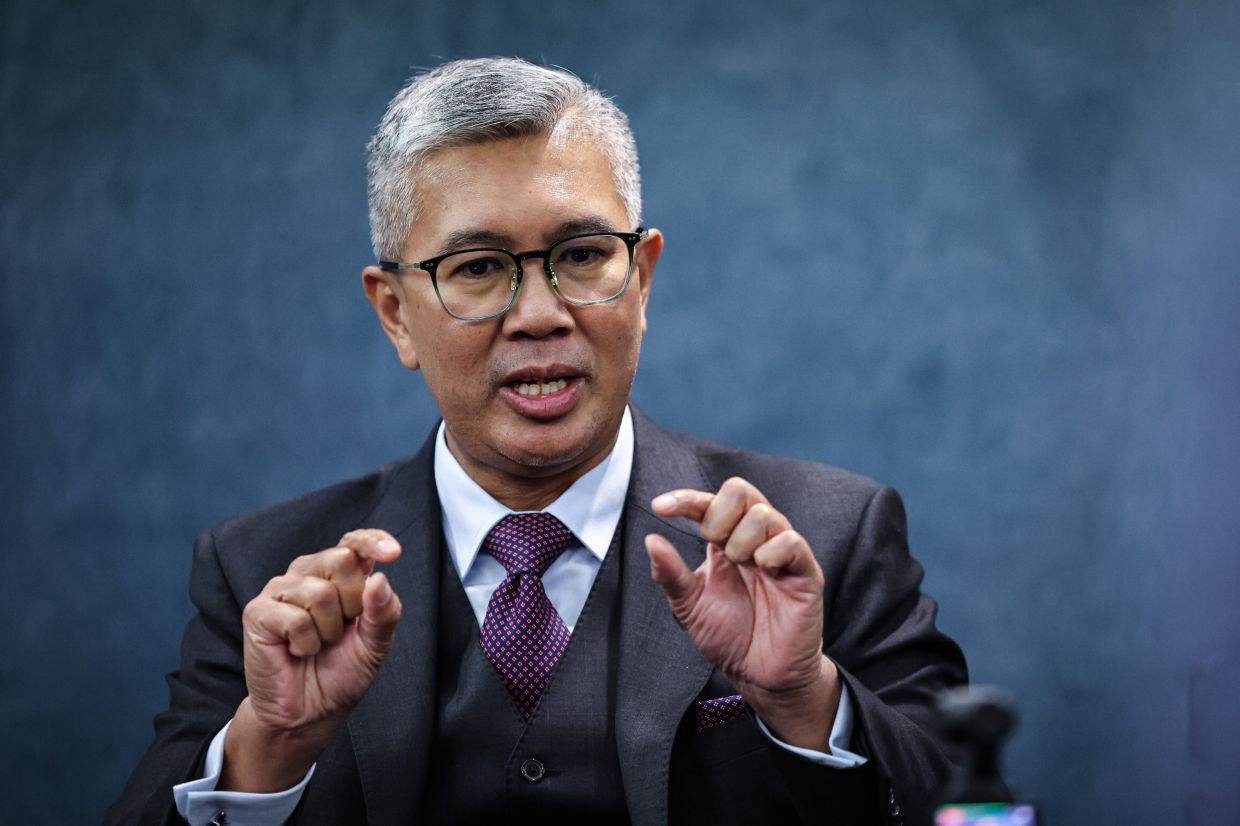
The chairman of the Malaysian Investment Development Authority, Tengku Datuk Seri Zafrul Abdul Aziz, has warned that ASEAN's energy transition faces a fundamental coordination crisis rather than a lack of political will, calling for urgent regional cooperation to unlock billions in investment needed to meet climate commitments. Speaking at the 7th International Sustainable Energy Summit here today, Tengku Zafrul identified the core challenge confronting Southeast Asia's energy future: while nearly every ASEAN economy has pledged net-zero targets, the region lacks the unified financial mechanisms and harmonised regulatory systems necessary to channel capital towards these ambitious goals.
The scale of the financing challenge is staggering. ASEAN requires approximately US$200 billion annually through 2030 to fund its energy transition—a sum that dwarfs current investment flows and underscores the urgency of coordinated action across the bloc. This investment gap is not merely a technical problem confined to economics ministries; it reflects deeper structural fragmentation that hampers project development from conception to completion. Tengku Zafrul characterised the situation bluntly as "a capital coordination problem," emphasising that individual ASEAN governments lack the institutional capacity to address energy transition on a standalone basis.
Three specific structural barriers currently impede ASEAN's energy transition. Projects languish in protracted development phases before achieving the financial viability required to attract institutional investors. National regulatory frameworks remain misaligned, creating inconsistencies that complicate cross-border energy cooperation. Cross-border financing mechanisms remain underdeveloped, forcing projects to rely on limited domestic capital sources. Risk-sharing instruments that could encourage private investment in lower-yielding renewable energy projects remain absent or inadequate across the region. These compounding obstacles explain why ambitious climate pledges often fail to translate into concrete infrastructure investments.
To overcome these barriers, Tengku Zafrul proposed three interconnected regional mechanisms. The ASEAN Power Grid, targeted for full operational integration by 2045, represents the most transformative option. This integrated electrical system would enable ASEAN's geographically dispersed renewable energy resources to support one another across borders—channelling hydroelectric capacity from Laos to energy-deficit neighbours, tapping Indonesia's abundant geothermal reserves, utilising Vietnam's offshore wind potential, and leveraging Malaysia's substantial solar capacity. The APG essentially treats ASEAN as a unified energy market rather than fragmented national silos, dramatically improving resource utilisation efficiency.
Secondly, Tengku Zafrul advocated establishment of an ASEAN Green Investment Facility designed to aggregate capital from diverse sources including government treasuries, institutional pension funds, and private investors into a single regional mechanism. This pooling approach addresses a critical asymmetry: individual ASEAN economies cannot comfortably absorb the fiscal burden of financing energy transition alone, whereas collective burden-sharing becomes manageable. By centralising capital mobilisation and deploying it strategically across the region, such a facility would accelerate project bankability and reduce individual governments' financial strain.
The third pillar involves regional energy security protocols extending beyond renewable energy infrastructure. Tengku Zafrul called for harmonised emergency response procedures, coordinated strategic fuel reserves accessible to member states during supply disruptions, aligned crisis communication protocols, and integrated monitoring of regional supply chains. This resilience-focused approach reflects lessons from recent global energy shocks, which exposed ASEAN's vulnerability to external supply interruptions. A region divided by uncoordinated crisis responses is substantially more fragile than one with pre-negotiated cooperation frameworks.
Malaysia itself is positioning to advance this agenda through multiple domestic initiatives. The New Industrial Master Plan 2030 incorporates energy transition considerations into broader economic strategy, while the National Energy Transition Roadmap specifically maps decarbonisation pathways for the country's power sector. The Green Investment Strategy establishes mechanisms to channel capital towards clean energy development. However, Tengku Zafrul stressed that Malaysia's leadership role must be understood as convening the region rather than imposing unilateral solutions.
His rhetoric emphasised the interconnectedness of ASEAN member states' energy futures. The investment gap is regional, meaning solutions require regional coordination. Energy shocks affect the entire bloc regardless of origin point, necessitating collective resilience measures. Solutions proportional to the scale of the challenge cannot emerge from fragmented national efforts but only from unified regional frameworks. This framing shifts energy security from a bilateral or strictly national concern to a core regional stability issue comparable to traditional security matters.
Tengku Zafrul concluded by invoking both urgency and unity as decision-making principles. Every day of delayed action increases ASEAN's exposure to energy supply volatility and climate risks, creating economic costs that dwarf the investment required for proactive transition. Simultaneously, a region fractured by uncoordinated energy policies becomes increasingly vulnerable to external pressures and supply disruptions. Conversely, a region bound by interconnected energy infrastructure and aligned transition strategies becomes substantially more resilient. The binary choice presented was stark: either ASEAN acts collectively now through coordinated mechanisms, or faces escalating economic and geopolitical vulnerabilities from delayed action and fragmented responses.
The immediate implications for Malaysia are significant. As a major regional economic power with substantial renewable energy potential and established investment infrastructure, Malaysia occupies a natural leadership position in regional energy architecture. The country's energy transition success and its ability to mobilise capital for clean energy projects will influence broader ASEAN momentum. Malaysia's diplomatic and technical engagement in establishing the ASEAN Power Grid and Green Investment Facility will largely determine whether these initiatives progress from concept to implementation.
For Southeast Asia more broadly, the speech signals shifting energy diplomacy priorities. Traditional energy security frameworks emphasizing fossil fuel supply diversification increasingly give way to renewable energy coordination and clean technology deployment. ASEAN's journey toward net-zero will unavoidably intersect with capital flows, technology transfer, and geopolitical alignment with major powers investing in regional energy transitions. A region that achieves coordinated energy transition secures greater strategic autonomy than one dependent on fragmented, individually-negotiated arrangements with external powers.
The timeline is compressed. ASEAN member states have set 2030 and 2050 targets for emissions reductions and net-zero achievement respectively. Current investment trajectories fall far short of these commitments. The structures Tengku Zafrul outlined—the power grid, investment facility, and emergency protocols—require years of negotiation, legal harmonisation, and institutional development before yielding tangible results. The window for beginning these processes is now rapidly closing, making his call for urgent action more than rhetorical flourish but rather a statement of practical necessity.

