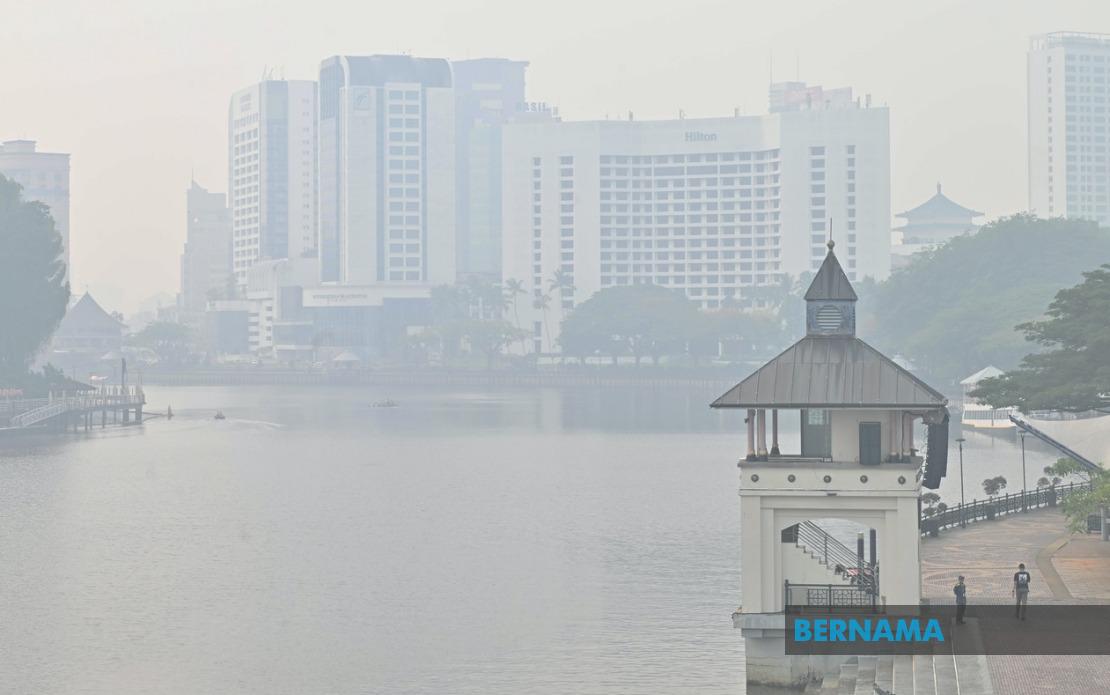
Tan Sri Lee Lam Thye has made an urgent call for ASEAN leadership to undertake a comprehensive review of the region's approach to transboundary haze pollution, arguing that the bloc's existing framework has failed to stem a persistent environmental crisis. The social activist contends that the ASEAN Agreement on Transboundary Haze Pollution, which has governed cross-border air quality issues for over two decades since its adoption in Kuala Lumpur on June 10, 2002, requires fundamental strengthening with legally binding enforcement provisions and measurable performance targets. His intervention reflects growing frustration among civil society in the region with the inadequacy of voluntary cooperation mechanisms in addressing an issue that affects hundreds of millions of people across Southeast Asia.
Lee's critique challenges the notion that transboundary haze represents an acceptable seasonal inconvenience that ASEAN nations must simply endure. He emphasises that policymakers must recognise the phenomenon not merely as a meteorological problem but as a complex governance failure with cascading consequences for public health, environmental integrity, and regional stability. This reframing is significant for Malaysia, which has borne the brunt of haze episodes originating in neighbouring countries, particularly during El Niño years when dry conditions exacerbate wildfire risks. The persistent recurrence of such crises despite 20 years of formal agreement suggests that existing mechanisms lack sufficient teeth to compel compliance or deter polluting activities.
The activist has specifically highlighted the need for a strategic pivot from reactive emergency response to preventative planning. Rather than waiting for haze episodes to materialise and then scrambling to manage their health and economic impacts, ASEAN should implement forward-looking systems that identify and neutralise fire risks before they develop into transboundary crises. This approach would require substantial investments in fire suppression infrastructure, early-warning systems, and personnel training across the region, particularly in nations vulnerable to large-scale agricultural burning and uncontrolled land clearing operations.
While acknowledging warnings from the ASEAN Specialised Meteorological Centre about strengthening El Niño conditions and below-normal rainfall in southern ASEAN, Lee cautions against using natural climate phenomena as an excuse for inaction. El Niño creates vulnerability, he argues, but does not create fires; human decisions to engage in open burning, illegal land clearance, and unregulated plantation development convert dry seasonal conditions into transnational environmental disasters. This distinction matters because it places responsibility for mitigation within human control rather than attributing haze to immutable natural forces beyond regional influence.
Lee's proposal for urgent measures encompasses several interconnected elements designed to create accountability and transparency. He calls for establishing clear, quantifiable targets for fire prevention and hotspot reduction, mechanisms for investigating and prosecuting individuals and companies responsible for pollution-causing activities, and frameworks for evidence-sharing and enforcement when cross-border damage occurs. These provisions would represent a significant departure from the current arrangement, which relies largely on goodwill and voluntary compliance without robust consequences for non-performance.
A permanent regional haze response mechanism emerges as central to Lee's reform agenda. Such a body would operate continuously rather than episodically, maintaining real-time satellite surveillance of hotspots, enabling rapid dissemination of fire location data, coordinating cross-border firefighting operations, and clarifying which ASEAN member bears responsibility for managing specific fire clusters. The mechanism would also establish predetermined protocols for escalating response intensity as haze severity increases, ensuring that serious episodes trigger mobilisation of maximum available regional resources rather than merely notifying neighbouring countries of deteriorating air quality.
Enhanced peatland and forest management cooperation represents another pillar of the proposed framework. Peatlands, concentrated in Indonesia and Malaysia, are particularly fire-prone during dry seasons and generate disproportionately intense smoke when burning. Joint management protocols, supported by transparent information-sharing on forest health, land use changes, and enforcement actions, could significantly reduce the risk of massive wildfires originating from poorly managed peatland areas. This dimension of the reform recognises that preventing fires is more efficient and less costly than attempting to control them once they spread across vast territories.
The establishment of joint prevention and early-warning systems operating ahead of each dry season would enable ASEAN to move beyond tactical firefighting toward strategic preparation. These systems would assess rainfall patterns, vegetation moisture levels, wind dynamics, and existing fire activity to project seasonal risk profiles and pre-position resources accordingly. Such forward planning could dramatically improve response capacity and reduce the lag between fire ignition and suppression efforts, particularly in remote areas where detection and access present significant operational challenges.
Lee emphasises that Malaysia and other affected nations must be prepared to raise haze issues assertively at the highest levels of ASEAN decision-making structures. This represents a departure from traditional ASEAN practice, which emphasises consensus and non-interference in member states' internal affairs. However, Lee frames firm advocacy not as interference but as legitimate pursuit of shared regional interests in protecting public health and environmental sustainability. This framing attempts to reconcile ASEAN's foundational principles with the practical necessity of binding commitments on transboundary pollution, which by definition crosses borders and therefore cannot be treated as purely domestic concerns.
The timing of Lee's intervention is significant given current climate patterns and escalating public health concerns across Southeast Asia. Multiple countries in the region have experienced hazardous air quality episodes with increasing frequency and severity, imposing substantial economic costs through healthcare expenditures, productivity losses, and tourism disruption. Younger generations of voters and civil society activists appear increasingly unwilling to accept recurring haze as an inevitable feature of regional life, creating political pressure on governments to demonstrate tangible progress in addressing the problem.
For Malaysian readers, the practical implications of this reform agenda are substantial. Stronger ASEAN enforcement mechanisms could reduce the nation's exposure to imported air pollution, improving public health outcomes particularly for vulnerable populations including children, elderly persons, and those with pre-existing respiratory conditions. Enhanced regional cooperation could also lower firefighting costs and reduce economic disruption to Malaysian agriculture, tourism, and manufacturing sectors during serious haze episodes.
Implementing Lee's proposals would require genuine political will from all ASEAN member states and acceptance that environmental protection occasionally necessitates collective action that constrains individual state sovereignty. The challenge ahead for ASEAN leadership lies in demonstrating that regional cooperation can produce tangible, measurable improvements in air quality and fire management within a reasonable timeframe, thereby validating the region's commitment to collectively addressing shared environmental challenges.

