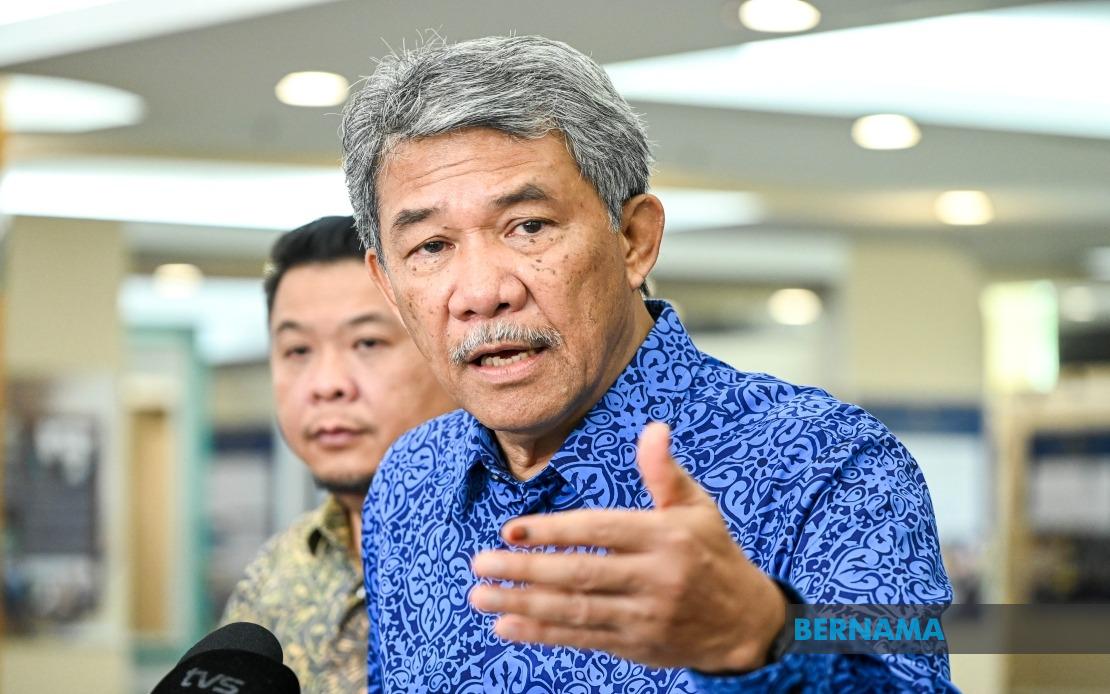
The Association of Southeast Asian Nations is at a critical juncture in its economic evolution, with internal trade patterns revealing significant room for growth despite the region's combined GDP trajectory. Speaking at the 59th ASEAN Day celebration in Putrajaya, Foreign Minister Datuk Seri Mohamad Hasan emphasised that strengthening commerce among member states remains a cornerstone of the bloc's ambitions to position itself as the world's fourth-largest economic entity within the next decade.
Currently, intra-ASEAN trade accounts for less than 25 per cent of the region's total trade volume, a figure that Mohamad characterised as indicative of untapped potential rather than failure. This metric reveals a paradox at the heart of Southeast Asian integration: despite three decades of formal cooperation, member nations still conduct the majority of their external commerce outside the bloc's boundaries. For Malaysian readers and businesses, this represents both a challenge and an opportunity, as deepening regional supply chains could reshape competitive advantages across industries from manufacturing to services.
The shift in ASEAN's strategic focus represents a maturation of the organisation's priorities. No longer confined to managing geopolitical tensions and navigating great power politics, the bloc has embraced an economic development agenda that recognises the interdependence of its diverse member economies. Mohamad's comments underscored that political stability, while necessary, is insufficient without concurrent progress on trade liberalisation and economic integration. This recalibration acknowledges regional realities: member states from Vietnam to Indonesia face mounting pressure to generate employment and attract investment, objectives achievable through expanded intra-regional commerce.
ASEAN has established multiple institutional mechanisms designed to facilitate movement of goods across borders and reduce tariff barriers. These frameworks, built incrementally through various trade agreements and declarations, theoretically create pathways for seamless commerce among the ten member nations. Yet the persistence of intra-regional trade below the 25 per cent threshold suggests implementation gaps, non-tariff barriers, and logistical challenges continue to inhibit the full realisation of these mechanisms. Infrastructure deficits, regulatory inconsistencies, and protectionist pressures within individual member states frequently undermine the spirit of regional integration.
Malaysia's tenure as ASEAN chair during the preceding year produced several initiatives aimed at catalysing economic momentum. These efforts, encapsulated in the Kuala Lumpur Declaration and accompanying resolutions, established reference points for successor administrations to build upon. The Philippines, assuming the 2024 ASEAN chairmanship, has inherited a baton requiring continued momentum on trade facilitation and market integration. For Malaysian stakeholders, this continuity matters considerably, as sustained advocacy for deeper integration positions the nation as a bridge between more developed ASEAN economies and those still developing their industrial base.
The designation of Malaysia as Permanent Shepherd of the ASEAN Community 2045 Vision grants the country a distinctive custodial role in shepherding the bloc toward its long-term aspirations. This responsibility extends beyond ceremonial functions; it implies active stewardship of foundational principles underpinning regional cooperation, particularly the strengthening of intra-ASEAN trade architecture. The symbolic weight of this role reflects recognition of Malaysia's consistent advocacy for deeper regional integration and its strategic position within Southeast Asia's geographic and economic landscape.
Achieving fourth-largest economy status globally depends fundamentally on converting latent potential into measurable economic outcomes. The International Monetary Fund and regional development banks project ASEAN's combined GDP could exceed USD 4 trillion by 2030, but realising this projection requires robust internal demand generation and production efficiency. When goods, services, and investment capital move freely within the region, the entire bloc benefits from specialisation, economies of scale, and reduced production costs. Conversely, fragmented markets and duplicative manufacturing capabilities diminish competitive advantage against rival blocs.
The challenge facing ASEAN policymakers involves reconciling national interests with regional aspirations. Individual member states naturally prioritise domestic industries and employment, sometimes resisting trade rules that expose local producers to external competition. Yet protectionism carries long-term costs, including retaliatory measures, reduced consumer choice, and lower productivity incentives. Malaysia, as a trade-dependent economy historically benefiting from open markets, has particular interest in championing dismantling of internal ASEAN barriers while supporting capacity-building in less-developed member states.
Infrastructure deficits constitute a substantial impediment to intra-regional commerce. Inadequate port facilities, air freight capacity, and ground transportation networks in several member states create bottlenecks frustrating traders seeking to move goods efficiently. Investment in connectivity—both physical and digital—would multiply returns from existing trade agreements. Regional development banks have begun financing such projects, but the pace remains insufficient relative to demonstrated demand. Malaysian businesses engaged in regional supply chains frequently cite logistics costs as determining factors in outsourcing location decisions.
Regulatory harmonisation represents another frontier for ASEAN integration efforts. Divergent product standards, licensing requirements, and customs procedures between member states impose compliance costs on businesses attempting to serve regional markets. A merchant shipping goods from Malaysia to Thailand faces different documentation protocols at each border, increasing transaction costs and reducing competitiveness against companies operating within unified markets like the European Union. Streamlining these processes through mutual recognition agreements and standardised procedures would substantially reduce friction.
The regional geopolitical environment adds urgency to ASEAN's economic integration agenda. As supply chains reconfigure globally due to trade tensions and strategic competition between major powers, ASEAN nations face pressures to align with competing blocs. By demonstrating tangible economic benefits from regional cooperation, ASEAN can offer member states compelling reasons to maintain cohesion and resist external pressure to fragment. Enhanced intra-regional trade strengthens the bloc's collective resilience and negotiating position internationally.
For Malaysian enterprises, from manufacturing conglomerates to agricultural exporters, meaningful progress on intra-ASEAN trade expansion would create new market opportunities and diversified supply chains. The nation's position as both a developed economy and ASEAN member positions it to benefit disproportionately from deeper integration, particularly as a hub for high-value manufacturing and services. Yet realising these benefits requires sustained political commitment from all member states and willingness to implement reform despite domestic opposition.
Moving beyond the 25 per cent threshold demands concrete action beyond rhetorical commitments. Member states must prioritise implementation of existing agreements, invest in enabling infrastructure, and demonstrate political courage in confronting protectionist interests. Mohamad's acknowledgment of current shortfalls signals recognition that aspirations require alignment with reality through sustained effort. With the Philippines now steering the ASEAN chair and Malaysia positioned as custodian of longer-term vision, the next 12-24 months will reveal whether rhetorical emphasis on economic integration translates into measurable progress.

